Housing vs. Sustainability: Vermont Governor Passes Executive Order 06-25, Easing Building Energy Efficiency Standards By Diamond McAllister
Vermont Governor Phil Scott issued Executive Order 06-25 (EO) on September 17, 2025.[1] EO 06-25 is titled “Promoting Housing Construction and Rehabilitation.”[2] It aims to improve housing access in Vermont by streamlining development, supporting affordability, incentivizing developers, coordinating state agencies, and reducing regulatory barriers.[3] Meanwhile, Vermont’s environmental goals, codified at 10 V.S.A. § 578, require the state to significantly reduce greenhouse gas emissions.[4] Governor Scott’s EO highlights the tension between Vermont’s statutory climate commitments and the state’s efforts to accelerate housing development.[5] This tension raises questions about whether easing energy efficiency standards undermines Vermont’s legally binding environmental goals.[6] The EO marks a clear departure from the state’s codified mission to reduce greenhouse gas emissions.
I. Stated Purpose of the Executive Order
According to the 2024 Vermont Housing Needs Assessment, Vermont faces a longstanding housing deficit.[7] Most Vermont homes remain unaffordable to the majority of Vermonters.[8] The Governor spends over three pages of the EO justifying prioritizing rapid housing expansion over strict energy efficiency standards as a response to this housing issue.[9] The Governor cites strict energy efficiency rules as slowing the pace of housing development. [10] Specifically, he claims that the 2024 building energy efficiency standards increase construction costs and make housing less affordable for Vermonters.[11]
For several years, Vermont has faced a pressing housing shortage, with the Governor estimating Vermont needs 40,000 new homes by 2030 to adequately meet the state’s housing needs.[12] Vermont is not on track to meet this demand.[13] The EO streamlines permitting, accelerates project approval, and suspends heightened energy efficiency standards in an attempt to address the shortage.[14] However, by acting while the General Assembly is out of session, the Governor demonstrates tensions between urgent housing needs and statutory commitments.
The Governor listed the housing crisis, failed attempts to address it, and the need for accelerated executive action as the rationale for the EO.[15] He acknowledges legislative efforts to address Vermont’s housing crisis but notes that they have been insufficient.[16] Thus, he argues that the executive branch must use its authority to tackle the state’s critical housing shortage.[17] He calls this approach accelerated executive action.[18] This urgency operates within a broader legal framework that binds Vermont to ambitious climate goals.
II. Vermont’s Climate Framework and Energy Efficiency Standards
The Vermont Global Warming Solutions Act of 2020 (GWSA), codified at 10 V.S.A. § 578, establishes Vermont’s climate goals as legally binding mandates.[19] The statute obligates Vermont to reduce greenhouse gas pollution 26% below 2005 levels by 2025.[20] It also requires emissions to reduce a further 40% below 1990 levels by 2030 and 80% by 2050.[21] The GWSA aims to help Vermonters prepare for negative climate change effects.[22] Increasing energy efficiency across sectors plays a crucial role in reaching climate goals because improved energy efficiency reduces emissions.[23] Specifically, “[i]ncreased energy efficiency can reduce industrial carbon emissions by up to 34% in many sectors.”[24]
The EO’s reinstatement of the 2020 energy efficiency standards rolls back prior efficiency requirements.[25] It shifts the focus from long-term energy efficiency to immediate housing expansion.[26] Efficiency Vermont (a nonprofit focused on transitioning Vermont to cleaner and more affordable energy solutions) has demonstrated key differences between the 2020 and 2024 residential building energy efficiency standards.[27] Among these substantial differences are heavier insulation requirements, stricter energy efficiency standards, required electric vehicle charging provisions, solar-ready zone requirements, mandatory airtightness testing, and more stringent overall performance requirements.[28] The 2020 energy efficiency standard reinstatement thus lowers Vermont’s energy efficiency requirements.[29] The reinstatement sets the stage for expanding housing at the expense of energy efficiency.
III. Expansion of Housing vs. Energy Efficiency
EO 06-25 embodies a deliberate trade-off between two objectives: promoting faster housing development and risking slower progress on energy efficiency.[30] This trade-off is evident throughout the EO, particularly in its framing of the 2024 residential building energy efficiency standards as “regulatory barriers.”[31] The EO reinstates the 2020 standards, giving builders the option to choose between the 2020 and 2024 standards.[32]
Conclusion
Will this rollback prevent Vermont from achieving its codified greenhouse gas reduction goals? The answer is still unclear. The EO, however, marks a clear departure from the state’s mission under the GWSA to reduce emissions. The question now is whether Vermont can expand housing and maintain strong energy standards at the same time. Ultimately, the state must balance its immediate housing needs with its long-term, legally binding climate commitments.
Preserving Our Playground: The Significance of State Stewardship By Maddy Barney
Land conservation is a consistent bipartisan priority in America.[1] Conservation brings ideologies together because of widespread historical support for maintaining public lands for all to enjoy.[2] Outdoor recreationists represent important stakeholders in land conservation by consistently using public lands.[3] Outdoor recreation and land conservation go hand in hand.[4] “Protecting . . . [and] defending public lands is especially important to the outdoor recreation community.”[5] Almost a third of the nation’s land is held by the United States’ government entities and most public land is managed for “conservation, recreation, and education.”[6] Given the influence the government exercises over public lands, it is of critical importance that lands open for recreation are managed and created intentionally.[7] Balancing dual goals of public recreation and conservation can raise substantial challenges, but successful projects bring generational benefits.[8]
I. Challenges Balancing Outdoor Recreation and Land Conservation
Although land conservation directly supports outdoor recreation, projects must incorporate sustainable goals to prevent disrupting the delicate environmental balance.[9] Land conserved for outdoor recreation can raise several challenges.[10] There is limited public awareness on the conflict between conservation and recreation—especially when introducing high volumes of people into outdoor spaces.[11] Visitors to protected areas can degrade local “vegetation, soil, water, wildlife, and cultural resources.”[12] Negative effects vary by site and activity.[13] Effects from recreationists are “not readily apparent to the individual” but are considered by land managers daily.[14]
Land managers must overcome significant hurdles governing conserved areas and balancing diverse interests.[15] Land managers face a lack of funding, threats of energy development leases, overcrowding, and climate change impacts.[16] Generally, ecological data that guides informed decision making is lacking.[17] The lack of necessary data makes it especially difficult for public agencies to defend their management decisions under scrutiny.[18] Lastly, public agencies have limited resources to manage public lands, with 75% of land managers citing inadequate funding.[19] Conservation management challenges due to a lack of resources were exacerbated this year given the federal government’s mass firing of park employees and continual attacks on land conservation.[20]
II. Who’s making land conservation decisions anyway?
The federal government has long prioritized land conservation.[21] Conservation stems back to “colonial-era policies” focused on extraction rather than protection.[22] Additionally, “conservation areas were historically established as ways to rid land of its indigenous inhabitants.”[23] Western expansion and the early establishment of national parks put land into the hands of the centralized government.[24] As extraction continued, conservation concerns arose, and President Roosevelt created the U.S. Forest Service, which established 230 million acres of public land.[25] The public’s awareness of environmental concerns steadily grew, making space for the first Earth Day in 1970.[26] During this pro-conservation period, President Reagan’s terms “marked a growing polarization” in American politics. But still, public land protection remained a bipartisan goal.[27] Congress continued enacting widely supported conservation legislation and started adjusting management practices to better meet modern protection objectives, including recreation and biodiversity.[28] President Trump, despite approving the passage of the Great American Outdoors Act, attempts to change the public lands rhetoric and threatens the classification of “conservation” as a valid land use.[29]
When the federal government threatens public lands, states must take action.[30] States can continue preserving conservation areas despite federal priorities straying.[31] Luckily, local municipalities majorly control land use decisions anyway.[32] States delegate authority to individual municipalities through enacting legislation “that empowers land use decision making to individual towns or cities.”[33] Since the seminal case Euclid, zoning has evolved from regulating the construction and location of buildings to involve more attenuated goals such as land conservation, sustainable development, and affordable housing developments.[34] States and their municipalities are in strong positions to set specific conservation goals that best serve the health, safety, and welfare of its residents through outdoor recreation.[35] Despite federal reform to conservation, there are opportunities to effectively conserve land at the local level. Outdoor recreation represents but one strategy opening the door to new and improved state-led conservation projects.[36]
III. Vermont’s Model State Conservation Project
A special conservation project is coming to fruition in Vermont, aligning the interests of outdoor recreationists and conservationists alike. Vermont is implementing ne of the largest conservation projects in the Northeast to date—the “Velomont.”[37] The Velomont is a huge trail connection project designed to improve local land conservation and encourage outdoor recreation.[38] The Green Mountain State’s expansive conservation project “will represent the largest hut-supported trail network in the U.S.” and conserve 214,000 unprotected acres of land.[39] The Velomont represents a massive collaboration between nonprofit organizations, state agencies, and private landowners.[40] This is not just a concept—the vision arose in 2016 and official planning began in 2023.[41] The “Velomont Vision Plan” lays out numerous goals that guide decision making on the statewide effort.[42]
The Velomont project is a model for intentional land conservation.[43] The Velomont addresses concerns from competing interests while outlining the benefits of such a massive project.[44] Outdoor recreation was a primary motivator of the Velomont. The ancillary motivators of protecting migratory wildlife corridors, boosting economic activity in small rural towns, and promoting public health are just as significant for the State of Vermont.[45] Additionally, this trail connection project creates a contiguous tract of conserved land the length of the state.[46] Generally, the distribution of conserved land is a result of convenience rather than strategic planning.[47] The Velomont represents a methodical approach to conservation that will benefit future generations of people and biodiversity.[48] States should follow Vermont’s lead by intentionally linking outdoor recreation with land use to create new opportunities for recreation and ecological protection in contiguous strips of conserved land. The Velomont Vision Plan even lays out the process for state organizations to develop similar projects.[49]
IV. Why Should States Follow Vermont’s Lead?
Despite challenges with local land conservation and federal cuts to conservation initiatives, it remains a valid interest to prioritize. Outdoor recreation is a primary use of public lands and a major contributor to the U.S. economy.[50] Public lands are the foundation of America’s $1.2 trillion outdoor recreation industry, which “accounted for 2.2 percent of the nation’s gross domestic product” in 2017.[51] Despite numerous economic benefits accompanying outdoor recreation, conservation efforts also encourage healthy populations and environments.[52] The current American reality, however, is that “less than half of people in the United States live within half a mile of a park.”[53] Inequitable access to public lands can be addressed through local and state initiatives. A well-designed, accessible conservation area offers endless benefits.[54] Individuals recreating outdoors experience lower cortisol levels, healthier heart functions, decreased likelihood of developing depression, and a closer connection to the community.[55] In addition to health benefits, green spaces have been shown to encourage social interaction in communal spaces.[56]
In 2024, 81 million people recreated on public lands.[57] The millions of people visiting public lands contributed to the local economy and connected with the community.[58] Outdoor enthusiasts may not align themselves on issues pertaining to how land is used, but all agree that access to conserved land is a necessity.[59] The ultimate goal of protecting everyone’s right to recreate on public lands requires collective action. Conservation issues can result in alignment because American land conservation is an “inherently bipartisan issue.”[60]
Conclusion
State conservation projects are crucial to protect public lands during this period in American politics. Conservation projects can receive widespread support among voters.[61] Outdoor recreation is an excellent strategy to advocate for conserving tracts of land.[62] Recreationists are rallying for threats to America’s public lands—public comments on recission of the roadless rule alone, which protect remaining truly wild places, reached 625,749.[63] The latest attack on public lands comes from President Trump’s attempt to de-recognize conservation as a valid land use.[64] Dissembling an inherently American ideal of protecting wild places for current and future generations is an issue that abridges ideological divides.[65] Hunters, fishers, mountain-bikers, hikers, and off-roaders all share a common interest in maintaining access to conserved areas despite ideological disagreements.
Moving forward, state legislators should genuinely consider similar projects to the Velomont that blend outdoor recreation and land conservation intentionally. There are efficient strategies to manage land conservation that states can utilize to minimize negative impacts to the environment.[66] Indigenous communities have extensive knowledge of “wildlife migration patterns, seasonal changes, and ecosystem balance” to develop community centered conservation.[67] States can adopt “strict carrying capacities” on recreation areas to prevent overcrowding and erosion.[68] Land conserved for outdoor recreation must include community engagement and careful planning to protect access for current and future generations.[69]
[2] Kate Wall, the nature of conservation is inherently bipartisan, IFAW (Dec. 15, 2020), https://www.ifaw.org/people/opinions/conservation-bipartisan; John Leshy, American Public Lands: A Sketch of Their Political History and Future Challenges, 62 Nat. Res. J. 341, 343 (2022) (“Americans of all persuasions have come to agree on the importance of protecting [public] lands.”).
[3] Sarah L. Thomas & Sarah E. Reed, Entrenched ties between outdoor recreation and conservation pose challenges for sustainable land management, 14 Env’t Rsch. Letters, No. 11 (Nov. 14, 2019).
[6] John Leshy, American Public Lands: A Sketch of Their Political History and Future Challenges, 62 Nat. Res. J. 341, 341 (2022) (“[I]ndustrial uses like mining, drilling, and large-scale commercial logging take place on a relatively small proportion of Forest Service and BLM lands.”).
[8] Sarah L. Thomas & Sarah E. Reed, Entrenched ties between outdoor recreation and conservation pose challenges for sustainable land management, 14 Env’t Rsch. Letters, No. 11 (Nov. 14, 2019).
[11]Id.; Roger L. Moore & Beverly L. Driver, Introduction to Outdoor Recreation: Providing and Managing Natural Resource Based Opportunities 209 (Venture Publishing 2005).
[12] Jeffery L. Marion, Impacts to Wildlife: Managing Visitors and Resources to Protect Wildlife, Interagency Visitor Use Mgmt. Council, Nat’l Park Serv. (March 2019).
[13] Roger L. Moore & Beverly L. Driver, Introduction to Outdoor Recreation: Providing and Managing Natural Resource Based Opportunities, 214 (Venture Publishing 2005); See Sierra Forest Legacy, Off-road Vehicles, https://www.sierraforestlegacy.org/FC_FireForestEcology/TFH_OHV.php (last visited Oct. 10, 2025) (outlining substantial negative impacts from off-road vehicles).
[14] Sarah L. Thomas & Sarah E. Reed, Entrenched ties between outdoor recreation and conservation pose challenges for sustainable land management, 14 Env’t Rsch. Letters, No. 11 (Nov. 14, 2019).
[17] Sarah L. Thomas & Sarah E. Reed, Entrenched ties between outdoor recreation and conservation pose challenges for sustainable land management, 14 Env’t Rsch. Letters, No.11 (Nov. 14, 2019).
[21]See generally John Leshy, American Public Lands: A Sketch of Their Political History and Future Challenges, 62 Nat. Res. J. 341 (2022) (“[P]oliticians have time and time again joined hands regardless of political party to hold and protect more lands in U.S. ownership.”).
[27] John Leshy, American Public Lands: A Sketch of Their Political History and Future Challenges, 62 Nat. Res. J. 341, 352 (2022) (“Reagan signed legislation adding more than eight million acres to the national wilderness system, the largest addition in any single year since the Wilderness Act.”).
[29] Great American Outdoors Act, Pub. L. No. 116-152, 134 Stat. 682 (2020) (establishing dedicated funds for use by National Parks and Public Lands); Great American Outdoors Act, U.S. Dep’t of the Interior, https://www.doi.gov/gaoa (last visited Oct. 10, 2025) (describing the Great American Outdoors Act as necessary to address overdue maintenance needs); Rescission of Conservation and Landscape Health Rule, 90 Fed. Reg. 43990 (Sept. 11, 2025) (to be codified at 43 C.F.R. pts. 1600, 6100).
[46] Compass Vermont, U.S. Forest Service Approves 72-Miles for the Velomont Bike Trail in Vermont (Sept. 4, 2025), https://www.compassvermont.com/p/us-forest-service-approves-72-miles; L. Claire Powers et al., Reconnecting stranded public lands is a win-win for conservation and people, 270 Biological Conservation June 2022 at 109557 (connecting conserved land use projects benefit both wildlife and people).
[47] L. Claire Powers et al., supra note 46 (outlining the negative aspects of “checkerboarded” nature of private and public land parcels).
[56]Id.; Viniece Jennings & Omoshalewa Bamkole, The Relationship between Social Cohesion and Urban Green Space: An Avenue for Health Promotion, 16 Int. J. Env’t Res. Public Health 452 (2019).
[68] Moore & Driver, supra note 66 (introducing formula to calculate carrying capacity based on acreage, trail mileage, and vulnerability of the system).
When Agencies Overlook the Environment, NEPA Speaks Up By Gustavo Concepcion-Cordero
More than 55 years after its enactment, the National Environmental Policy Act (NEPA) is still a valuable tool for environmental advocates.[1] NEPA requires federal agencies to consider if there are reasonably foreseeable environmental impacts of proposed major federal actions.[2] An agency will have to issue an Environmental Impact Statement (EIS) if it finds that its proposed action has a reasonably foreseeable significant effect on the quality of the human environment.[3] Environmental advocates regularly bring suits when they believe an agency failed to prepare an EIS or a conduct a proper EIS.[4] One common outcome when a court finds that the agency did not comply with NEPA is to issue an injunction and order the agency to prepare a proper EIS.[5] While courts have described NEPA as a purely procedural statute, federal agencies must comply with its environmentally conscious provisions.[6]
In recent years, however, Congress has made certain NEPA challenges more difficult to pursue. In 2015 Congress approved the Fixing America’s Surface Transportation Act (FAST Act).[7] The Act contains certain provisions affecting some NEPA claims.[8] Under the FAST Act, parties seeking to bring a NEPA claim must submit a comment during the agency’s environmental review period and these claims are subject to a two-year statute of limitations.[9]
NEPA also created the Council on Environmental Quality (CEQ) with the purpose of, among other duties, assisting and advising the President on certain environmental matters, including NEPA implementation.[10] For almost 50 years, the CEQ promulgated government-wide regulations for other agencies to follow when implementing NEPA, but the current administration has taken actions to reduce the CEQ’s power.[11] As a part of his first day executive orders, the President reduced the regulatory power of the CEQ to implement NEPA regulations.[12] By April the CEQ was forced to rescind all of its NEPA regulations.[13]
The President may seek to expedite and simplify the permitting process, but this cannot come at the expense of our environment.[14] NEPA is part of the rule of law and agencies are still subject to judicial review when they fail to properly consider the reasonably foreseeable environmental impacts of their actions. Environmental advocates are not giving up, nor should they.
Recently, a group of advocates in Puerto Rico obtained a partial summary judgment in their favor against the Federal Emergency Management Agency (FEMA).[15] FEMA is currently working on projects to rebuild Puerto Rico’s power grid, following the devastating impacts of Hurricane Maria in 2017.[16] These projects will have a substantial impact on the citizens of Puerto Rico, as it has been reported that FEMA will spend billions of dollars on the repairs.[17] The suit, filed by the Center for Biological Diversity and eight Puerto Rican community groups, highlights how FEMA failed both to consider renewable energy sources in its plans and to prepare an EIS.[18]
The court found there would be significant impacts to human life in Puerto Rico and an EIS should have been prepared.[19] The court proceeded to explain how the agency’s decision will affect the vast majority of Puerto Rico. First, continued reliance on the existing energy infrastructure will affect public health and safety considering the frequent power outages caused by the aging infrastructure.[20] Second, the projects will likely affect park lands, ecologically critical areas, and protected species considering how transmission lines run through some of these areas.[21] Finally, it could establish a harmful precedent for future actions: if FEMA funding continues to be used for fossil fuel-based infrastructure, it is unlikely that Puerto Rico will have the resources to pursue renewable energy alternatives in the near future.[22]
What FEMA’s ultimate EIS may look like is yet to be seen, but they are required to go back and consider renewable energy alternatives for Puerto Rico and the environmental impacts of their proposals. Hopefully, FEMA will propose and pursue a project that is good for the environment and the people of Puerto Rico. However, as the Supreme Court has stated: “NEPA merely prohibits uninformed—rather than unwise—agency action.”[23] While this statement can be disheartening, it’s still a powerful one. Uninformed agency action is still prohibited, and courts are willing to hold agencies accountable.
The role of NEPA may seem small, but it can play a crucial role in federal decision making. The federal government engages a significant number of major federal actions; the least it can do is consider reasonably foreseeable environmental impacts of its actions. Especially when noncompliance may significantly affect the quality of human life. After all, complying with procedural statutes is an essential part of government integrity.
[23] Robertson v. Methow Valley Citizens Council, 490 U.S. 332, 351 (1989).
Data Centers are Increasing Utility Rates—What are States Doing About it? By Daniela Ricardo
Data Centers are Increasing Electricity Consumption and Everyone Else is Paying For It Utility bills are rising because of data centers.[1] Residential rates are up 6.6% since 2023.[2] Additionally, more than 100 utilities have either raised or proposed higher rates for a total increase of 67 billion dollars.[3] These rising prices are due to increased demand,[4] namely from data centers.[5] In 2023, 4.4% of the electricity consumed in the United States was consumed by data centers.[6] This percentage is only projected to increase.[7] Data centers increase utility rates because they require expensive updates to the grid, which existing ratemaking allows to be shifted to residential consumers.[8]
Residential consumers end up paying for part of data centers’ electricity consumption in addition to paying for data centers’ infrastructure needs. To understand how residential consumers end up paying for data centers’ power consumption, understanding utility ratemaking is essential. Utilities are monopolies.[9] Most are investor-owned and for-profit.[10] Because electricity is an essential service and the industry is shielded from competition, utilities must be regulated.[11] Public utility commissions (PUCs) make sure utilities charge justifiable rates through rate cases.[12] PUCs use the “cost causation” principle to examine whether consumer rates correspond to the costs utilities incur in providing electricity to like consumers.[13] Utilities propose their preferred rates based on their own analyses and records.[14] Part of this proposal includes dividing the cost of operating expenses and profit among customers with similar infrastructure requirements.[15] These groups are called “ratepayer classes.”[16] For each ratepayer class, utilities propose different tariffs to standardize what they pay.[17] Because the cost-causation principle is flexible, all ratepayers can be made to pay for all transmission costs.[18]
Traditional cost distribution shifts the cost of updating the grid for data centers onto residential consumers.[19] The increase in electricity demand requires high-voltage transmission infrastructure.[20] Residential consumers, however, require low-voltage systems.[21] Therefore, data centers require transmission that residential consumers do not require.[22] However, utility-planned transmission is paid for by the customers within their territory.[23] Because the Federal Energy Regulatory Commission (FERC) does not require utilities to keep transmission connection costs separate from other transmission costs, utilities do not differentiate the costs incurred from data centers from that of other consumers.[24] Hence, all consumers within a utility territory pay for all transmission costs regardless of whether they benefit from it.[25]
PJM Interconnection, a regional transmission organization (RTO) monitoring utilities in thirteen states and the District of Colombia, exemplifies how traditional cost distribution has operated in the modern sphere.[26] In 2023, PJM approved a $5.1 billion cost-share plan for transmission costs.[27] PJM assigns transmission costs based on each utilities’ share of power demand and share of benefits.[28] When PJM allocates costs to each PUC, each PUC allocates costs based on ratepayer classes.[29] Over half of the cost incurred in this case was attributed to Virginia’s data centers.[30] Ratepayers in other states argued that they should not be made to pay for transmission when Virginia alone would realize the economic benefits.[31] Because it is presumed that all ratepayers benefit from transmission proportional to their energy consumption, FERC dismissed the economic benefit argument,[32] and approved the plan.[33] In Maryland and Virginia, residential ratepayers paid for more than half of the transmission costs.[34] Unless utilities require data centers to pay for transmission up-front, residential ratepayers will end up paying for it.
When utilities do not make data centers pay for transmission costs up front, they run the risk of building unnecessary transmission.[35] Ratepayers could be on the hook for transmission costs even when a data center does not connect to the grid.[36] Utilities build transmission anticipating the large load, but when it does not come ratepayers still have to pay for it.[37] Most data centers do not pay for transmission up-front.[38] Instead, they sign contracts with utilities behind closed doors.[39]
Traditional ratemaking allows data centers and utilities to shift costs onto residential consumers through special contracts or favorable tariffs. Because data centers are large consumers, they negotiate with utilities directly.[40] Utilities offer data centers lower rates to entice them into building in that utility’s service area.[41] As opposed to ratemaking, these private contracts have little opportunity for public participation and review.[42] The process is not transparent and is isolated from other ratepayers.[43] Furthermore, these contracts incentivize utilities to increase rates for residential consumers in the next ratemaking case.[44] Utility tariffs can function similarly. For example, Florida Power and Light (FPL) recently proposed a rate hike of $10 billion.[45] In a revised settlement, FPL walked back plans to create a new tariff for data centers which would have required data centers to pay 65% higher rates.[46] Instead, data centers under a certain size would save 50% off their base bills.[47] The increase in residential rates directly contrasts data centers’ savings.[48]
Are State Laws Protecting Residential Ratepayers? Several states have sought to address a major risk data centers pose to ratepayers—building too much transmission. In Ohio, data centers must pay penalties if they commit to using a certain amount of electricity and do not do so.[49] Data centers must pay 85% of the capacity they committed to for twelve years unless they give three years’ notice.[50] In Virginia, Dominion Energy has proposed both a rate increase and an exit fee for large load consumers.[51] It would require large load consumers to sign a fourteen-year contract.[52] If they withdraw early or do not build the facility, the consumer will still have to pay for their proposed energy costs.[53] Additionally, the consumer would have to pay a certain percentage of demand charges for transmission, distribution, and generation.[54] Oregon’s Power Act creates a new rate class for large energy users.[55] Oregon requires large energy users to sign contracts for at least ten years.[56] Large energy users are also required to pay for a minimum amount of energy and an extra fee if they exceed the maximum amount of energy projected.[57] To address potential burdens on residential ratepayers, Texas takes a slightly different approach.[58] Texas requires large energy users to pay for infrastructure costs.[59] It also requires large energy users to disconnect during emergencies and register backup generators.[60] In California, a new law requires the California Public Utilities Commission to conduct a study on the effects of data centers on ratepayers.[61]
While state-level legislation is progressing, the trend towards penalizing data centers falling short of commitments does not address major issues in traditional ratemaking. Unless data centers pay for transmission costs up-front, residential ratepayers will foot the bill. Furthermore, states with a lot of data centers are incentivized not to require data centers to pay for transmission upgrades up-front under current cost distribution methods.[62] If the RTO a state is in apportions costs by energy consumption among all states in the region, the state incurring those costs benefits the most. If that state required data centers to pay for transmission costs up-front, data centers would look elsewhere. On the other hand, requiring a data center to pay for energy it committed to using simply makes sure a utility gets paid. Either way, residential ratepayers are still on the hook for the cost of connecting data centers to the grid. Texas’ law requiring data centers to pay for costs up-front addresses this issue. Another way of addressing this issue would be changing how the cost causation principle works. If residential ratepayers are not using it, they should not pay for it.
[8]E.g., Ivan Penn & Karen Weise, Big Tech’s A.I. Data Centers Are Driving Up Electricity Bills For Everyone, N.Y. Times (Aug. 14, 2024), https://www.nytimes.com/2025/08/14/business/energy-environment/ai-data-centers-electricity-costs.html (“recent reports expect data centers will require expensive upgrades to the electric grid, a cost that will be shared with residents”); see Levy, supra note 1 (“[U]nless utilities negotiate higher specialized rates, other ratepayer classes . . . are likely paying for data center power needs”).
[28] Martin & Peskoe, supra note 9 at 15 (explaining that PJM assigns transmission costs based on each utilities’ share of power demand and share of benefits).
[38] Union of Concerned Scientists, supra note 19 at 5 (explaining that only large load customers paid for transmission connection costs up-front or directly in only 5% of cases in 2024).
[44]Id. (describing a FERC audit’s discovery of Duke Energy’s plan to “shift the cost of the discount” of a data center to other ratepayers by raising their rates).
Lewis Ritchie pulls a kayak through floodwater after delivering groceries to his father-in-law on July 28, 2022 outside Jackson in Breathitt County. (Photo by Michael Swensen/Getty Images).
Fracking The Hills: The Legal Exemption Flooding Appalachia By Kathryn Stapleton
The Appalachian Mountain region has long endured frequent and devastating floods. From the shale-rich hills of West Virginia to the hollers of eastern Kentucky and the Blue Ridge Mountains of western North Carolina, communities have repeatedly witnessed creeks overflowing and valleys drowning in mud and debris. While climate change has intensified annual rainfall, another, less visible factor is compounding the crisis: the Halliburton Loophole. This exemption from federal regulations on hydraulic fracturing allows companies to inject millions of gallons of fluid underground with minimal oversight, further destabilizing the region’s already fragile hydrology and escalating the risk of catastrophic flooding.
The Halliburton Loophole: What It Is and How It Came to Be
The Halliburton Loophole was created by the Energy Policy Act of 2005, which amended the Safe Drinking Water Act (SDWA) to exempt most hydraulic fracturing operations from the Underground Injection Control (UIC)program.[1] The UIC program was originally established to regulate underground fluid injection and safeguard underground sources of drinking water (USDWs).[2] Prior to 2005, the Environmental Protection Agency (EPA) had the authority to require permits, conduct testing, and monitor subsurface injections, including those involving fracking fluids.[3]
This changed with the 2005 amendment, heavily supported by Vice President Dick Cheney, a former Halliburton CEO, and redefined “underground injection” to exclude “the underground injection of fluids or propping agents pursuant to hydraulic fracturing operations.”[4] Consequently, the EPA lost its authority to regulate the chemical makeup, injection pressures, or long-term impacts of fracking fluids.[5] Oversight now largely rests with state agencies, which in Appalachia are frequently underfunded, understaffed, and subject to political pressures.[6] The result is a fragmented regulatory system that leaves watersheds vulnerable to contamination, slope instability, and hydrologic alteration.
Connecting Fracking to Flooding: Hydrology in Hills
At first glance, fracking and flooding seem unrelated—one occurs deep underground, the other unfolds on the surface. Yet in the Appalachian Mountains, the two are deeply connected. The region’s folded shale, fractured sandstone, and legacy coal seams create natural pathways for groundwater flow. When millions of gallons of high-pressure fluid are injected into these formations, underground water movement is disrupted, potentially opening new fractures or reactivating dormant ones.[7] Without the SDWA’s UIC permitting requirements, these subsurface changes frequently go undocumented, leaving regulators unaware of dangerous buildups in groundwater pressure.[8]
When heavy rains arrive—and in Appalachia, they always do—these modified subsurface pathways amplify runoff.[9] Water that once seeped gradually into the ground may now be channeled directly to streams through fractures, raising discharge rates and peak flood levels.[10] The EPA’s 2016 assessment of hydraulic fracturing impacts found that these subsurface changes can “create or enhance hydraulic connections between deep formations and near-surface aquifers.”[11] In some instances, fracking fluids and brine have migrated upward through abandoned wells or faults, contaminating both groundwater and surface water sources.[12]
Surface disturbance further heightens the risk.[13] Fracking operations require clearing land for well pads, access roads, and retention ponds, which are often on steep, sensitive slopes.[14] These impervious surfaces limit infiltration and accelerate stormwater runoff.[15] When heavy rains pound barren hillsides, erosion worsens, stream channels become clogged with sediment, and flash floods grow even more destructive.[16]
West Virginia: Ground Zero for Legal and Hydrologic Failure
Nowhere are these dynamics clearer than in West Virginia. The 2016 West Virginia floods, which killed 23 people and caused over $1 billion in damage, were exacerbated by deforestation, slope development, and poorly regulated energy infrastructure.[17] Researchers have since argued that hydraulic fracturing and related industrial activity amplified runoff in already-fragile watersheds.[18]
A U.S. Geological Survey (USGS) study in the Monongahela River Basin found that stress-relief fractures—naturally occurring cracks in the bedrock—act as important groundwater pathways and are highly sensitive to changes in underground pressure caused by human activity.[19] Even deep injection activity can alter groundwater discharge patterns that sustain valley streams.[20] Research also shows that areas near shale-gas wells exhibit elevated groundwater pressures and disrupted base-flow dynamics, highlighting the connection between subsurface fluid injection and surface-water response.[21] These findings demonstrate how the Halliburton Loophole’s regulatory gap hinders the hydrologic review necessary to anticipate and prevent flood impacts.
Kentucky: Landslides, Injection, and the 2022 Floods
In eastern Kentucky, where steep terrain and shale formations intersect with intensive energy extraction, the effects of deregulation have been equally severe. The July 2022 floods killed more than 40 people and devastated entire communities.[22] Although extreme rainfall triggered the disaster, post-event analysis revealed that widespread landslides and debris flows were linked to saturated, fractured slopes already destabilized by mining and drilling.[23]
Kentucky’s oil and gas statutes lack robust requirements for cumulative hydrologic impact assessment or subsurface injection monitoring.[24] Because the Halliburton Loophole preempts federal UIC oversight, the EPA cannot require operators to model how injection pressures might interact with groundwater or slope stability. The result is a self-reinforcing cycle: weak regulation leads to altered hydrology, which amplifies natural hazards in already vulnerable mountain communities.
North Carolina: A Lesson in Prevention
Unlike its neighbors, North Carolina has so far avoided widespread fracking. In 2013, the state’s Mining and Energy Commission proposed rules to require chemical disclosure for hydraulic-fracturing fluids, but the effort was weakened by lobbying from industry groups citing trade secret protections.[25] Legal challenges and political shifts delayed comprehensive regulation, leaving the state with only partial transparency requirements.[26] If the Halliburton Loophole persists, any future expansion of fracking in North Carolina will likely proceed without essential hydrologic safeguards or baseline groundwater testing—raising the risk of destabilization and flooding seen elsewhere in the region.[27]
Legal and Policy Implications: Federalism at Its Breaking Point
The Halliburton Loophole undermines the Safe Drinking Water Act’s central goal: safeguarding underground drinking water from contamination and structural damage.[28] In hydrologically connected regions like Appalachia, this exemption threatens not just groundwater but also surface stability and flood resilience. By shifting oversight to states—without adequate funding, technical resources, or consistent standards—Congress created a regulatory blind spot at the intersection of energy development and climate risk..[29] As a result, fracking can move forward in flood-prone areas without federal review of hydrologic risks, cumulative injection pressures, or the interplay between slope geology and extreme rainfall.
Reform and Responsibility: Closing the Loophole for Climate Resilience
Congress should amend the Safe Drinking Water Act to repeal the 2005 exemption and restore EPA authority over hydraulic fracturing fluids under the UIC program. The Fracturing Responsibility and Awareness of Chemicals (FRAC) Act—introduced multiple times since 2009—would close this loophole, mandating chemical disclosure and groundwater monitoring.[30] In addition to reinstating oversight, regulators should embed flood resilience into permitting by requiring hydrologic impact assessments, vegetative buffers, and adaptive monitoring in areas with steep topography or high rainfall.[31] States and localities should implement complementary zoning and stormwater controls in energy fields to prevent destabilization and capture runoff before it collects in hollows. A coordinated federal, state, and local approach is essential to close both the legal and hydrologic gaps.
Ultimately, the Halliburton Loophole exemplifies a breakdown of environmental federalism. It removed crucial oversight precisely where cross-jurisdictional coordination is needed most: in watersheds that span county and state boundaries. In Appalachia, water flows downhill through communities that often lack the political power to challenge upstream industry. The loophole enables private profits while transferring the costs—damaged homes, contaminated wells, and repeated flood recovery—to local taxpayers. Repealing the loophole will not stop the rain, but it would empower regulators to ensure industrial activity no longer exacerbates natural disasters. Water always finds the gaps—and in this case, the most dangerous gap is in the law itself.
[1] Energy Policy Act of 2005, Pub. L. No. 109-58, § 322, 119 Stat. 594, 694 (2005) (codified at 42 U.S.C. § 300h(d)(1)(B)).
[5] U.S. Env’t Prot. Agency, Permitting Guidance for Hydraulic Fracturing Using Diesel Fuels (Feb. 2014).
[6] Mary Tiemann & Adam Vann, Cong. Rsch. Serv., R41760, Hydraulic Fracturing and Safe Drinking Water Act Regulatory Issues (2015).
[7] Granville G. Wyrick & James W. Borchers, Hydrologic Effects of Stress-Relief Fracturing in an Appalachian Valley, U.S. Geological Surv. Water-Supply Paper 2177 (1981).
[8] U.S. Env’t Prot. Agency, EPA-600-R-16-236, Assessment of the Potential Impacts of Hydraulic Fracturing on Drinking Water Resources (2016) (finding that “limited data availability and lack of consistent monitoring make it difficult to determine the full extent of hydraulic connectivity or subsurface pressure changes resulting from hydraulic fracturing operations”).
[19] D.B. Chambers et al., US Geological Survey, SIR 2014-5233, Water Quality of Groundwater and Stream Base Flow in the Marcellus Shale Gas Field of the Monongahela River Basin (2015), https://pubs.usgs.gov/sir/2014/5233/pdf/sir2014-5233.pdf.
[29] U.S. Gov’t Accountability Off., GAO-14-555, Oil and Gas Regulation: Opportunities Exist to Improve Oversight of Hydraulic Fracturing Activities (2014).
[30] Fracturing Responsibility and Awareness of Chemicals (FRAC) Act, H.R. 2133, 117th Cong. (2021).
Cruelty for Me but Not for Thee: How Vermont’s Animal Cruelty Laws Could Protect Farmed Animals By Anthony Corradi
Complaints of animal cruelty in Vermont rarely result in a change to an animal’s status. Voluntary compliance or enforcement via civil or criminal penalties only occur in 21% and 1.3% of cases respectively.[1] There are many reasons for this, including the fragmentation of the law’s enforcement and lack of knowledge as to what constitutes a violation.[2] Cases involving livestock and poultry are even rarer given the deference afforded to accredited animal husbandry practices.[3] Despite these challenges, an analysis of Vermont’s animal cruelty statute shows that Vermont can—and should—enforce a provision of the law to inhibit several common methods of farmed animal confinement.
The Vermont Legislature wrote the animal cruelty statute with the broad purpose of “prevent[ing] cruelty to animals.”[4] Correspondingly, the State should interpret and enforce the law to respect its breadth.[5] The statute states that one commits criminal cruelty when one “[t]ies, tethers, or restrains . . . livestock, in a manner that is inhumane or is detrimental to its welfare.”[6] This provision further exempts “[l]ivestock and poultry husbandry practices.”[7] However, in defining this term, the legislature did not simply defer to common or accepted industry practices. Instead, a three-part conjunctive test requires, in part, that farmers raise animals consistent with “husbandry practices that minimize pain and suffering.”[8] This language creates a powerful exception (to the exception) for farmed animals.
The State need not prove that farmers tying or restraining animals intended to act in a manner detrimental to the animal’s welfare. In State v. Gadreault, the Vermont Supreme Court held that this provision creates a strict liability offense.[9] Thus, Vermont only needs to show that a farmer has voluntarily tied or restrained an animal in a manner that causes harm.[10]
Further, because husbandry practices must minimize pain and suffering to be exempt from the cruelty statute imposes a real limit on acceptable farming techniques.[11] Since the legislature did not define “minimize,” we start with the dictionary definition.[12] The dictionary defines “minimize” as: “to reduce or keep to a minimum,”[13] where “minimum” means “the least quantity . . . possible.”[14] While some may interpret these definitions as only requiring a nominal reduction in pain and suffering, a straight reading requires farmers to take non-cost prohibitive measures to eliminate pain and suffering at any cost. The Vermont Supreme Court has not resolved this ambiguity in the context of the animal cruelty statute, as it has done in other statutes.[15] In those cases, the Court has generally taken the middle route, holding that one meets a mandate to “minimize” when a fact-intensive inquiry shows evidence of reasonable and concrete steps taken to mitigate negative effects.[16]
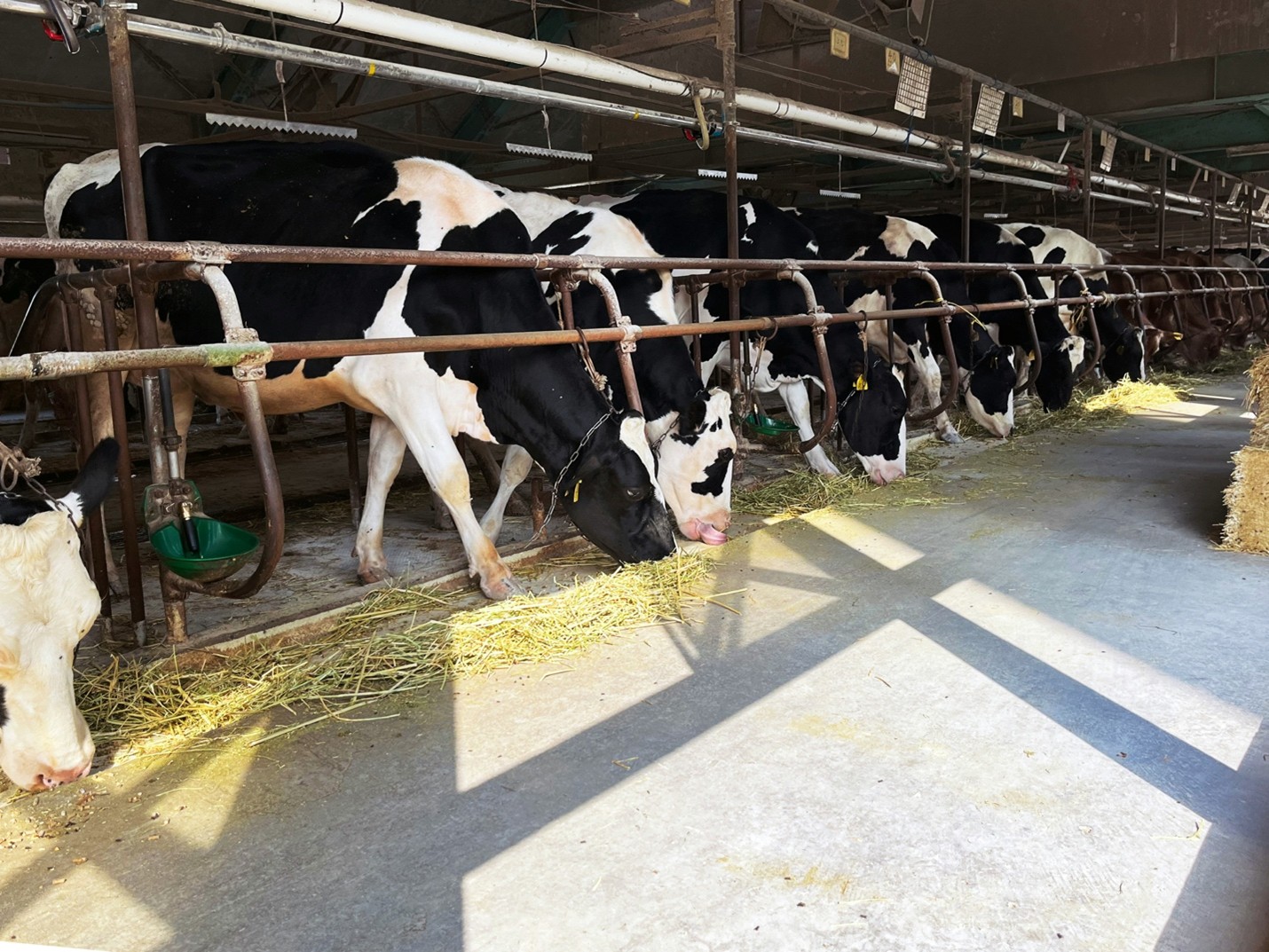
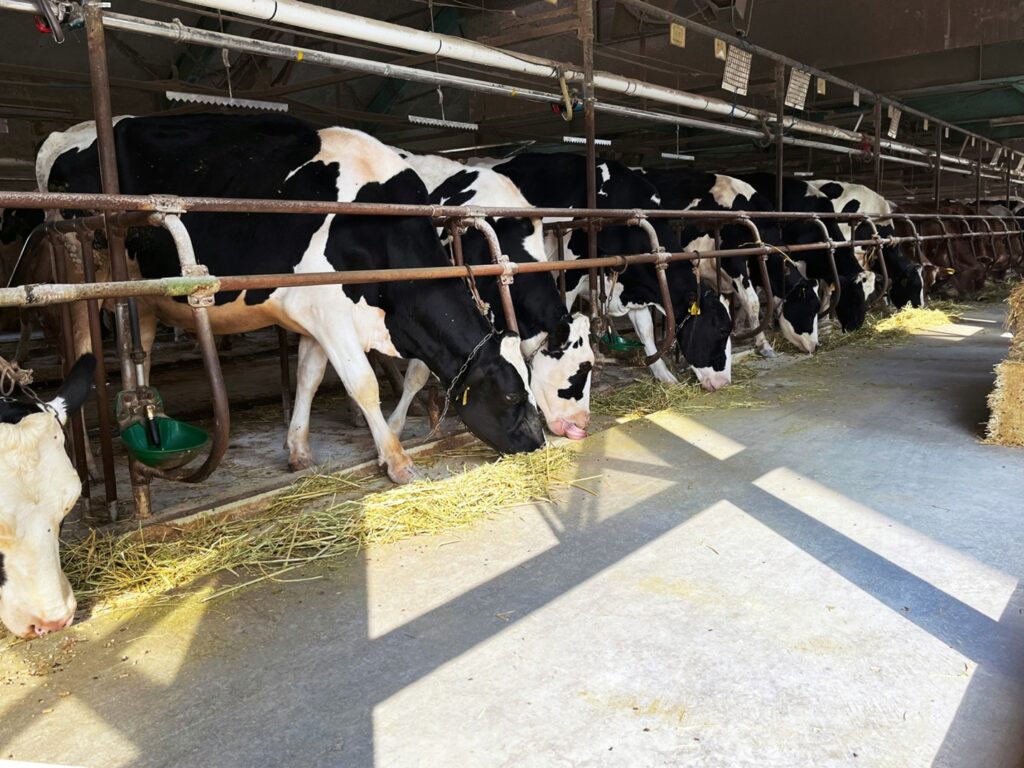
Accordingly, Vermont could use its current animal cruelty law to prevent several types of on-farm confinement such as battery cages and veal crates. Of special relevance to dairy-loving Vermont, though, is the “tie stall.” Tie stalls are a housing scheme in which farmers confine a cow to a narrow stall by a neck collar and chain.[17] Numbers for Vermont alone are unavailable, but as of 2014 between 20% and 42% of cows were kept in tie stalls in the eastern U.S.[18] These are likely conservative estimates for Vermont as the data also showed tie stall usage increased as herd size decreased.[19]
In a potential criminal or civil enforcement action, the State would need to show that confining a cow in a tie stall is a voluntary act done in a manner that is detrimental to the cow’s welfare. Of course, farmers choose to use tie stalls, and thus the voluntary requirement would generally be irrelevant. The question of the cow’s welfare is only slightly more difficult. Farmers can point to certain benefits of tie stall use that are incidental to a lack of outdoor freedom—such as the reduced prevalence of foot lesions.[20] Conversely, the negative effects of tie stalls are more numerous and arguably more severe. Harmful outcomes include disrupted natural lying behaviors, increased physiological stress levels and injury rates, and decreased emotional states.[21] As farmers and governments alike have concluded from similar observations and data, tie stalls are almost certainly more detrimental to cows’ welfare than not.[22]
Harmful or not, however, tie stalls are an accredited animal husbandry convention. Thus, Vermont would still need to show that the customary livestock practice exception should not apply. Here, the exception is void if the farmers using tie stalls have not taken reasonable actions to mitigate cows’ pain and suffering. Considering the statute’s broad purpose, the State could likely show that any act short of replacing tie stalls with free housing is unreasonable. Even if not, farmers would have to submit evidence of concrete steps taken to reduce the harm of tie stalls. Though less desirable than an outright exclusion, this would still reduce extended or permanent tie stall use as outdoor access is the clearest way to reduce negative outcomes.[23]
The State’s inaction on farmed animal cruelty is not solely due to a lack of legal authority. To the contrary, the Vermont Legislature and Supreme Court has made it clear that the law applies to farmers who do not take reasonable steps to reduce harm. This surely implicates the use of objectively detrimental practices like tie stalls, veal crates, or battery cages without further mitigating action. As a result, Vermont’s prosecutors and courts have a powerful tool—should they choose to utilize it—that could improve the lives of vast numbers of animals.
[9] 171 Vt. 534, 536 (2000) (concluding strict liability offense since punishment not severe and provision lacking intent element other provisions include).
[10]Id. at 537, (holding that “the restraint need only be detrimental” and “the perpetrator’s actions be voluntary”).
[11]SeeIn re SM Farms Shop, LLC, 2025 VT 33, ¶ 10 (“[W]e presume that language is inserted advisedly and that the Legislature did not intend to create surplusage.”).
Border Patrol for Biodiversity: The Global Fight Against Invasive Alien Species By Katherine Cantor
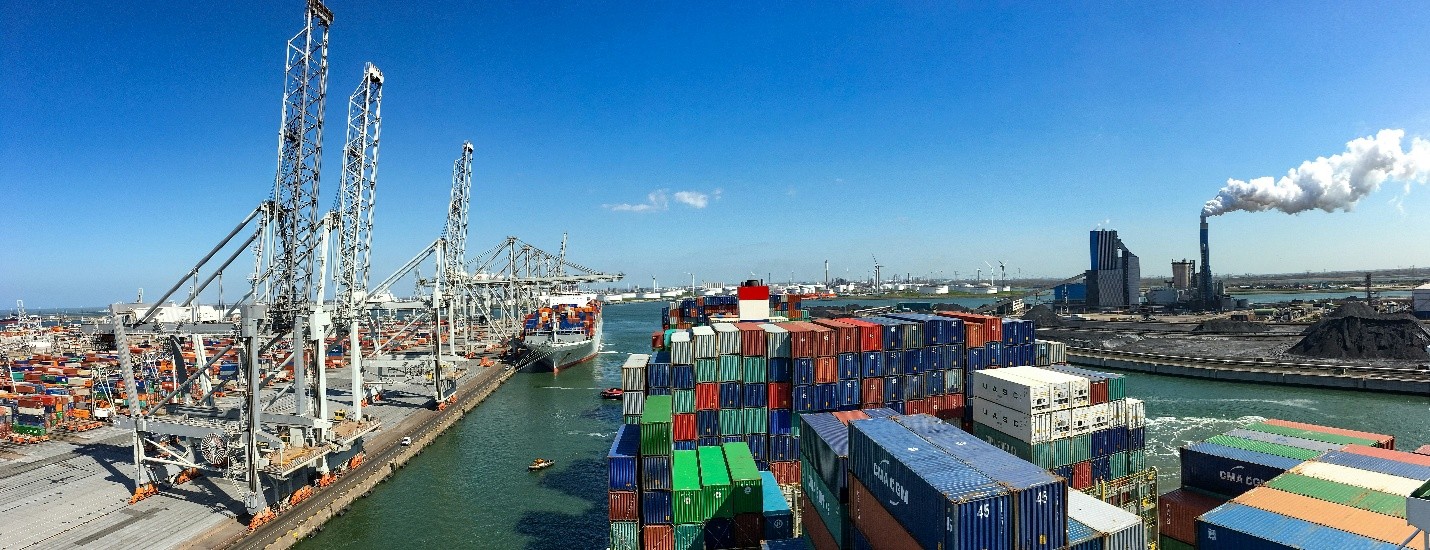
What comes to mind when you think of international trade? Is it wealthy businessmen and crowded shipyards? A lesser-known threat lurks: countries trade more than goods, they trade invasive species. Humans bringing non-native species into new lands is not new.[1] However, international trade has allowed these invasive alien species to lead ecosystem-altering sieges on foreign lands.[2] Much of the trade in invasive species is unintentional: they sneak across borders as secret seeds, parasites, or stuck on soil.[3] The main pathway for invasive alien species into new countries is through horticulture and the nursery trade, sometimes intentionally.[4]
Invasive alien species (IAS) are species brought to a new place by humans, which allows them to overcome barriers the native species face.[5] Unfortunately, this allows IAS to wreak havoc on native ecosystems.[6] IAS result in monetary harm through changes in nutrient cycling, hydrology, and the ecosystem’s ability to deal with disturbances.[7] Introduction of IAS also leads to significant extinctions. Since the 17th century, “invasive alien species played a significant part ‘in nearly 40% of all animal extinctions’” with known causes.[8] This problem is especially widespread in America. Even disregarding overseas territories, the U.S. has some of the highest amounts of IAS worldwide.[9] Invasive species in the international markets are problematic, so what is being done?
International Regulations on Invasive Alien Species
There are many international treaties relevant to IAS.[10] The primary treaty is the Convention on Biological Diversity (CBD). The CBD states that countries should “[p]revent the introduction of, control or eradicate those alien species which threaten ecosystems, habitats or species.”[11] Unfortunately, while the U.S. signed the CBD, they did not ratify it.[12] The International Plant Protection Convention (IPPC) governs “pests”—species that are injurious to plants.[13] It also governs “quarantine pests”—pests that pose an economic threat to the introduced area.[14] The IPPC also developed International Phytosanitary Measures (IPMs), which set rules preventing the spread of pests in international trade.[15] Because the CBD, IPPC, and IPMs are all international, cooperation across countries and various levels of government is imperative. To aid international cooperation, the IPPC introduced an EPhyto program, where countries can electronically send and receive messages and phytosanitary certificates.[16] 127 countries have adopted the EPhyto program.[17] Under the CBD and IPPC, countries have taken the reigns and established their own regimes to protect against IAS.
Case Studies: What Other Countries Are Doing
America operates a host of programs fighting IAS under the IPPC.[18] The main American program carrying out the IPPC is the Animal and Plant Health Inspection Service’s Plant Protection and Quarantine program (APHIS-PPQ).[19] The APHIS-PPQ works to safeguard “against the entry, establishment, and spread of economically and environmentally significant pests.”[20] America is also a part of NAPPO, the North American Plant Protection Organization.[21] Under both the IPPC and NAPPO, the APHIS-PPQ developed their own set of International Phytosanitary Standards (IPS).[22] One specific IPS aims to prevent IAS from hitching a ride in on imported plants. Under that rationale, the NAPPO implemented a regional phytosanitary measure requiring plant-growers to ensure containment and control of possible pests.[23] This measure poses issues: what constitutes non-compliance and how the standard is enforced are both ambiguous.[24] Working internationally to prevent IAS, America also implemented the International Forestry Cooperation Act.[25] This Act allows support to non-U.S. forests through “prevention and control of insects, diseases, and other damaging agents.”[26] While America has many IAS regulations, the issue has not been diminished.[27]
Across the world, Viwa Island of Fiji is a success story in eradicating IAS.[28] This effort was congruent with the Fijian National Biodiversity Action Plan passed under the CBD.[29] The Action Plan notes concerns with IAS and states that it’s a priority for landowners to “use, manage, or eradicate species” that threaten biodiversity.[30] The Viwa Island plan originally started with the intent to eradicate poisonous and invasive cane toads.[31] After hearing community concerns, the project shifted to feral dogs, cats, and rats.[32] Community members were trained and “involved in all decisions and . . . engaged in the full range of management activities.”[33] Because community members were able to choose the IAS most disruptive to them, they were incredibly engaged.[34] Because of their engagement, all chosen species were completely eradicated.[35] The community has since cited increases in native lizards, birds, and crop yields.[36] Importantly, local communities now have the knowledge and skills to support biodiversity and manage IAS.
The goal of these international laws should be preventing IAS from being transported, rapid detection, and efficient eradication.[37] This necessitates global cooperation and enforcement of current laws. There are also moral questions raised in eradicating IAS that laws have not tackled.[38] While many regulations exist, the problem persists.
[1] Philip E. Hulme, Unwelcome exchange: International trade as a direct and indirect driver of biological invasions worldwide, 4 One Earth 666, 666 (2021).
[4] Anna J. Turbelin et al., Mapping the global state of invasive alien species: patterns of invasion and policy responses, 26 Glob. Ecology & Biogeography 78, 78 (2016).
[23] Secretariat of the North American Plant Protection Organization, RSPM 24 Integrated Pest Risk Management Measures for the Importation of Plants for Planting into NAPPO Member Countries 6–7 (2013).
[28] Sypmosia, A “Community” Approach to Invasive Species Management: Some Pacific Case Studies, Managing Vertebrate Invasive Species: Proc. of the USDA Nat’l Wildlife Rsch. Ctr. Symp. 29, 31 (2007).
All Politics is Local: Vermont Municipalities Can and Should Take the Lead in Driving Vermont to Achieve Energy Goals By Aidan Sitler
The Vermont State legislature has made it easier for thermal energy networks to emerge as a viable option for clean heating and cooling in the State. The State set goals to lower energy costs and reduce greenhouse gas emissions in the Global Warming Solutions Act.[1] Currently, Vermont is expected to fall short of attaining these goals.[2] One of the best pathways for Vermont to achieve the target set in the Act is for towns to lead the efforts and establish municipally owned thermal energy networks.
Why Thermal Energy Networks? Thermal energy networks “use a shared network of water-filled pipes that transfer heat in and out of buildings.”[3] Thermal heating and cooling systems work by exchanging heat with the constant temperature below Earth’s surface to regulate the temperature inside the buildings.[4] Thermal energy networks use a heat pump connected to the underground network of pipes. [5] The pipe’s water stores heat regulated by the in-building pumps.[6] The pumps regulate heat as a sink to absorb excess heat during the summer months, and act as a heat source during the colder winter months.[7] The more buildings connected to the same network, the more efficient the exchange and stronger the system.[8] Thermal energy networks can replace traditional heat methods that rely on fossil fuels, such as natural gas, and traditional cooling methods that rely on inefficient air conditioning.[9] In addition to replacing these methods entirely, thermal energy networks can co-exist with traditional heating and cooling methods as a way to supplement the majority of the energy needed to run them.[10] Local municipalities benefit from the build-to-scale model for outfitting neighborhoods and existing infrastructure with thermal energy networks.[11]
Why Local Municipalities? The design and scale of thermal energy networks are what make them ideal for local municipalities to implement and control. Traditionally, in Vermont, any entity wanting to establish a thermal energy network would have to obtain a certificate of public good.[12] The Vermont Public Utility Commission requires a certificate of public good to begin construction.[13] Obtaining a certificate is a lengthy application process that requires many procedural obstacles, reducing a project’s chance of success.[14] Because thermal energy networks are a way of distributing heat among citizens, they would normally be subject to the control and regulations of the public utility commission.[15]
Recently, Vermont enacted Act 142, which changed regulations surrounding public utilities.[16] A major change in the Act is that local municipalities no longer require a certificate of public good or permission from the public utility commission to establish and operate a thermal energy network.[17] The Act now allows municipalities to “have the authority to construct, operate, set rates for, finance, and use eminent domain for thermal energy networks . . . .”[18] This change creates opportunities for municipalities in Vermont to greenlight construction on thermal energy networks. The benefits from the Act for the municipalities include foregoing the application process and regulation from the public utility commission. The benefits from the Act for the citizens come in the form of reduced rates, energy efficiency, and having a voice in their energy needs.
Rate decreases for users in a thermal energy network are reflected in the efficiency of the system. As the network becomes more efficient, the municipality will be able to save on energy costs. These savings can then be passed down as lower rates for every user of the network. Thermal energy networks can also ensure fixed rates for users as they are not subject to traditional fluctuations in cost.[19] These fluctuations occur from the natural gas global market, supply chain, or fuel transportation fees.[20] Instead, thermal energy networks rely on local resources to effectuate heating and cooling.[21]
Citizens will also have opportunities to go directly to the town with concerns and feedback on how their thermal energy network is functioning. This creates a more local, hands-on experience for users of the energy networks in voicing their needs. Inclusion is important for creating an equitable energy system, which is more difficult to do when citizens must navigate the public utility structure.[22] The local management of the thermal energy networks allows for a greater ease of access and accountability in the operations.
For Vermont to get back on track and achieve its goals of lowering energy costs and reducing its greenhouse gas emissions, there needs to be a greater push at the local level. Municipalities are in a unique position to be the best fit owners of a thermal energy network, both within the logistical and regulatory frameworks surrounding the networks. It is time for Vermont towns to take advantage of this new exemption and begin implementing thermal energy networks to address the energy concerns in the State.
Moving Backwards: EPA Aims to Repeal Greenhouse Gas Emission Standards for Power Sector By Matthew Allen
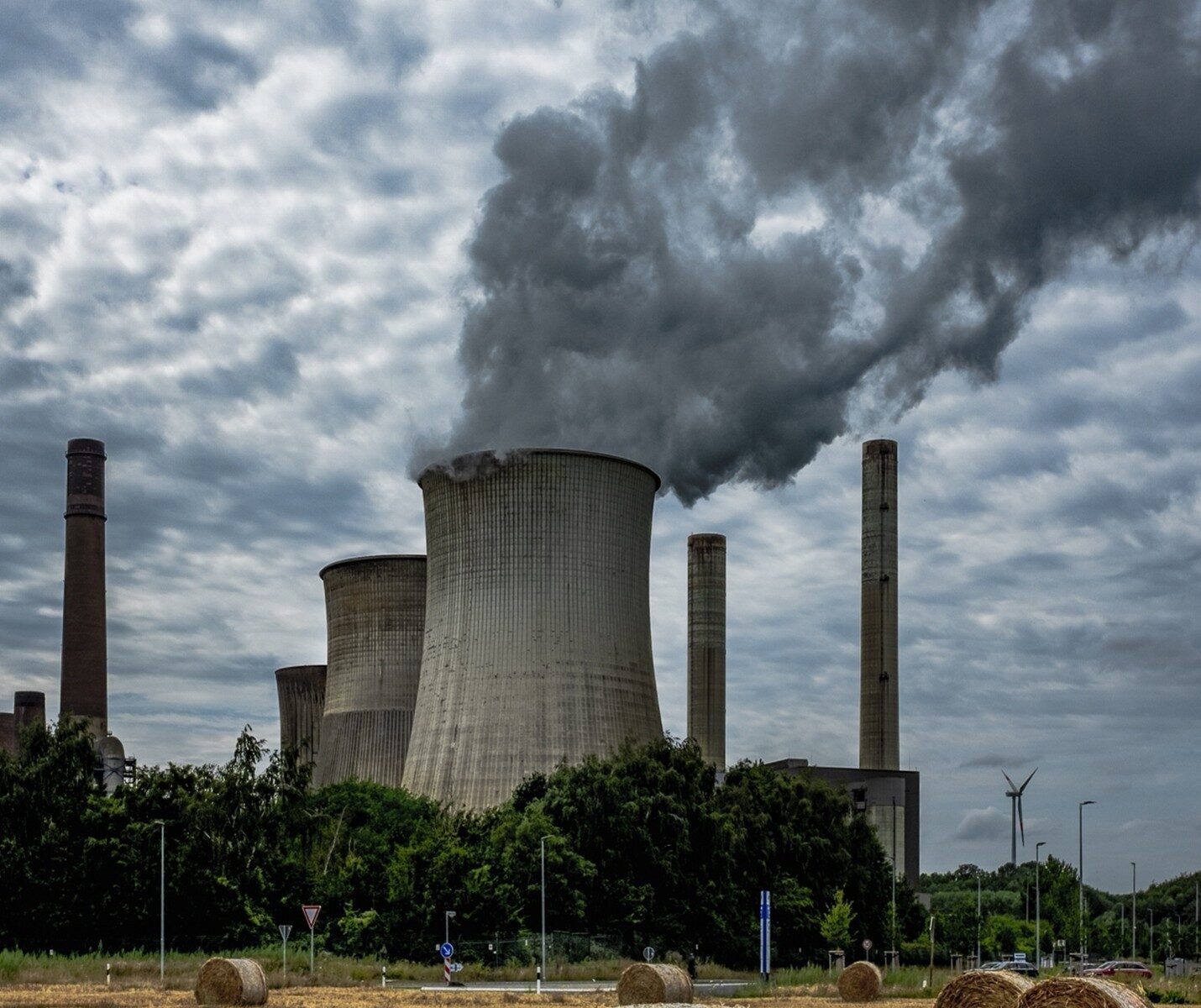
On June 11, 2025, the U.S. Environmental Protection Agency (EPA) proposed to repeal greenhouse gas (GHG) emission standards for fossil-fuel-fired power plants. GHG standards act in direct accordance with the Clean Air Act (CAA).[1] The Supreme Court granted EPA this power after it held in Massachusetts v. EPA that the CAA authorizes EPA to regulate GHG emissions.[2] CAA requires standards for emissions of air pollutants from stationary sources like power plants.[3] EPA Administrator Lee Zeldin indicates this proposal would provide more reliable energy supply and drive down costs which would benefit U.S. citizens.[4] Eliminating GHG emission standards would not only violate the CAA, but would be a direct contradiction to what the EPA seeks to protect.
Administrator Zeldin’s reasoning is no more than a showing for public appeal. EPA proposal looks to neglect years of scientific data, research, and positive changes the CAA has helped to promote. Deregulating GHG emissions could create long lasting environmental and public impacts, reversing decades of effort.[5] This proposal leans more toward corporate and production convenience rather than focusing on EPA’s mission of protection and sustainability.[6] Although the proposal has been submitted, EPA ought to look back at its roots and prevent this injustice from continuing.
EPA is looking to cut the red tape burdening energy production for facilities. Actions like this proposal draw concern for quality of public health and future climate issues. Mary Rice and Amruta Nori-Sarma, Professors of Environmental Health at Harvard University School of Public Health addressed concerns on the long-term effects of deregulating GHG emissions.[7] Greenhouse gases like carbon dioxide (CO₂) and other toxic substances released expose harmful pollutants to the public, especially for children and the elderly.[8]
Not only are short-term air pollution effects of concern, so are long-term climate impacts. GHGs are linked to increased temperatures, more frequent and severe wildfires, and severe weather patterns.[9] Emissions from GHGs like CO₂, methane, and nitrous oxide from burning of fossil fuels and other production are the primary drivers of climate change.[10] Like some health professionals, American Public Health Association (APHA) strongly opposes EPA’s decision for these rollbacks.[11] APHA argues “these rules are especially important, as they would bring environmental and climate justice to historically disadvantaged communities, which face the greatest exposure to pollution from the power sector.”[12] Many private and public organizations have joined in opposition to these rollbacks including, U.S. Climate Alliance, Sabin Center, Health Care Without Harm.[13] All of which have expressed how the repeal of these standards can cause significant harm.[14]
Under the CAA, the Administrator shall include sources that contributes significantly to air pollution resulting in possible endangerment to public health or welfare.[15] In Massachusetts v. EPA, the Court originally only refers to motor vehicles or “moving” sources as a necessary regulated issue.[16] That holding addresses key distinctions that relied upon statutory interpretation of the CAA. Under CAA, a pollutant must reasonably be anticipated to endanger public health or welfare.[17] EPA argues that GHG emissions from fossil-fuel-fired power plants do not contribute to dangerous air pollution.[18] EPA also proposes that it is the responsibility of the agency to prove the emissions are dangerous prior to issuing regulations.[19]
Removing the regulation standards opens the door for power plants to emit anything and everything they want without accountability. EPA estimates this proposal would save over $15 billion on regulatory costs over the course of two decades.[20] Not only does EPA believe GHG emissions play a little part in climate change, the proposal does not address any future public health concerns of these rollbacks.[21] A repeal of emission standards would constitute a clear violation of CAA. [22] New or previously existing facilities would no longer be enforced to regulate their emissions.[23]
EPA’s proposal is based on a new scientific and economic framework that contradicts the Endangerment Finding codified in 2009.[24] The Endangerment Finding states that regulation must be prescribed for any motor vehicle that emits air pollutants. The Endangerment Finding also states that regulations can be set if emissions contribute to the endangerment of public welfare.[25] EPA’s proposal to remove the Endangerment Finding is supported by the Department of Energy, where multiple scientists challenged the validity of the climate crisis.[26] The scientists claim that models and experience suggest that CO₂ “might be less damaging economically than commonly believed, and excessive mitigation policies could prove more detrimental” to economic and environmental safety.[27] The authors of the Greenhouse Gas Emissions Review exhibit skeptic ideology regarding climate change.[28] An administrative push towards less regulatory restrictions and skepticism of climate change could play a major role on why the EPA is utilizing this report. Regardless, the objective to repeal the Endangerment Finding directly correlates to GHG emissions under CAA. A rollback of these necessary standards could cause legal and environmental uproar.
EPA challenges the established authority under CAA to set emission standards. EPA establishes the standard of performance which creates a standard that reflects the “degree of emission limitation.”[29] Subsequently, this standard represents the best system of emission reduction and monitoring to prevent poor quality of health and environmental impacts. Even with emission standards in place, facilities are still meeting energy requirements.[30] This standard directly correlates with the administrative power to enforce the regulations.[31] EPA’s proposal wishes to reshape the meaning of standard of performance to allow EPA more leeway with emissions regulations.[32] In turn, the administration is attempting to remove current authority established within CAA that authorizes EPA to establish emission standards. EPA’s argument stems from seeking to eliminate regulatory roadblocks that prohibit efficiency.[33] While this action may streamline regulatory process, the proposal creates an open market for facilities to ignore previous standards. GHG emission standards established a sense of responsibility for emitters to protect the environment and public welfare. This proposal could negate years of challenging work and corporate accountability.
CAA stands as the foundational element to authorize EPA to regulate emissions from stationery and mobile sources. This aligns with the protection of public health and welfare.[34] EPA should not look at flawed science or misrepresentations of foundational statutes. EPA should focus on sustainability and not jeopardizing the safety of the community. Courts should continue to act against rash decisions, like this proposal, which deregulate key initiatives instead of protecting our environment.
[1] Repeal of Greenhouse Gas Emissions Standards for Fossil Fuel-Fired Electric Generating Units, 90 Fed. Reg. 25752 (proposed June 17, 2025) (to be codified at 40 C.F.R. pt. 60).
[2] Massachusetts v. EPA, 549 U.S. 497, 521 (2007).
[18] Repeal of Greenhouse Gas Emissions Standards for Fossil Fuel-Fired Electric Generating Units, 90 Fed. Reg. 25752 (proposed June 17, 2025) (to be codified at 40 C.F.R. pt. 60).
[21] Repeal of Greenhouse Gas Emissions Standards for Fossil Fuel-Fired Electric Generating Units, 90 Fed. Reg. 25752 (proposed June 17, 2025) (to be codified at 40 C.F.R. pt. 60).
[32] Repeal of Greenhouse Gas Emissions Standards for Fossil Fuel-Fired Electric Generating Units, 90 Fed. Reg. 25752 (proposed June 17, 2025) (to be codified at 40 C.F.R. pt. 60).
Withdrawing from the UN Climate Negotiations: Cascading Mistakes from the Trump Administration By Rachel Westrate
No one was particularly shocked when one of President Trump’s first acts upon returning to office on January 20, 2025 was to sign an executive order directing the State Department to withdraw from the Paris Agreement on climate change. After all, Trump pulled out of the Agreement during his first term, only for the United States to re-join the Agreement under the leadership of President Joe Biden in 2021. Now, a new January 7, 2026 Presidential Memorandum demands the U.S. withdraw from the parent treaty of the Paris Agreement—the United Nations Framework Convention on Climate Change (UNFCCC)—as well as 30 other United Nations entities and 35 non-U.N. organizations.
Withdrawal from the UNFCCC will make the United States the only U.N. member state that does not participate in the international climate treaty. For those who care about the health of our planet, U.S. foreign relations, or general international order, this move is deeply troubling. It is unsurprising that this Administration would take such drastic measures to prevent the United States from participating in the international climate conversation. But it is also a profoundly un-strategic move by the Trump Administration, given both their keen interest in international energy trends and ongoing domestic litigation against state climate laws.
This blog will provide a brief background on the international climate regime, summarize the legal speculations around the U.S. withdrawal from the UNFCCC, and discuss the implications for Trump’s international and domestic priorities.
Background: the UNFCCC & International Climate Negotiations
The United States was the first industrialized country and the fourth country overall to join the UNFCCC, after ratification by the Senate and signature by Republican President George H.W. Bush. As the first and still the most significant multinational climate treaty, the UNFCCC establishes the framework under which countries cooperate to address climate change. That framework entails an annual Conferences of the Parties (COPs) where UNFCCC member states negotiate “legal instruments” or “protocols” to help achieve the UNFCCC’s goal of stabilizing greenhouse gas concentrations in our atmosphere.
Countries have negotiated and adopted two main instruments under the UNFCCC: the 1997 Kyoto Protocol and the 2015 Paris Agreement. The United States signed the Kyoto Protocol in 1998. But the Senate never ratified that treaty, because it called for binding emissions reductions in developed countries without imposing similar obligations on developing countries (the Byrd-Hagel Resolution expressing the Senate’s distaste for Kyoto passed with a vote of 95 – 0). As soon as it became clear that the U.S., the largest annual emitter of greenhouse gases at the time, would not ratify the Kyoto Protocol, negotiations began anew under the UNFCCC to work toward an agreement that would be more universally accepted.
The result was the Paris Agreement. Paris, unlike Kyoto, does not mandate emission cuts from any country. Instead, it establishes a cooperative framework under which countries work together to limit warming to under 2 degrees Celsius by creating and submitting plans to reduce national greenhouse gas emissions (called Nationally Determined Contributions, or NDCs). Parties to the Paris Agreement must also submit annual reports on their greenhouse gas emissions. Aside from those reporting obligations, though, the Paris Agreement is an entirely voluntary instrument, relying on bottom-up, domestic action within countries to address climate change—an evolution from the top-down, mandatory emissions reductions required under the Kyoto Protocol. 195 member countries to the UNFCCC adopted the Paris Agreement in 2015, and President Obama used his executive authority to ratify the Agreement on behalf of the United States in 2016.
President Trump withdrew from the Paris Agreement upon taking office, with the U.S. withdrawal becoming effective in 2020. The U.S. then rejoined under President Biden in 2021, only to deposit a notice of withdrawal from the Paris Agreement with the Office of the U.N. Secretary General on January 27, 2025, shortly into Trump’s second term. The U.S. withdrawal will become effective one year from that date, on January 27, 2026. (For a full timeline and guide, see NRDC’s Paris Climate Agreement: Everything You Need to Know).
Legal Implications of Withdrawing from the UNFCCC
While a President can unilaterally withdraw from the Paris Agreement (given that President Obama unilaterally entered it in 2016), it is a matter of legal debate whether the same is true of the UNFCCC. During the last Trump Administration, legal scholars built a body of work exploring this question. Professor Harold Koh published a 2018 essay arguing the President does not have the authority to unilaterally terminate or withdraw from any international agreement. Professor Jean Galbraith argued in a law review article that if a President unilaterally withdraws from a Senate-ratified treaty, the action does not negate the Senate’s initial advice and consent, and a future President could unilaterally rejoin the same treaty without seeking Senate re-authorization. But there is no Supreme Court precedent on unilateral withdrawal or rejoining of Senate-ratified treaties, and so the question remains up for debate.
This time around, the climate legal community has been quick to opine on whether or not the President can withdraw from the Framework Convention without consulting Congress and what withdrawal might mean for U.S. participation under a more climate-friendly future administration. Former U.S. climate negotiator Sue Biniaz and Professor Galbraith explained the international and domestic process of withdraw and reiterated their theory of rejoining without additional Senate consent. Carbon Brief collected experts’ thoughts on withdrawal, rejoining, and practical changes to the climate negotiations absent U.S. participation, detailing the legal uncertainty of the move and analogizing to other international organizations the U.S. has left and rejoined. Law Professor Dan Farber suggested that the U.S. may not even need to be a party to the UNFCCC to play a role in the Paris Agreement. The Executive Secretary of the UNFCCC issued a statement on Thursday, January 8th noting that “the doors remain open for the US to reenter in the future”—but what that looks like legally is anyone’s guess.
We have yet to see if any litigation will be filed against the Trump Administration for this latest action—and whether any potential litigation may provide us with a definitive answer.
International Implications
By withdrawing from Paris, the United States will no longer be required to submit an NDC, nor will it submit yearly reports on domestic emissions (although, despite the withdrawal not officially occurring until 2026, the Trump Administration failed to submit the data in 2025). U.S. funding to the international climate organizations has ceased, including the UNFCCC and the Green Climate Fund (GCF).
But the U.S. withdrawal also means it can no longer participate in negotiations as a party and does not have the right to vote, which in turn means the U.S. will no longer have a say on topics that seem central to the Trump Administration’s policy agenda. In recent years, multinational climate negotiations have increasingly seen calls for an international roadmap to phase out fossil fuels, which would jeopardize the Administration’s goal of exporting domestic fossil fuels. The U.S. has already used its influence in other spheres to weaken environmental language coming out of the U.N., and it seems strange the Administration is willing to so easily give up the opportunity to thwart international climate progress.
Pulling out of the UNFCCC also means that future decisions and agreements will not reflect the interests or priorities of the United States—and are likely to be more heavily influenced by other big players. That includes China, which is rapidly expanding its global influence and renewable energy markets, and the European Union, which usually favors a more top-down, regulatory approach to addressing climate change in comparison to U.S.-favored market-based, voluntary approaches (for evidence of the U.S.-EU tension, see recently released State Department papers detailing the lead up to the Paris summit).
But what is bad for the Trump Administration could well be good for people and the planet. The lack of the presence of the United States, and particularly the Trump Administration, could leave room for more innovation and progress in the climate talks, as U.S. positions (in both Republican and Democratic Administrations) against mandatory emissions reductions, climate finance contributions, and phase-out of fossil fuel subsidies have frustrated negotiations in the past. While deep divides remain among countries party to the UNFCCC and the Paris Agreement, the power vacuum left by the U.S. may create an opportunity for new players and alliances to support ideas that would have previously been considered dead on arrival.
The folly of the Trump Administration and the potential for new movement in the climate negotiations, however, are unlikely to outweigh the staggering loss of the U.S. withdrawing from the UNFCCC. A climate process without the largest historical emitter of greenhouse gases, the second largest current emitter of GHGs, and the world’s largest economy can only achieve so much when climate change is a collective action problem. And while the international climate negotiations process will not break down without the participation of the U.S., the country has been a major player for the last thirty years and often a broker of compromise.
Beyond this Administration, if decisions and agreements coming out of the COPs are not reflective of U.S. priorities and political landscape, it may also make it more difficult for the U.S. to rejoin in the future. President Obama was able to unilaterally join the Paris Agreement because domestic legislation and authority already existed to allow the country to comply with obligations under the agreement—and U.S. negotiators worked to design the agreement with this in mind. Even in the final hours of the negotiations over the Paris Agreement, State Department lawyers had to lobby for a one-word change that threatened the U.S.’s ability to support the outcome. Without U.S. input and pressure, it is possible for the negotiations to produce outcomes that even a climate-friendly Administration would be unable to rejoin without action from the Congress.
Domestic Implications: Inconsistencies in Ongoing Litigation
Perhaps especially cofounding is the Trump Administration’s decision to withdraw from the UNFCCC while relying on U.S. membership in the organization to justify ongoing domestic litigation against state climate laws. Both Vermont and New York passed climate superfund acts in 2024, which require payments from entities that emitted large amounts of greenhouse gases in the past several decades to help pay for climate adaptation projects in the states. On May 1, 2025, the United States of America and the United States Environmental Protection Agency filed suit against Vermont and New York, claiming (among other things) that the climate superfund laws are preempted by the federal government’s foreign affairs power.
The basis for the lawsuits overall is fundamentally flawed, given that the climate superfund laws do not regulate greenhouse gas emissions, states have both a right and responsibility to protect their citizens and environment, and both the UNFCCC and Paris Agreement support subnational action. But putting aside the Trump Administration’s mischaracterization of the laws and misunderstanding of national and international law, withdrawing from the UNFCCC fatally undermines their arguments that the federal government’s participation in the UNFCCC is what preempts states from acting on climate.
In its complaint against Vermont, the United States argues that “[b]y adopting the Framework Convention, the federal government undertook to formulate foreign policy” on greenhouse gases. It characterizes Trump’s decision to withdraw from the Paris Agreement as a foreign policy decision because Trump wants to “put the interests of the American people first in negotiating the terms of any future treaty to implement the” UNFCCC. The Vermont Act, the brief claims, “interferes with… the United States’ participation in the” UNFCCC. In a subsequent brief, the Department of Justice also argues that state climate superfund statutes conflict with the 1987 Global Climate Protection Act, in which Congress directed the President to “‘work towards multilateral agreements’ on greenhouse gas emissions.”
By withdrawing from the UNFCCC, the Trump Administration has pulled the rug out from under those arguments. The Administration has ensured that the United States will not be negotiating any future treaty to implement the UNFCCC or to carry out its obligations under the Global Climate Protection Act. By abdicating its role in formulating the American climate policy, the Trump Administration may well have cleared the way for states to fill the void.
The news from January 7th is, without a doubt, a major setback for the international climate negotiations. But it is also, as U.N. climate chief Simon Steill said, a “colossal own goal” for the United States and the Trump Administration in their quest to influence international and domestic climate priorities in the coming years.