
Preserving Our Playground: The Significance of State Stewardship
By Maddy Barney
Land conservation is a consistent bipartisan priority in America.[1] Conservation brings ideologies together because of widespread historical support for maintaining public lands for all to enjoy.[2] Outdoor recreationists represent important stakeholders in land conservation by consistently using public lands.[3] Outdoor recreation and land conservation go hand in hand.[4] “Protecting . . . [and] defending public lands is especially important to the outdoor recreation community.”[5] Almost a third of the nation’s land is held by the United States’ government entities and most public land is managed for “conservation, recreation, and education.”[6] Given the influence the government exercises over public lands, it is of critical importance that lands open for recreation are managed and created intentionally.[7] Balancing dual goals of public recreation and conservation can raise substantial challenges, but successful projects bring generational benefits.[8]
I. Challenges Balancing Outdoor Recreation and Land Conservation
Although land conservation directly supports outdoor recreation, projects must incorporate sustainable goals to prevent disrupting the delicate environmental balance.[9] Land conserved for outdoor recreation can raise several challenges.[10] There is limited public awareness on the conflict between conservation and recreation—especially when introducing high volumes of people into outdoor spaces.[11] Visitors to protected areas can degrade local “vegetation, soil, water, wildlife, and cultural resources.”[12] Negative effects vary by site and activity.[13] Effects from recreationists are “not readily apparent to the individual” but are considered by land managers daily.[14]
Land managers must overcome significant hurdles governing conserved areas and balancing diverse interests.[15] Land managers face a lack of funding, threats of energy development leases, overcrowding, and climate change impacts.[16] Generally, ecological data that guides informed decision making is lacking.[17] The lack of necessary data makes it especially difficult for public agencies to defend their management decisions under scrutiny.[18] Lastly, public agencies have limited resources to manage public lands, with 75% of land managers citing inadequate funding.[19] Conservation management challenges due to a lack of resources were exacerbated this year given the federal government’s mass firing of park employees and continual attacks on land conservation.[20]
II. Who’s making land conservation decisions anyway?
The federal government has long prioritized land conservation.[21] Conservation stems back to “colonial-era policies” focused on extraction rather than protection.[22] Additionally, “conservation areas were historically established as ways to rid land of its indigenous inhabitants.”[23] Western expansion and the early establishment of national parks put land into the hands of the centralized government.[24] As extraction continued, conservation concerns arose, and President Roosevelt created the U.S. Forest Service, which established 230 million acres of public land.[25] The public’s awareness of environmental concerns steadily grew, making space for the first Earth Day in 1970.[26] During this pro-conservation period, President Reagan’s terms “marked a growing polarization” in American politics. But still, public land protection remained a bipartisan goal.[27] Congress continued enacting widely supported conservation legislation and started adjusting management practices to better meet modern protection objectives, including recreation and biodiversity.[28] President Trump, despite approving the passage of the Great American Outdoors Act, attempts to change the public lands rhetoric and threatens the classification of “conservation” as a valid land use.[29]
When the federal government threatens public lands, states must take action.[30] States can continue preserving conservation areas despite federal priorities straying.[31] Luckily, local municipalities majorly control land use decisions anyway.[32] States delegate authority to individual municipalities through enacting legislation “that empowers land use decision making to individual towns or cities.”[33] Since the seminal case Euclid, zoning has evolved from regulating the construction and location of buildings to involve more attenuated goals such as land conservation, sustainable development, and affordable housing developments.[34] States and their municipalities are in strong positions to set specific conservation goals that best serve the health, safety, and welfare of its residents through outdoor recreation.[35] Despite federal reform to conservation, there are opportunities to effectively conserve land at the local level. Outdoor recreation represents but one strategy opening the door to new and improved state-led conservation projects.[36]
III. Vermont’s Model State Conservation Project
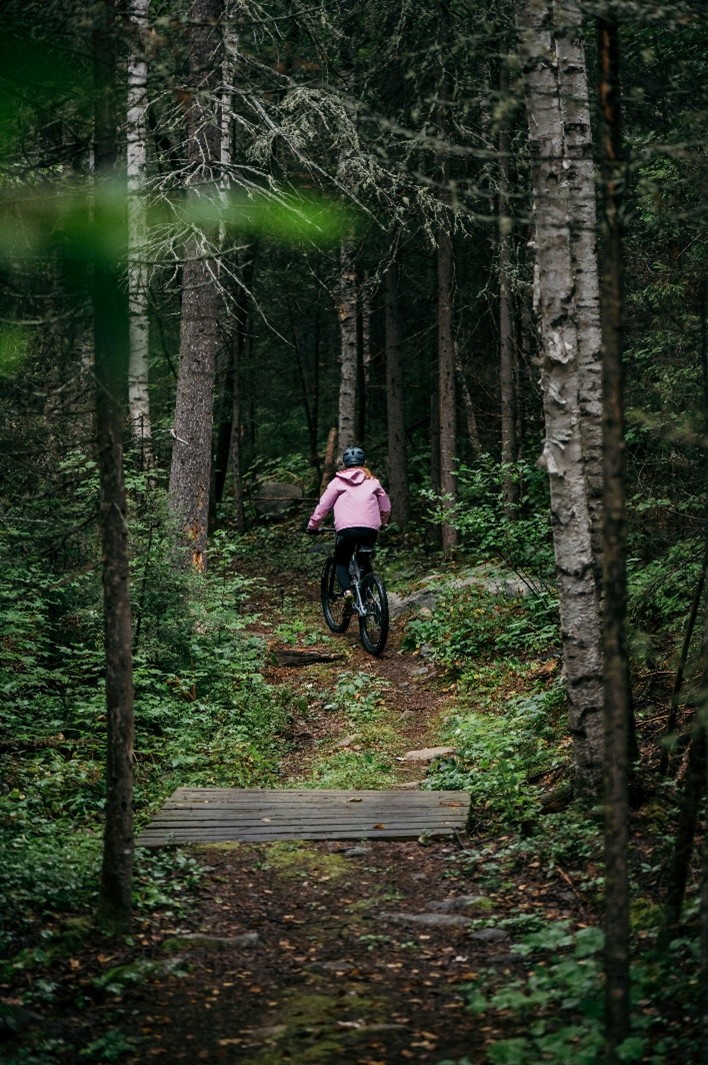
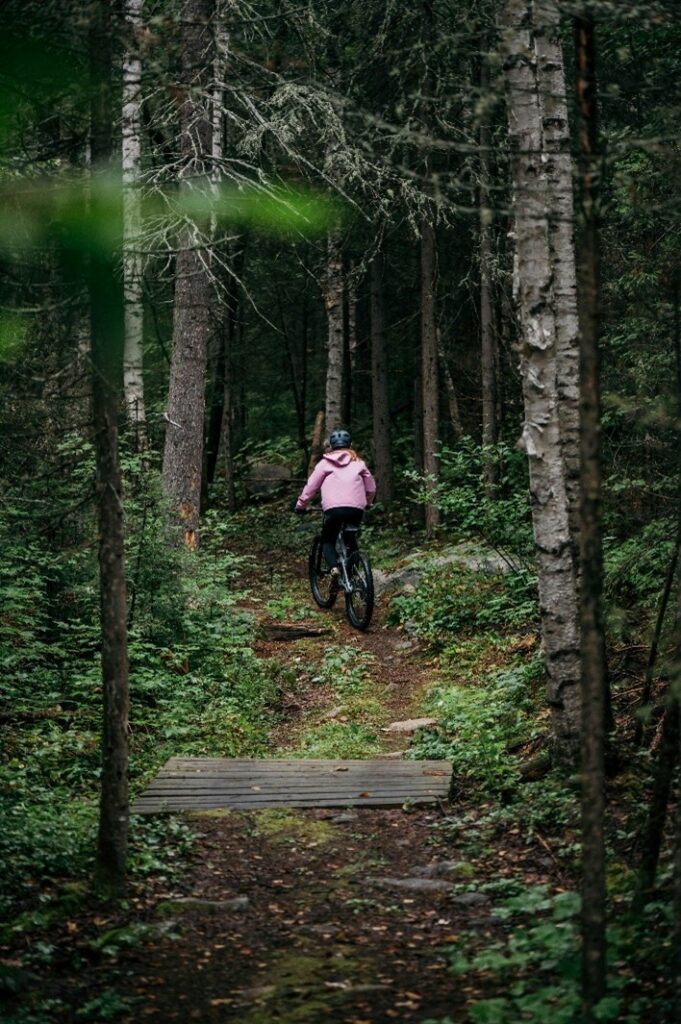
A special conservation project is coming to fruition in Vermont, aligning the interests of outdoor recreationists and conservationists alike. Vermont is implementing ne of the largest conservation projects in the Northeast to date—the “Velomont.”[37] The Velomont is a huge trail connection project designed to improve local land conservation and encourage outdoor recreation.[38] The Green Mountain State’s expansive conservation project “will represent the largest hut-supported trail network in the U.S.” and conserve 214,000 unprotected acres of land.[39] The Velomont represents a massive collaboration between nonprofit organizations, state agencies, and private landowners.[40] This is not just a concept—the vision arose in 2016 and official planning began in 2023.[41] The “Velomont Vision Plan” lays out numerous goals that guide decision making on the statewide effort.[42]
The Velomont project is a model for intentional land conservation.[43] The Velomont addresses concerns from competing interests while outlining the benefits of such a massive project.[44] Outdoor recreation was a primary motivator of the Velomont. The ancillary motivators of protecting migratory wildlife corridors, boosting economic activity in small rural towns, and promoting public health are just as significant for the State of Vermont.[45] Additionally, this trail connection project creates a contiguous tract of conserved land the length of the state.[46] Generally, the distribution of conserved land is a result of convenience rather than strategic planning.[47] The Velomont represents a methodical approach to conservation that will benefit future generations of people and biodiversity.[48] States should follow Vermont’s lead by intentionally linking outdoor recreation with land use to create new opportunities for recreation and ecological protection in contiguous strips of conserved land. The Velomont Vision Plan even lays out the process for state organizations to develop similar projects.[49]
IV. Why Should States Follow Vermont’s Lead?
Despite challenges with local land conservation and federal cuts to conservation initiatives, it remains a valid interest to prioritize. Outdoor recreation is a primary use of public lands and a major contributor to the U.S. economy.[50] Public lands are the foundation of America’s $1.2 trillion outdoor recreation industry, which “accounted for 2.2 percent of the nation’s gross domestic product” in 2017.[51] Despite numerous economic benefits accompanying outdoor recreation, conservation efforts also encourage healthy populations and environments.[52] The current American reality, however, is that “less than half of people in the United States live within half a mile of a park.”[53] Inequitable access to public lands can be addressed through local and state initiatives. A well-designed, accessible conservation area offers endless benefits.[54] Individuals recreating outdoors experience lower cortisol levels, healthier heart functions, decreased likelihood of developing depression, and a closer connection to the community.[55] In addition to health benefits, green spaces have been shown to encourage social interaction in communal spaces.[56]
In 2024, 81 million people recreated on public lands.[57] The millions of people visiting public lands contributed to the local economy and connected with the community.[58] Outdoor enthusiasts may not align themselves on issues pertaining to how land is used, but all agree that access to conserved land is a necessity.[59] The ultimate goal of protecting everyone’s right to recreate on public lands requires collective action. Conservation issues can result in alignment because American land conservation is an “inherently bipartisan issue.”[60]
Conclusion
State conservation projects are crucial to protect public lands during this period in American politics. Conservation projects can receive widespread support among voters.[61] Outdoor recreation is an excellent strategy to advocate for conserving tracts of land.[62] Recreationists are rallying for threats to America’s public lands—public comments on recission of the roadless rule alone, which protect remaining truly wild places, reached 625,749.[63] The latest attack on public lands comes from President Trump’s attempt to de-recognize conservation as a valid land use.[64] Dissembling an inherently American ideal of protecting wild places for current and future generations is an issue that abridges ideological divides.[65] Hunters, fishers, mountain-bikers, hikers, and off-roaders all share a common interest in maintaining access to conserved areas despite ideological disagreements.
Moving forward, state legislators should genuinely consider similar projects to the Velomont that blend outdoor recreation and land conservation intentionally. There are efficient strategies to manage land conservation that states can utilize to minimize negative impacts to the environment.[66] Indigenous communities have extensive knowledge of “wildlife migration patterns, seasonal changes, and ecosystem balance” to develop community centered conservation.[67] States can adopt “strict carrying capacities” on recreation areas to prevent overcrowding and erosion.[68] Land conserved for outdoor recreation must include community engagement and careful planning to protect access for current and future generations.[69]
[1] Sabirah Abdus-Sabur, The History of US Conservation, Dogwood All. (May 8, 2025), https://dogwoodalliance.org/2025/05/the-history-of-us-conservation/; Kate Wall, the nature of conservation is inherently bipartisan, IFAW (Dec. 15, 2020), https://www.ifaw.org/people/opinions/conservation-bipartisan.
[2] Kate Wall, the nature of conservation is inherently bipartisan, IFAW (Dec. 15, 2020), https://www.ifaw.org/people/opinions/conservation-bipartisan; John Leshy, American Public Lands: A Sketch of Their Political History and Future Challenges, 62 Nat. Res. J. 341, 343 (2022) (“Americans of all persuasions have come to agree on the importance of protecting [public] lands.”).
[3] Sarah L. Thomas & Sarah E. Reed, Entrenched ties between outdoor recreation and conservation pose challenges for sustainable land management, 14 Env’t Rsch. Letters, No. 11 (Nov. 14, 2019).
[4] Appalachian Mountain Club, Four Key Ties Between Conservation and Recreation, https://www.outdoors.org/resources/amc-outdoors/conservation-and-climate/four-key-ties-between-conservation-and-recreation/ (last visited Sept. 24, 2025).
[5] Adrian Ballinger & Sam Kieckhefer, Outdoor Alliance: Conservation Powered by Outdoor Recreation, The Duffle Shuffle Podcast (Sept. 24, 2025), https://www.duffelshufflepodcast.com/episodes/38-outdoor-alliance.
[6] John Leshy, American Public Lands: A Sketch of Their Political History and Future Challenges, 62 Nat. Res. J. 341, 341 (2022) (“[I]ndustrial uses like mining, drilling, and large-scale commercial logging take place on a relatively small proportion of Forest Service and BLM lands.”).
[7] Why Connectivity Matters to Wildlife—And People, WWF, https://www.worldwildlife.org/stories/why-connectivity-matters-to-wildlife-and-people (last visited Oct. 9, 2025) (“protected areas in isolation aren’t enough”).
[8] Sarah L. Thomas & Sarah E. Reed, Entrenched ties between outdoor recreation and conservation pose challenges for sustainable land management, 14 Env’t Rsch. Letters, No. 11 (Nov. 14, 2019).
[9] Id.
[10] Id.
[11] Id.; Roger L. Moore & Beverly L. Driver, Introduction to Outdoor Recreation: Providing and Managing Natural Resource Based Opportunities 209 (Venture Publishing 2005).
[12] Jeffery L. Marion, Impacts to Wildlife: Managing Visitors and Resources to Protect Wildlife, Interagency Visitor Use Mgmt. Council, Nat’l Park Serv. (March 2019).
[13] Roger L. Moore & Beverly L. Driver, Introduction to Outdoor Recreation: Providing and Managing Natural Resource Based Opportunities, 214 (Venture Publishing 2005); See Sierra Forest Legacy, Off-road Vehicles, https://www.sierraforestlegacy.org/FC_FireForestEcology/TFH_OHV.php (last visited Oct. 10, 2025) (outlining substantial negative impacts from off-road vehicles).
[14] Sarah L. Thomas & Sarah E. Reed, Entrenched ties between outdoor recreation and conservation pose challenges for sustainable land management, 14 Env’t Rsch. Letters, No. 11 (Nov. 14, 2019).
[15] Id.
[16] The Wilderness Society, Current Issues in Public Lands Management in, Public Lands Curriculum (Sept. 13, 2022), https://www.wilderness.org/articles/article/public-lands-united-states-curriculum.
[17] Sarah L. Thomas & Sarah E. Reed, Entrenched ties between outdoor recreation and conservation pose challenges for sustainable land management, 14 Env’t Rsch. Letters, No.11 (Nov. 14, 2019).
[18] Id.
[19] Id.
[20] Matthew Daly, Trump’s firing of 1,000 national park workers raises concerns about maintenance and operating hours, AP News (Feb. 19, 2025), https://apnews.com/article/trump-national-park-firings-doge-grand-teton-baedee0a748a6374eafb6f95aac5dadc; Matthew Brown, Trump administration wants to cancel Biden-era rule that made conservation a ‘use’ of public land, AP News (Sept. 10, 2025), https://apnews.com/article/public-lands-conservation-drilling-burgum-5e08bfa715d692ad2ca5184504569748.
[21] See generally John Leshy, American Public Lands: A Sketch of Their Political History and Future Challenges, 62 Nat. Res. J. 341 (2022) (“[P]oliticians have time and time again joined hands regardless of political party to hold and protect more lands in U.S. ownership.”).
[22] Lucas Kaososi, The Human Cost of Conservation: Recognizing Indigenous Rights in Wildlife Protection, Cultural Survival (Mar. 3, 2025), https://www.culturalsurvival.org/news/human-cost-conservation-recognizing-indigenous-rights-wildlife-protection.
[23] Quinn Luthy, How Conservation Contributes to the Displacement of Indigenous People, Earth.org (Mar. 8, 2023), https://earth.org/conservation-indigenous-people/.
[24] Sabirah Abdus-Sabur, History of US Conservation, Dogwood All. (May 8, 2025), https://dogwoodalliance.org/2025/05/the-history-of-us-conservation/.
[25] Id.
[26] Id.
[27] John Leshy, American Public Lands: A Sketch of Their Political History and Future Challenges, 62 Nat. Res. J. 341, 352 (2022) (“Reagan signed legislation adding more than eight million acres to the national wilderness system, the largest addition in any single year since the Wilderness Act.”).
[28] Id. at 353.
[29] Great American Outdoors Act, Pub. L. No. 116-152, 134 Stat. 682 (2020) (establishing dedicated funds for use by National Parks and Public Lands); Great American Outdoors Act, U.S. Dep’t of the Interior, https://www.doi.gov/gaoa (last visited Oct. 10, 2025) (describing the Great American Outdoors Act as necessary to address overdue maintenance needs); Rescission of Conservation and Landscape Health Rule, 90 Fed. Reg. 43990 (Sept. 11, 2025) (to be codified at 43 C.F.R. pts. 1600, 6100).
[30] Matthew Brown, Trump administration wants to cancel Biden-era rule that made conservation a ‘use’ of public land, AP News (Sept. 10, 2025), https://apnews.com/article/public-lands-conservation-drilling-burgum-5e08bfa715d692ad2ca5184504569748.
[31] Id.
[32] Euclid v. Ambler Realty Co., 272 U.S. 365, 397 (1926) (upholding the validity of local land use decisions related to public health, safety, and welfare); Eliza Terziev, The sunny side of the street: Unveiling strides in zoning reform, reason Found. (June 24, 2024), https://reason.org/commentary/the-sunny-side-of-the-street-unveiling-strides-in-zoning-reform/.
[33] Euclid, 272 U.S. at 389–90.
[34] Eliza Terziev, The sunny side of the street: Unveiling strides in zoning reform, Reason Found. (June 24, 2024), https://reason.org/commentary/the-sunny-side-of-the-street-unveiling-strides-in-zoning-reform/; Carol A. Rolf, Zoning Laws, EBSCO (2023), https://www.ebsco.com/research-starters/law/zoning-laws.
[35] Euclid, 272 U.S. at 387 (recognizing the flexibility of zoning to address community specific issues); American Trails, Statewide Comprehensive Outdoor Recreation Plans (SCORPs) (Jan. 12, 2019), https://www.americantrails.org/resources/statewide-comprehensive-outdoor-recreation-plans-scorps-2 (stating SCORPs bring states funding from Land and Conservation Fund).
[36] Voters Give Overwhelming Approval to Land Conservation Measures, Tr. for Pub. Land (Nov. 3, 2010), https://www.tpl.org/media-room/voters-give-overwhelming-approval-land-conservation-measures (outlining high voter approval of conservation projects around the nation); Role of Parks and Recreation in Conservation, Nat’l Recreation and Park Ass’n, https://www.nrpa.org/our-work/Three-Pillars/role-of-parks-and-recreation-in-conservation/ (last visited Oct. 6, 2025).
[37] Charlie Reinertsen, Conservation Successes, New England Forestry Found., https://newenglandforestry.org/land-conservation/conservation-successes/ (last visited Oct. 6, 2025); Places We Protect, Ne. Wilderness Tr., https://newildernesstrust.org/places-we-protect/ (last visited Oct. 6, 2025).
[38] The Velomont, Vt. Huts and Trails, https://vermonthuts.org/the-velomont/ (last visited Sept. 30, 2025).
[39] Id.; What is a hut? Towards a definition, U.S. Hut All. (2015), https://www.hutalliance.org/library/2022/8/16/what-is-a-hut-towards-a-hut-definition (defining a hut as a range of shelter types used to support long distance walking, biking, or skiing).
[40] SE Group, Velomont Vision Plan 7 (June 2024).
[41] Id. at 6.
[42] Id. at 14.
[43] The Velomont Collective, supra note 40; The Velomont, Vt. Huts and Trails, https://vermonthuts.org/the-velomont/ (last visited Sept. 30, 2025).
[44] Velomont Trail and Vermont Huts: Outdoor Recreation Outcomes-Based Financing, Quantified Ventures, https://www.quantifiedventures.com/velomont-trail-and-vermont-huts (last visited Oct. 6, 2025).
[45] The Velomont Collective, supra note 40.
[46] Compass Vermont, U.S. Forest Service Approves 72-Miles for the Velomont Bike Trail in Vermont (Sept. 4, 2025), https://www.compassvermont.com/p/us-forest-service-approves-72-miles; L. Claire Powers et al., Reconnecting stranded public lands is a win-win for conservation and people, 270 Biological Conservation June 2022 at 109557 (connecting conserved land use projects benefit both wildlife and people).
[47] L. Claire Powers et al., supra note 46 (outlining the negative aspects of “checkerboarded” nature of private and public land parcels).
[48] The Velomont Collective, supra note 40.
[49] SE Group, Velomont Vision Plan, 102–110 (June 2024).
[50] U.S. Dep’t of Interior, America’s Public Lands Explained, (Jan. 31, 2023), https://www.doi.gov/blog/americas-public-lands-explained.
[51] Robert B. Keiter, The Emerging Law of Outdoor Recreation on the Public Lands, 51 Utah L. Fac. Scholarship 89, 91 (2021); The $1.2 Trillion Outdoor Recreation Economy Depends on Keeping Public Lands Public and Accessible, Outdoor Recreation Roundtable, (Apr. 4, 2025), https://recreationroundtable.org/news/the-1-2-trillion-outdoor-recreation-economy-depends-on-keeping-public-lands-public-and-accessible/ (“[outdoor industry supports] 5 million jobs, and [fuels] businesses in communities large and small, rural and urban”).
[52] Parks, Recreation, and Green Spaces, CDC (Jan. 31, 2025), https://www.cdc.gov/active-people-healthy-nation/php/tools/parks-rec.html (stating that people who have more access to green environments tend to be more physically active).
[53] Id.
[54] Id.; Mandi Taylor, Nurtured by Nature: Why Outdoor Recreation Matters, Unique Places to Save (Nov. 2024), https://uniqueplacestosave.org/news/nurtured-by-nature-outdoor-recreation-benefits.
[55] Taylor, supra note 54.
[56] Id.; Viniece Jennings & Omoshalewa Bamkole, The Relationship between Social Cohesion and Urban Green Space: An Avenue for Health Promotion, 16 Int. J. Env’t Res. Public Health 452 (2019).
[57] U.S. Dep’t of the Interior, Celebrating the power of public lands through tourism and community impact, Bureau of Land Mgmt. (May 5, 2025), https://www.blm.gov/blog/2025-05-05/celebrating-power-public-lands-through-tourism-and-community-impact.
[58] Id.
[59] Vast Majority of Americans Oppose Selling or Closing Public Lands, New Poll and Report Reveal, Tr. for Pub. Land (Apr. 16, 2025), https://www.tpl.org/media-room/vast-majority-of-americans-oppose-selling-or-closing-public-lands-new-poll-and-report-reveal (“74% oppose the closure of national public lands, and 71% oppose selling public lands to the highest bidder.”).
[60] Kate Wall, the nature of conservation is inherently bipartisan, ifaw (Dec. 15, 2020), https://www.ifaw.org/people/opinions/conservation-bipartisan.
[61] Voters Give Overwhelming Approval to Land Conservation Measures, Tr. for Pub. Land (Nov. 3, 2010), https://www.tpl.org/media-room/voters-give-overwhelming-approval-land-conservation-measures; Tr. for Pub. Land, supra note 59.
[62] Role of Parks and Recreation in Conservation, Nat’l Parks and Recreation Ass’n, https://www.nrpa.org/our-work/Three-Pillars/role-of-parks-and-recreation-in-conservation/ (last visited Oct. 6, 2025).
[63] See Rescission of Conservation and Landscape Health Rule, 90 Fed. Reg. 43990 (Sept. 11, 2025) (to be codified at 43 C.F.R. pts. 1600, 6100) (showing [number] public comments) (last visited Oct. 8, 2025).
[64] Matthew Brown, Trump administration wants to cancel Biden-era rule that made conservation a ‘use’ of public land, AP News (Sept. 10, 2025), https://apnews.com/article/public-lands-conservation-drilling-burgum-5e08bfa715d692ad2ca5184504569748.
[65] Tr. for Pub. Land, supra note 59; Kate Wall, supra note 60.
[66] Roger L. Moore & Beverly L. Driver, Introduction to Outdoor Recreation: Providing and Managing Natural Resource Based Opportunities 216 (2005).
[67] Lucas Kaososi, The Human Cost of Conservation: Recognizing Indigenous Rights in Wildlife Protection, Cultural Survival (Mar. 3, 2025), https://www.culturalsurvival.org/news/human-cost-conservation-recognizing-indigenous-rights-wildlife-protection.
[68] Moore & Driver, supra note 66 (introducing formula to calculate carrying capacity based on acreage, trail mileage, and vulnerability of the system).
[69] Id. at 217.