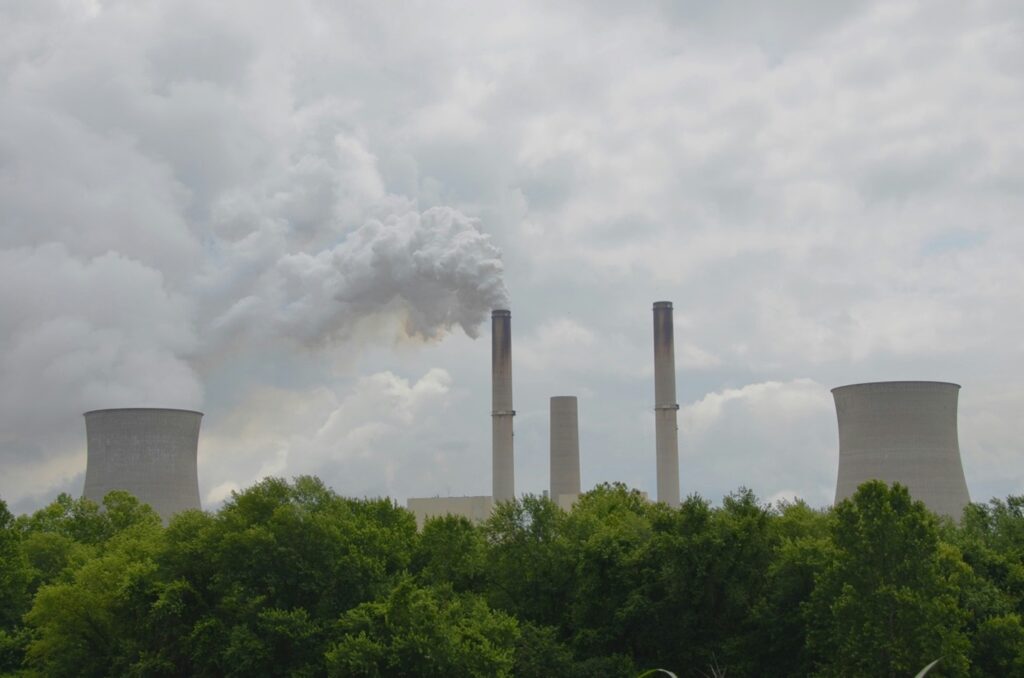
Superfund Climate Acts Under Threat: Implications for States
Written by Emily Karwacki and Professor Kirt Mayland

What is a Climate Superfund Act?

Vermont made history in 2024 when it enacted the first of its kind Climate Superfund Act (the Vermont Act).[1] New York quickly followed suit (the New York Act; together with the Vermont Act, the “Acts”).[2] The Acts draw inspiration from the Comprehensive Environmental Response, Compensation, and Liability Act (CERCLA) passed by Congress in 1980.[3] CERCLA, sometimes known as the Superfund law, requires entities (referred to as potentially responsible parties) that own or owned contaminated facilities or sites, or generated, disposed, treated, or transported hazardous wastes to pay to clean up the resulting contamination. To some extent, the Acts treat greenhouse gasses (GHGs)[4] emitted into the atmosphere as one large spill of hazardous waste. CERCLA holds such parties strictly, and jointly and severally liable, sometimes retroactively.[5] The Acts similarly operate under strict liability[6] theories, potentially avoiding some of the attribution complications in some of the past and current climate change litigation.[7] The Acts hold responsible parties liable for the cost of the damage their emissions have caused to the states generally and impose a fee on the responsible parties to be put into a “climate superfund” to be used for various adaptation projects.[8]

Frameworks like this are commonly referred to as Polluter Pays.[9] Essentially, the Polluter Pays principle, means that “the polluter should be charged with the cost of whatever pollution prevention and control measures are determined by the public authorities, whether preventive measures, restoration, or a combination of both.”[10] While the principle does not necessarily mandate bringing pollution levels down, it does not exclude that option but leaves the judgement of what an acceptable state of the environment is to public authorities.[11]

The Vermont Act requires responsible parties, defined as entities or successors in interest who extracted or refined fossil fuels, to pay for the damages from their past actions. The fines go towards climate change adaptation in Vermont with no monetary cap.[12] The Vermont Act limits responsibility to those parties that emitted more than one billion metric tons of covered GHG emissions to the atmosphere from the period of 1995–2025,[13] equivalent to approximately 33 million metric tons of GHG emissions per year. The New York Act defines responsible parties similarly and requires such entities to pay for the state’s climate change adaptation costs for damage to the state attributed to their emissions but is for the period running from 2000 to 2024 and sets a monetary cap of $75 billion.[14]

The Acts both have the purpose of requiring responsible parties to pay for the damage their products have caused under strict liability.[15] The Acts will use the funds gathered to pay for climate adaptation projects.[16] While it will take years to determine adaptation costs and responsible party apportionment under the Vermont Act, the New York Act sets a limit on such costs and prioritizes faster distribution of money to the state for adaptation projects. Such projects could include nature-based solutions such as maintaining floodplains and natural riverine corridors, as well as engineered solutions such as upgrading roads, bridges, stormwater drainages, and the electrical grid, or for residents’ medical care for climate-related illness or injury.[17] Importantly, neither Act attempts to make sweeping efforts to mitigate or regulate the future emission of GHGs from activities of responsible parties or restrict fossil fuel use or extraction.[18]

Why are Vermont and New York’s Climate Superfund Acts being Challenged?

The American Petroleum Institute (the “API”) and the United States Chamber of Commerce (the “Chamber”), potentially prematurely, sued the state of Vermont in late 2024 in the District Court of Vermont challenging the Vermont Act.[19] A coalition of 24 states intervened in the litigation in May of 2025.[20] Similarly, in early 2025 the West Virginia Coal Association, the Gas and Oil Association of West Virginia, America’s Coal Associations, and a coalition of 22 states sued the state of New York in the Northern District of New York challenging the New York Act.[21] In February 2025, the Chamber, the API, the National Mining Association, and the Business Council of New York filed suit against New York in the Southern District of New York;[22] and in May the Department of Justice and the Environmental Protection Agency (EPA) filed a separate suit against New York in the Southern District.[23]

The complaints raise similar issues involving federal preemption under the Supremacy Clause, the Dormant Commerce Clause, the Commerce Clause, and the Due Process Clause of the Fourteenth Amendment.[24] West Virginia’s Attorney General claims the Vermont Act would “fine America’s coal, oil and natural gas suppliers into oblivion.”[25] Other state parties similarly argue Vermont is enjoying the benefits of affordable fuel while penalizing the entities who help produce that fuel.[26] So far, one group has filed an amicus brief in the Vermont and New York cases and two groups have filed a motion to intervene in the Vermont cases while six groups have filed motions to intervene in the New York cases.[27] In the Vermont cases, for instance, a group of economists filed an amicus brief arguing, among other things, that the one-time fee imposed by the Act only represents a fraction of a typical fossil fuel company’s annual profits and will have no impact, like a carbon tax, on future production or costs to the state or consumers.[28] Outside arguments on both sides are likely to continue as the cases proceed through their respective courts and generate more attention.

Almost immediately following the issuance of Executive Order 14260, “Protecting American Energy from State Overreach,” the Trump administration sued Vermont and New York challenging the Acts.[29] The Trump administration complaints are nearly identical to the earlier claims and allege the Acts are preempted by the Clean Air Act, violate the Due Process and Commerce Clauses, are impermissibly retroactive, and interfere with foreign affairs.[30] President Trump’s administration sued New York and Vermont the day after preemptively suing Hawai’i and Michigan to block liability suits the states had yet to file against fossil fuel companies.[31] The speed with which the administration’s cases were brought and the extent of arguments against the Acts could indicate the administration’s concern that these Acts could be effective in requiring fossil fuel companies to pay for the damage their products have caused where other efforts have fallen short.[32]

What’s Next?

The plaintiffs argue, among other things, that regardless of their stated objectives these Acts are attempting to mitigate GHG emissions on a national level or at least will have the effect of doing so, and that power lies exclusively in the Clean Air Act. This argument is based primarily on the Supreme Court’s decision in American Electric Power v. Connecticut[33] where the Court dismissed a common law nuisance claim seeking to limit emissions of a utility’s power plants because, among other reasons, state common law was displaced by the Clean Air Act.[34] A federal appeals court later looked to this ruling and applied it to monetary damage claims for climate change based on federal common law.[35]

The federal government also heavily relies on City of New York v. Chevron where the Second Circuit dismissed a case from New York City seeking damages against fossil fuel companies for climate change-related harms reaffirming EPA’s authority to regulate domestic greenhouse gas emissions.[36] It is not clear how the courts will treat these novel Acts and whether they will view them as an end-around attempt by New York and Vermont to mitigate GHG emissions. On their face, the Acts do not do so. Rather, they punish past actions over a limited period of time and focus on cost recovery and adaption, not mitigation or emissions regulation.

Further muddying the waters, EPA recently proposed repealing the endangerment finding, meaning GHGs would no longer be regulated under the Clean Air Act as a danger to public health or welfare, and, thus, EPA would no longer be obligated to regulate them.[37] If the repeal is successful, the effect of it on the Acts and the various other climate change related lawsuits, remains to be seen. If EPA is no longer obligated to regulate GHGs, a principal argument of the fossil fuel companies and some courts regarding federal preemption in this area would seemingly no longer apply. Regardless, the Acts’ focus on past actions and adaptation funding may make it easier for New York and Vermont to survive the federal preemption challenges.

The Acts, however, are novel and not perfectly analogous to the federal law of CERCLA, and GHGs are different than the traditional pollutants regulated under CERCLA. The Acts face similar constitutional challenges to those CERCLA has, for the most part, warded off successfully; in particular, challenges to the Acts’ retroactivity, strict liability, and interstate commerce effects. These challenges could very well be decided by a Supreme Court reluctant to accept state attempts to address the consequences of climate change.

If the various cases challenging the Acts are ultimately dismissed, Vermont and New York can start receiving funds for climate change adaptation projects within the next decade. If, however, the Acts are struck down, the states will continue to struggle for federal aid in this area. The federal government has slashed funding for agencies like the Federal Emergency Management Agency (FEMA) that help states recover from natural disasters and extreme weather events.[38] Further, in states like Vermont and New York where residents already face high taxes and costs of living, it would be challenging for the states to raise funding for climate change adaptation projects by increasing taxes and further burdening its residents.[39] Without federal assistance and funding, it’s difficult to imagine how states will cope and recover after more frequent and intense storms and natural disasters in the future.[40]

Conclusion

States need outside funding to be able to adapt to and address the extreme negative effects of climate change largely caused by the emission of GHGs, much of it from fossil fueled electric generation or transportation.[41] The Acts provide a process to secure funding from those industries that should be held accountable. The world seems to be on track to blow through its climate change goals,[42] so resiliency and adaptation need to be prioritized and funded immediately. The Acts represent a responsible, limited, and fair way to do this.

Author Bio:
Emily is a third-year law student at VLGS with a concentration in international and comparative law. She is actively involved in the Environmental and Environmental Justice law societies on campus and is working towards a career that incorporates environmental justice principles at every level. She has a background in molecular biology and aims to be a middleperson between scientists and communities experiencing environmental damage on the ground and decisionmakers who may never have faced such difficulties.

[1] Climate Superfund Cost Recovery Program, 10 V.S.A. § 596–599; Karen Zraick, New ‘Climate Superfund’ Laws Face Widening Legal Challenges, N.Y. Times (May 2, 2025), https://www.nytimes.com/2025/05/02/climate/climate-superfund-law-vermont-new-york-lawsuits.html.

[2] Climate Change Adaptation Cost Recovery Program, N.Y. Env’t Conserv. L. § 76-0103 (2025).

[3] Sarah McGovern, The Future of Climate Superfund Laws, 55 Envt’l. L. Rep. 10493, 10495 (2025).

[4] In New York, “greenhouse gas” means “carbon dioxide, methane, nitrous oxide, hydrofluorocarbons, perfluorocarbons, sulfur hexafluoride, and any other substance emitted into the air that may be reasonably anticipated to cause or contribute to anthropogenic climate change.” N.Y. Env’t Conserv. L. § 75-0101(7) (2025). In Vermont, “greenhouse gas” means any chemical or physical substance “emitted into the air and that the Secretary may reasonably anticipate to cause or contribute to climate change, including carbon dioxide, methane, nitrous oxide, hydrofluorocarbons, perfluorocarbons, and sulfur hexafluoride.” 10 V.S.A. § 552(11).

[5] 42 U.S.C. § 9601.

[6] Strict liability refers to the existence of liability regardless of the liable party’s intent or mental state when they did the act. The justification generally is that the party causing harm does so while enriching themselves and are thus in the best position to bear the loss. Alexandra B. Klass, From Reservoirs to Remediation: The Impact of CERCLA on Common Law Strict Liability Environmental Claims, 39 Wake Forest L. Rev. 903, 907 (2004).

[7] See e.g. City of N.Y. v. Chevron Corp., 993 F.3d 81, 97 (2d Cir. 2021).

[8] 10 V.S.A. § 598; N.Y. Env’t Conserv. L. § 76-0103 (LexisNexis 2025).

[9] Organization for Economic Co-operation and Development, The Polluter Pays Principle 6 (2008).

[10] Id.

[11] Id. at 15.

[12] 10 V.S.A. § 596.

[13] Id.

[14] N.Y. Env’t Conserv. L. § 76-0101 (2025).

[15] 10 V.S.A. § 597; N.Y. Env’t Conserv. L. § 76-0103 (2025).

[16] 10 V.S.A. § 596; N.Y. CLS ECL § 76-0101.

[17] Id.

[18] Austyn Gaffney, State and nonprofits ask federal courts to dismiss lawsuits against Climate Superfund Act, vtdigger (Aug. 22, 2025 at 04:08 pm ET), https://vtdigger.org/2025/08/22/state-and-nonprofits-ask-federal-courts-to-dismiss-lawsuits-against-climate-superfund-act/; McGovern supra note 3.

[19] Complaint, Chamber of Com. v. Moore, No. 2:24-cv-01513 (D. Vt. filed Dec. 30, 2024).

[20] Complaint in Intervention, Chamber of Com. v. Moore, No. 2:24-cv-01513 (D. Vt. filed May 7, 2025).

[21] Complaint, West Virginia v. James, No. 1:25-cv-00168 (N.D.N.Y. filed Feb. 6, 2025).

[22] Complaint, Chamber of Com. v. New York, 1:25-cv-01738 (S.D.N.Y. filed Feb. 28, 2025).

[23] Complaint, United States v. New York, 1:25-cv-03656 (S.D.N.Y. filed May 1, 2025).

[24] Complaint in Intervention, Chamber of Com. v. Moore, No. 2:24-cv-01513 ¶¶ 2, 6-11 (D. Vt. filed May 1, 2025); Complaint, West Virginia v. James, No. 1:25-cv-00168 ¶¶ 4, 5, 8, 11-16 (N.D.N.Y. filed Feb. 6, 2025); Complaint, United States v. New York, 1:25-cv-03656 ¶¶ 6-7 (S.D.N.Y. filed May 1, 2025); Complaint, Chamber of Com. v. New York, 1:25-cv-01738 ¶¶ 7-12 (S.D.N.Y. filed Feb. 28, 2025).

[25] Karen Zraick, New ‘Climate Superfund’ Laws Face Widening Legal Challenges, N.Y. Times (May 2, 2025), https://www.nytimes.com/2025/05/02/climate/climate-superfund-law-vermont-new-york-lawsuits.html.

[26] Id.

[27] United States v. Vermont, Sabin Center for Climate Change Law, https://www.climatecasechart.com/collections/united-states-v-vermont_e88e (last visited Dec. 21, 2025); Chamber of Commerce of the United States v. Moore, Sabin Center for Climate Change Law, https://www.climatecasechart.com/document/chamber-of-commerce-of-the-united-states-of-america-v-moore_d9a1?q=climate+superfund+act (last visited Dec. 21, 2025); United States v. New York, Sabin Center for Climate Change Law, https://www.climatecasechart.com/document/united-states-v-new-york_e0ca?q=climate+superfund+act (last visited Dec. 21, 2025).

[28] Gaffney, supra note 18.

[29] Nina Sablan, Trump Joins the Opposition to Vermont’s Climate Superfund Act, Calling it “Burdensome’ and “Ideologically Motivated’, Inside Climate News (June 27, 2025), https://insideclimatenews.org/news/27062025/trump-administration-tries-to-stop-vermont-climate-superfund-act//.

[30] See Complaint, United States v. New York, No. 1:25-cv-03656 ¶¶ 6-7 (S.D.N.Y. filed May 1, 2025); Complaint, United States v. Vermont, No. 2:25-cv-463 ¶¶ 32-36 (D. Vt. filed May 1, 2025).

[31] Sablan, supra note 29.

[32] See e.g. City of N.Y., 993 F.3d.

[33] 564 U.S. 410, 427 (2011).

[34] Id. at 426.

[35] Native Vill. of Kivalina v. ExxonMobil Corp., 696 F.3d 849, 858 (9th Cir. 2012).

[36] City of N.Y., 993 F.3d at 100.

[37] Reconsideration of 2009 Endangerment Finding and Greenhouse Gas Vehicle Standards, 90 Fed. Reg. 36288.

[38] Sarah Labowitz & Debbra Goh, Get Rid of FEMA? Some States Will hurt More Than Others, Carnegie Endowment for Int’l Peace (Mar. 6, 2025), https://carnegieendowment.org/emissary/2025/03/fema-disaster-recovery-budget-cuts-state-impact?lang=en.

[39] Sablan, supra note 29.

[40] Labowitz & Goh, supra note 38.

[41] Labowitz & Goh, supra note 38; Causes and Effects of Climate Change, United Nations, https://www.un.org/en/climatechange/science/causes-effects-climate-change (last visited Dec. 21, 2025).

[42] The world is likely to exceed a key global warming target soon. Now what?, UN environment programme (Nov. 5, 2025), https://www.unep.org/news-and-stories/story/world-likely-exceed-key-global-warming-target-soon-now-what.

Balancing the Conservation Checkbook: How the Federal Government is Quietly Risking America’s Soil
Written by Julia Wickham and Professor Jonathan Coppess

“It’s about the money” – Art Cullen[1]

I. Introduction: Production at High Cost

American agricultural policy has long struggled to balance short-term economic concerns for farmers with long-term environmental investments. The Upper Midwest is facing a nitrate challenge[2]—Iowa is ranked #2 in the nation in cancer rates.[3] Modern agricultural production methods have increased threats to biodiversity and soil erosion.[4] Meanwhile, agriculture is responsible for 25% of net greenhouse gas emissions in some states.[5] Investing in agricultural conservation is the best path forward. The recent recission of Inflation Reduction Act (IRA) funding, increasing incentives to prioritize production and large payouts to producers, along with an uncertain future for crucial programs is alarming for the future of agricultural conservation. This article articulates the interplay between United States Department of Agriculture (USDA) funding and disappearing investments in conservation programs as one of the most pressing environmental issues of 2026.

II. The Cost of Prioritizing Production over Environmental Protection

Environmental stewardship is sacrificed when farmers are given incentives to plant more. In the 1920s, an economic boost during World War I drove farmers in the Great Plains to adopt intensive cultivation methods, pulverizing topsoil.[6] Producers responded to the subsequent economic depression by plowing marginal land, abandoning conservation investments, and pushing production to offset collapsed prices culminating in a Dust Bowl.[7]

Just a generation later, in the 1970s, American crop lands were again losing millions of acres to severe soil erosion from overproduction and dropping conservation practices.[8] Rising global demands following a temporary embargo on soybeans from the Nixon Administration contributed to a spike in crop prices.[9] The Secretary of Agriculture’s infamous push to farmers to “get big or get out” encouraged more land to be put into production from “fence row to fence row.”[10] Together, the 1920s and the 1970s have demonstrated that when producers expand to maximize production, the fallout is not just increased bankruptcies and lost farms, but also land degradation.[11]

Emerging from these twin crises, was the landmark Food Security Act of 1985 (FSA).[12] As part of the FSA, Congress enacted the landmark Conservation Reserve Program (CRP) to remove environmentally sensitive land out of production and implement resource conserving practices for 10 or more years.[13] And it was a massive hit. For example, in 2017, it was estimated that 521 million pounds of nitrogen and 103 pounds of phosphorus were conserved in the soil compared to landed that was cropped.[14] That same year, it was estimated that CRP enhanced water quality by reducing sedimentation by 192 million tons.[15] In the years following the creation of CRP, Congress established other conservation programs to reward environmental stewardship.[16] These programs were major investments in agricultural prosperity. By incentivizing and prioritizing environmental stewardship, Congress aimed to prevent not only another boom-and-bust cycle in agricultural markets, but also in environmental health.

The durability of this investment depends on stable funding especially in times of climate crisis. Recently, while conservation funding has increased overall, it has lost out in relations to ad hoc funding and incentives to plow environmentally sensitive land. The combination emergency funding in recent years through the Commodity Credit Corporation (CCC), the restructuring of baseline funding through the One Big Beautiful Bill Act (OB3), and the wavering support of crucial conservation programs, such as CRP, is undermining decades of environmental investment to finance short term economic and political needs.[17]

A. The Conservation Reserve Program (CRP)

CRP is the largest, federal private-land retirement program in the United States, and it has demonstrated numerous positive environmental benefits including reduced soil erosion; water quality improvements through vegetative cover, buffer strips, and reduced fertilizer application; and wildlife population improvement from increased habitat.[18] By 1990, enrollment in CRP exceeded 32.5 million acres, and it was estimated in 1995 to have saved nearly 700 million tons of soil each year on the acres enrolled.[19] That year, the head of the Natural Resource Conservation Service (NRCS) told the Senate Agricultural Committee “we have yet to hear a negative about CRP.”[20]

Budgetary and spending concerns have repeatedly challenged CRP.[21] In 1995, farm bill reauthorization had been pulled into a massive budget reconciliation fight, spearheaded by a Republican controlled Congress focused on federal budget discipline and debt.[22] The following year, Congress revised the program to receive mandatory funding from the Commodity Credit Corporation (CCC).[23] This effectively continued CRP funding without having to revisit appropriations battles to find the 2 billion per year.[24] However, since its enactment, Congress has over time limited the amount of acres that may be enrolled in CRP.[25]

B. The Commodity Credit Corporation (CCC)

Two funding mechanisms exists for the farm bill: appropriations and mandatory.[26] The CCC allows for funding without appropriations in advance.[27] The CCC has served as a mandatory funding mechanism for agricultural programs since 1933.[28] It is wholly-government owned and managed by the USDA.[29] The CCC has a permanent, indefinite borrowing authority of $30 billion from the U.S. Treasury.[30] The majority of its activities are authorized through omnibus farm bills.[31] However, under Section 5 authority, the CCC allows the Secretary of Agriculture a high-level of discretion to carry out many broad operations to support U.S. agriculture.[32] During the first Trump Administration, the total amount authorized by USDA through CCC for a trade aid package, was valued at about $28 billion.[33] This was more than any previous individual discretionary uses of CCC.[34] These 2018 and 2019 trade aid packages provided direct and indirect assistance to farmers affected by “trade damage” from retaliatory tariffs.[35] This Section 5 action brought the CCC so close to its borrowing limit, that it was only through congressional action the CCC borrowing authority was restored before funding for conservation programs went dry.[36]

Again, under the current Trump Administration, the USDA recently announced $12 billion from the CCC for “Farmer Bridge Assistance” payments to provide emergency relief after tariffs have raised concerns in the farm economy.[37] These payments are expected to be released in February 2026.[38] This is nearly one-third of the authorized spending budget of the CCC, which means programs authorized by the farm bill relying on funding from the CCC are, again, deprioritized.[39] In addition, Congress expedited $10 billion in direct economic assistance to farmers in March 2025.[40] All these ad hoc payments are tied to planted acres, which place tough planting decisions on farmers who are incentivized to plant rather than conserve because there is not the same volume of funding.

III. Short-Term Fixes May Have Long Term Environmental Costs

The last decade has seen unprecedented swings in federal conservation investments. The Inflation Reduction Act’s (IRA) historic infusion of conservation investment followed by the OB3’s repurposing and recission of that funding has been tumultuous and confusing. Separately, Congress has continued CRP in each of the 2018 farm bill extensions.[41] Although, Congress has reauthorized other conservation programs through 2031, it has failed to do so for CRP.[42] As a result, this major conservation program faces substantial uncertainty.

A. The One Big Beautiful Bill: Reallocating and Rescinding Inflation Reduction Act Funds

In 2022, the IRA contained an unprecedented investment in conservation programs.[43] For decades, Congress has expanded its investment in agricultural conservation policies .[44] The IRA appropriated an additional $18 billion until 2031 to various programs.[45] The Reconciliation Farm Bill, contained within the OB3, rescinded unobligated IRA funds to four conservation programs and repurposed them with the effect of adding them to the permanent farm bill baseline.[46]Although this is a short term win for environmentalist, ultimately, conservation programs will lose $1.8 billion over the next ten years.[47] Further, the OB3 did not retain the IRA “climate smart” guardrails.[48] These activities included agricultural practices that reduce greenhouse gas emissions, sequester carbon, and build climate resilience.[49]

B. Encouraging Production in High-Risk Areas

The OB3 nearly $60 billion investment in farm subsidy programs, including crop insurance, “dwarfs” the reallocation of conservation funding.[50] This larger investment in crop insurance encourages production of high-risk crops in environmentally sensitive areas, and it is contrary to a future of safeguarding vital natural resources.[51] While more conservation funding will be available in the long term, the changes to crop insurance programs over the same period of time are setting a daunting precedent of rewarding more production in higher risk areas, resulting in greater soil erosion and possibility of nitrogen leeching to groundwater, surface water, and estuaries.[52]

C. CRP and Its Uncertain Future

Perhaps one of the largest harbingers of lapsed environmental investment is the uncertain future of CRP. Previous farm bills have now reduced the enrollment cap from 32 million acres to 24 million acres.[53] Because Congress did not include CRP in the IRA, CRP received no supplemental funding. When the 2018 farm bill expired in 2023, technically CRP’s authority did as well.[54] However, as part of legislation re-opening the federal government, Congress extended CRP until September of 2026.[55] These annual extensions of CRP are troublesome for two reasons. First, the uncertainty may cause landowners and farmers to plow eligible acres. Second, this could make it easier for Congress to shift funding away from the program, a fate similar to the Conservation Stewardship Program (CSP).

CSP is a pivotal program that offers direct payments to farmers in return for implementing conservation on the farm.[56] Congress first authorized CSP in the 2022 farm bill without limits on funding or acres that could be enrolled.[57] In 2008, Congress implemented a limit on acreage, but it authorized an increase each subsequent year.[58] Then in 2018, Congress ended the acreage cap and moved to a funding cap.[59] This drastically reduced the funding, and it made the program more difficult to use, and thus, much more ineffective.[60] This eventually created a “self-defeating” program where fewer funds meant fewer farmers could receive assistance which reduced the support for the program.[61] If CRP were to follow in the footsteps of CSP, it would be detrimental to our ecosystem, and rural economies, to take sensitive lands out of conservation and back into production.

IV. Conclusion

Congress should have learned from the 1920s and 1970s that when agricultural policy plows ahead with short-term production boosts at the expense of land stewardship, the environmental consequences are devastating. Not only should Congress follow through on conservation funding, but federal policies should also build on nearly a century’s worth of momentum. Agricultural conservation is at a pivotal moment. Massive ad hoc payments to farmers while over-insurance of high risk areas and crops, coupled with uncertainty for CRP, is risking our investment in agricultural conservation at a critical time. In addition, small and very long term increases in funding from the OB3 are not an effective or reasonable counterweight to increasing environmental threats.

Author Bio:
Julia Wickham is a third-year law student at Vermont Law and Graduate School, graduating in May 2026 with a J.D. She is the Senior Articles Editor of the Vermont Journal of Environmental Law Volume 27.

[1] Editors Notebook, Storm Lake Times Pilot (Jan. 7, 2025), https://www.stormlake.com/stories/time-to-make-some-noise-about-cancer-in-iowa,123004.

[2] Kristi Marohn, Minnesota Public Radio News, Southeast Minnesota Struggles for Common Ground on Nitrate Pollution as Health Worries Rise, (Oct. 31, 2023), https://www.mprnews.org/story/2023/10/31/does-nitrate-in-southeast-minnesotas-water-present-a-public-health-crisis; Jonathan Coppess et al., A Menace Reconsidered, Part 4: Losing Nitrogen, farmdoc daily (Apr. 18, 2024), https://farmdocdaily.illinois.edu/2024/04/a-menace-reconsidered-part-4-losing-nitrogen.html.

[3] Nina B. Elkadi, Sentient Health (Mar. 14, 2025), What’s Driving Iowa’s Outlier Cancer Rate? It’s Complicated, https://sentientmedia.org/what-is-driving-iowas-cancer-rate/; see Art Cullen, Time to Make Some Noise About Cancer in Iowa, Storm Lake Times Pilot (Jan. 7, 2025), https://www.stormlake.com/stories/time-to-make-some-noise-about-cancer-in-iowa,123004 (“We will continue to grow corn out our ears to feed those hogs and hens no matter how much nitrate drains into the Raccoon River, one of the most endangered in America.”).

[4] See generally World Wildlife Fund (Sept. 26, 2024), 2024 Plowprint Report, https://files.worldwildlife.org/wwfcmsprod/files/Publication/file/8mq6fdcmt4_PlowprintReport_2024_FINAL.pdf; see also Brent J. Dalzell, Topography and Land Use Impact Erosion and Soil Organic Carbon Burial over Decadal Timescales, 218 CATENA (2022), https://www.sciencedirect.com/science/article/abs/pii/S0341816222005641#preview-section-introduction.

[5] Minnesota Pollution Control Agency, Greenhouse gas emissions in Minnesota 2005-2022: Report to the legislature (2025).

[6] Jonathan Coppess, Between Soil & Society: Legislative history and Political Development of Farm Bill Conservation Policy 42 (2024).

[7] Id.

[8] Id. at 145 (“In 1974 and 1975, for example, Iowa experienced its worst soil erosion in twenty-five years, with some fields losing as many as fifty tons of topsoil per acre.”).

[9] Jonathan Coppess & Otto Doering, History & Tough Reality: When Payments Do More Harm Than Good, Consider Other Options, farmdoc daily (Sept. 25, 2025), https://farmdocdaily.illinois.edu/2025/09/history-tough-reality-when-payments-do-more-harm-than-good-consider-other-options.html.

[10] Kevin C. Rigdon, Stop the Planting! The 1985 Farm Bill, Conservation Compliance, and America’s Agricultural Conservation Failure, 16 Drake J. of Agric. L. 488, 489 (2012).

[11]Jonathan Coppess & Otto Doering, History & Tough Reality: When Payments Do More Harm Than Good, Consider Other Options, farmdoc daily (Sept. 25, 2025), https://farmdocdaily.illinois.edu/2025/09/history-tough-reality-when-payments-do-more-harm-than-good-consider-other-options.html.

[12] Food Security Act of 1985, Pub. L. No. 99-198, 99 Stat. 1354 (1985); see Jonathan Coppess, Between Soil & Society: Legislative history and Political Development of Farm Bill Conservation Policy 153 (2024).

[13] Megan Stubbs, Cong. Rsch. Serv, R42783, Conservation Reserve Program (CRP): Status and Issues, 1 (2017).

[14] Env’t Benefits of the US Conservation Rsrv. Program 2017, US Dept. of Agric. (2017).

[15] Id.

[16] See generally Megan Stubbs, Cong. Rsch. Serv., R40763, Agricultural Conservation: A Guide to Programs (2022).

[17] Pub. L. No. 119-21, 139 Stat. 72 (2025).

[18] Megan Stubbs, Cong. Rsch. Serv., R42783, Conservation Reserve Program (CRP): Status and Issues, 1 (2017).

[19] Jonathan Coppess, Between Soil & Society: Legislative history and Political Development of Farm Bill Conservation Policy 178 (2024).

[20] Id. at 42.

[21] Id. at 179.

[22] Id.

[23] Id. at 179.

[24] Megan Stubbs, Cong. Rsch. Serv., R42783, Conservation Reserve Program (CRP): Status and Issues, 1 (2017).

[25] Id.

[26] Renee Johnson & Jim Monke, Cong. Rsch. Serv., IF 12047, Farm Bill Primer: Background and Status, 1 (2024).

[27] Megan Stubbs, Cong. Rsch. Serv., R44606, The Commodity Credit Corporation (CCC) (2025).

[28] U.S. Dept. of Agric., About the Commodity Credit Corporation, https://www.usda.gov/farming-and-ranching/resources-small-and-mid-sized-farmers/commodity-credit-corporation (last visited Dec. 3, 2025); see 15 U.S.C. § 714 (2000).

[29] Id.

[30] Megan Stubbs, Cong. Rsch. Serv., R44606, The Commodity Credit Corporation (CCC), 7 (2025).

[31] Id. at 2.

[32] 15 U.S.C. § 714c.

[33] Stephanie Rosch, Cong. Rsch. Serv., IF11289, Farm Policy: Comparison of 2018 and 2019 Market Facilitation Programs, 1 (2019); U.S. Gov’t Accountability Off., GAO-22-104259, USDA Market Facilitation Program: Oversight of Future Supplemental Assistance to Farmers Could Be Improved (2022).

[34] Id.

[35] Id.

[36] See e.g., Letter from Sen. Debbie Stabenow et al. to Sonny Perdue, Secretary of Agriculture, (Nov. 12, 2019), https://www.agriculture.senate.gov/mfp-letter; Letter from Sen. John Hoeven et al. to Nancy Pelosi, Speaker of the U.S. House of Representatives, (Sept. 17, 2019), https://republicans-agriculture.house.gov/UploadedFiles/CCC_Letter.pdf.

[37] U.S. Dep’t Agric., Press Release: Trump Administration Announces $12 Billion Farmer Bridge Payments for American Farmers Impacted by Unfair Market Disruptions (2025); Eric Katz, USDA transfers $13B into ‘slush fund’ for future tariff relief, Gov. Exec. ( Oct. 30, 2025), https://www.govexec.com/management/2025/10/usda-transfers-13b-slush-fund-future-tariff-relief/409198/.

[38] Id.

[39] Id.

[40] U.S. Dep’t Agric., Press Release: USDA Expediting $10 Billion in Direct Economic Assistance to Agricultural Producers (2025).

[41] Megan Stubbs, Cong. Rsch. Serv., IF13114, Agricultural Conservation After Enactment of the FY2025 Budget Reconciliation Law (P.L. 119-21), 1 (2025).

[42] Id.

[43] Inflation Reduction Act, Pub. L. No. 117-69, 136 Stat. 1818 (2022).

[44] See generally Megan Stubbs, Cong. Rsch. Serv., R40763, Agricultural Conservation: A Guide to Programs (2022).

[45] Kelsi Bracmort et al., Cong. Rsch. Serv., IN11978, Inflation Reduction Act: Agricultural Conservation and Credit, Renewable Energy, and Forestry, 1 (2022).

[46] P.L. 119-21, Section 10601.

[47] Jonathan Coppess, The Reconciliation Farm Bill: Is Conservation a Silver Lining?, farmdoc daily (Sept. 11, 2025), https://farmdocdaily.illinois.edu/2025/09/the-reconciliation-farm-bill-is-conservation-a-silver-lining.html.

[48] Andrew Hockenberry & Emma Scott, Stuck in the Weeds: How the Next Farm Bill Impacts the Environment, Vt. J. Env. L. (2025), https://vjel.vermontlaw.edu/top-ten/2025-top-ten/2024/12/stuck-in-the-weeds-how-the-next-farm-bill-impacts-the-environment/.

[49]Megan Stubbs, Cong. Rsch. Serv., IF13114, Agricultural Conservation After Enactment of the FY2025 Budget Reconciliation Law (P.L. 119-21), 1 (2025).

[50] Jonathan Coppess, The Reconciliation Farm Bill: Is Conservation a Silver Lining?, farmdoc daily (Sept. 11, 2025), https://farmdocdaily.illinois.edu/2025/09/the-reconciliation-farm-bill-is-conservation-a-silver-lining.html.

[51] See Ruben N. Lubowski et al., USDA Econ. Res. Serv., Environmental Effects of Agricultural Land-Use Change: The Role of Economics and Policy 47 (2006) (“The increase in insurance subsidies appears to have had the largest effect for low-productivity and certain environmentally sensitive land.”).

[52] Id.

[53] Megan Stubbs, Cong. Rsch. Serv., R42783, Conservation Reserve Program (CRP): Status and Issues, 1 (2017).

[54] Id.

[55] Rachel Cramer, Congress extends critical Farm Bill for a third time. It’s a relief for farmers, but raises concerns, KCUR NPR (Nov. 17, 2025), https://www.kcur.org/environment-agriculture/2025-11-17/farm-bill-extended-crp.

[56] Jonathan Coppess, Between Soil & Society: Legislative history and Political Development of Farm Bill Conservation Policy 190 (2024).

[57] Id.

[58] Jonathan Coppess, The Incredible Shrinking of the Conservation Stewardship Program, farmdoc daily (Oct. 12, 2023), https://farmdocdaily.illinois.edu/2023/10/the-incredible-shrinking-of-the-conservation-stewardship-program.html.

[59] Id.

[60] Lisa Held, Republican Plans for Ag Policy May Bring Big Changes to Farm Country, Civil Eats (July 22, 2024), https://civileats.com/2024/07/22/republican-plans-for-ag-policy-may-bring-big-changes-to-farm-country/.

[61] Id.

Roads Not Taken: The Trump Administration’s Roadless Rule Reversal
Written by Drew Collins and Professor Ross Jones

For over two decades the Roadless Area Conservation Rule protected 58.5 million acres of national forest land in 39 different states.[1] The Roadless Rule prohibits road construction, road reconstruction, and timber harvesting in these areas.[2] Lands protected by the Rule include 80,000 acres in Vermont’s Green Mountain National Forest.[3] However, the Roadless Rule is now subject to reversal through massive deregulation efforts made by the Trump Administration to disempower the Forest Service.[4] This article will discuss the history and purpose of the Roadless Rule before jumping into the Trump Administration’s rescission of the Rule, public response, and the future of the Rule.

History of the Roadless Rules:

The Roadless Rule originated from decades of unsustainable logging practices that resulted in an $8.5 billion deficit in road maintenance.[5] Unsustainable logging required the construction of extensive forest road networks to access remote timber stands. These roads were costly to build, often poorly engineered, and left the Forest Service responsible for long-term upkeep after timber revenues declined.[6]

After World War II, the Forest Service entered the business of large-scale logging.[7] Timber production surged nationwide to fuel the post-war boom.[8] By the 1980s, annual harvests peaked at more than 12 billion board feet.[9] This level of production continued through the Clinton Administration, until Mike Dombeck, the Former Chief of the U.S. Forest Service, declared a temporary moratorium on new road construction in roadless areas in 1999.[10] Dombeck recognized this level of production was unsustainable, prompting a shift toward a new, ecosystem-based approach to forest management. In response to the moratorium, President Bill Clinton instructed the Forest Service to begin rulemaking to protect our forests.[11]

The Final Rule was promulgated in 2001 after two nationwide efforts to inventory roadless areas for their wilderness potential.[12] Many of the tracts targeted for protection lay high in watersheds, where soils were thin and highly prone to erosion.[13] Other tracts protected were already contentious sites for proposed timber sales.[14] The agency received over 1.8 million public comments on the proposed rule, most of which were in support of the rule or wanted to further expand its protections.[15]

Since its promulgation, the Roadless Rule survived several attempts to truncate it, particularly from the Bush Administration.[16] Despite these challenges, the Rule remained successful in conserving natural habitat and water quality.

Purpose of the Roadless Rule:

The United States Department of Agriculture (USDA) is the agency responsible for managing the National Forest System’s resources “to sustain the health, diversity, and productivity of the nation’s forests and grasslands to meet the needs of present and future generations.”[17] The Roadless Rule furthers these efforts by conserving forests, preserving water quality, and protecting habitats of endangered species.

As mentioned, the conservation benefits of the Roadless Rule stem from preserving forested areas and preventing large-scale logging.[18] However, the Rule also indirectly mitigates the effects of climate change. Currently, forests in the nation’s roadless areas are estimated to contain 445 million tons of sequestered carbon.[19] Many roadless areas contain the nation’s old-growth forests.[20] Old-growth forests are “areas [that] absorb and store climate-warming carbon dioxide at a large scale”.[21] These forests are prime examples of carbon sinks, areas on the earth that remove more carbon dioxide from the atmosphere than they produce. Carbon sinks are crucial to combatting climate change because they absorb vast amounts of atmospheric carbon dioxide, slowing global warming.[22]

The Rule preserves water quality by limiting development near headwaters that provide much of the nation with freshwater.[23] Over 60 million Americans rely on water sources originating from national forests.[24] As droughts intensify, preserving water sources in these areas becomes even more critical. Logging and construction degrade freshwater streams by increasing erosion and removing the natural filtration provided by trees and vegetation.[25]

By preserving large, unfragmented tracts of land, the Rule protects habitats for many species, including threatened and endangered species.[26] The Defenders of Wildlife, a conservation nonprofit, estimates the Roadless Rule protects over 220 different species listed under the Endangered Species Act.[27] The presence of roads can fragment habitats and have potential to disrupt migration patterns for some species.[28] Additionally, salmon and trout rely on undammed, unlogged streams for their very survival. As a result, some of the most productive fisheries in the country are found in roadless forest lands.[29]

The Rule also promotes the outdoor recreation industry. In 2023, the outdoor recreation industry generated $1.2 trillion of goods and services in the U.S. This represents 2.3 percent of the nation’s GDP and 3.1 percent of all jobs.[30] Roadless areas protect 11,337 climbing routes, 1,000 whitewater paddling runs, and more than 43,826 miles of trails, including 20,298 miles of mountain biking trails.[31] Without the Roadless Rule, these areas would be subject to development or logging operations.

The USDAs Plan to Reverse the Roadless Rule:

The Trump Administration’s Secretary of Agriculture, Brooke Rollins, announced plans to rescind the Roadless Rule in June 2025.[32] This plan aligns with three executive orders passed by the President in Spring 2025.[33] Executive Order 14192 titled “Unleashing Prosperity Through Deregulation”, directs the executive branch to “alleviate unnecessary regulatory burdens placed on the American people.”[34] Secretary Rollins argued the Roadless Rule is unnecessary, describing it as an “outdated administrative rule” that undermines the Forest Service’s duty “to sustain the health, diversity, and productivity of the nation’s forests and grasslands.”[35]

The USDA also justifies recession of the Rule by conformance with Executive Order 14225, titled “Immediate Expansion of American Timber Production”.[36] This Executive Order directs the Chief of the United States Forest Service to strategize ways to improve the speed of approving forestry projects and set targets for timber production.[37] Rescission of the Roadless Rule would lift the prohibition on timber harvesting across nearly 59 million acres of the National Forest System, aligning the agency’s regulatory framework with the Executive Order’s directive to expand timber production.[38]

Finally, President Trump issued Executive Order 14308, titled “Empowering Commonsense Wildfire Prevention and Response”, directing the Secretary of Agriculture to make wildfire programs more efficient.[39] Over 25 million acres of land protected by the Roadless Rule is categorized as “high or very high risk of wildfire”.[40] Secretary Rollins claims rescission of the Roadless Rule will reduce wildfire risk in high risk areas because land will be managed at the local forest level, which will provide greater flexibility to take action against fires.[41]

Opposition to the Rescission and Agency Response:

The USDA opened a 22 day truncated comment period for their rescission of the Roadless Rule starting on August 29, 2025.[42] During this time, more than 600,000 Americans commented on the proposed rescission, demonstrating substantial public concern for the Rule’s withdrawal.[43] The Center for Western Priorities, a conservation group, completed an analysis of comments and found that 99 percent of commenters disfavored rescission of the Rule.[44] In a day and age when Americans can’t agree on much, such overwhelming consensus underscores the public’s strong commitment to preserving roadless protections. It’s worth mentioning when Mike Dombeck first promulgated the Roadless Rule in 2001, the Rule drew over 1.8 million comments with 90 percent approval.[45] Based on these statistics, it’s fair to suggest Americans prefer the Rule in place, but does near-unanimous discontent mean the USDA will reverse course? The short answer is probably not.

The overwhelming public opposition for rescission of the Rule does automatically stop the rulemaking process. However, under the Administrative Procedures Act (APA), the USDA must address the major issues raised by commenters, explain why it disagrees, and provide evidence for that reasoning.[46] An unreasoned decision exposes the agency to potential litigation under the APA. If the agency cannot provide evidence to support its decision to rescind the Rule, then the rescission may be considered an arbitrary and capricious abuse of agency discretion and overturned in the court system.[47] Public comment alone is not enough to overturn an agency rulemaking, but it can certainly increase pressure on the agency to provide a reasoned explanation and the opportunity for a successful challenge under judicial scrutiny.

What’s Next? The Future of the Roadless Rule:       

The USDA must undertake more administrative steps before promulgating a Final Rule. At the end of August 2025, the USDA published a notice in the Federal Register to prepare an Environmental Impact Statement (EIS).[48] An agency must prepare an EIS when it undertakes a major federal action significantly affecting the quality of the human environment in accordance with the National Environmental Policy Act.[49] The EIS is expected in March 2026; it will address the potential environmental impacts of the rescission, alternatives to the decision, and possible mitigation measures.[50] If the EIS identifies significant adverse impacts or practicable alternatives, the USDA may be required to modify the proposed action or provide additional justification for proceeding. After the EIS is complete, the agency will promulgate a Final Rule based on their findings. The Final Rule is expected in late 2026.[51]

As the USDA moves towards rescinding the Roadless Rule, millions of acres of habitat, critical watersheds, carbon-rich old-growth forests, and countless recreation opportunities are at stake. The future of the Roadless Rule will test how the Trump Administration balances ecological stewardship, public participation, and administrative discretion. Whichever route the USDA pursues will represent a pivotal moment for the nation’s national forest lands and the importance of conservation as a pillar of the USDAs mandate.

Author Bio:
Drew Collins is a third-year law student at Vermont Law and Graduate School and serves as an Articles Editor for the Vermont Journal of Environmental Law. He intends to pursue a career in business law and family law following graduation. Drew holds a B.A. in Philosophy, Political Science, and Economics from Denison University. Outside of his academic and professional pursuits, he enjoys skiing, mountain biking, and spending time outdoors. These interests directly inspired the focus of this piece.

[1] Juliet Grable, Trump Wants to Rescind the Roadless Rule. What Does That Mean?, Sierra (Jul. 27, 2025), https://www.sierraclub.org/Sierra/roadless-rule-trump-wants-rescind-what-does-that-mean.

[2] Id; See Special Areas; Roadless Area Conservation, 66 Fed. Reg. 3244, 3244 (Jan. 12, 2001).

[3] Grable, supra note 1.

[4] See Special Areas; Roadless Area Conservation; National Forest System Lands, 90 Fed. Reg. 42179 (Aug. 29, 2025); see also Press Release, U.S. Dept. of Agric., Secretary Rollins Rescinds Roadless Rule, Eliminating Impediment to Responsible Forest Management (Jun. 23, 2025).

[5] Grable, supra note 1.

[6] Road Woes at the Forest Service, Taxpayers for Common Sense (Mar. 29, 2002), https://www.taxpayer.net/article/road-woes-at-the-forest-service/.

[7] Grable, supra note 1.

[8] Id.

[9] Id.

[10] Regarding the Promulgation of Regulations Concerning Roadless Areas Within the National Forest System, Hearing before Subcomm. on Forests and Pub. Lands Mgmt. Comm. on Energy and Nat. Res. U.S. S., 106th Cong. (1999) (statement of Mike Dombeck, Chief of U.S. Forest Serv.).

[11] Grable, supra note 1.

[12] Id.

[13] Id.

[14] Id.

[15] Id.

[16] Id; see Press Release, The PEW Charitable Trusts, Statement on the Bush Administration’s Plan to Remove Protections for Idaho’s Roadless Areas (Dec. 20, 2007); see also Timeline of the Roadless Rule, Earthjustice (Aug. 27, 2025), https://earthjustice.org/feature/timeline-of-the-roadless-rule.

[17] Meet the Forest Service, U.S. Dept. of Agric., https://www.fs.usda.gov/about-agency/meet-forest-service (last visited Nov. 23, 2025); see Mission Areas, U.S. Dept. of Agric., https://www.usda.gov/about-usda/general-information/mission-areas (last visited Nov. 23, 2025).

[18] Roadless Areas, U.S. Dept. of Agric., https://www.fs.usda.gov/managing-land/planning/roadless (last visited Nov. 23, 2025).

[19] DellaSala et. al., Hope in an Era of Climate Change: Roadless Areas in National Forests 5 (2011).

[20] Adel Alamo, What is the Roadless Rule and Why is it Important?, Dogwood All. (Aug. 10, 2025), https://dogwoodalliance.org/2025/08/what-is-the-roadless-rule/#:~:text=Why%20is%20the%20Roadless%20Rule,%2C%20fires%2C%20and%20strong%20storms.

[21] Id.

[22] What is a Carbon Sink?, ClientEarth (Dec. 22, 2020), https://www.clientearth.org/latest/news/what-is-a-carbon-sink/.

[23] Grable, supra note 1.

[24] Id.

[25] Id.

[26] Alamo, supra note 20.

[27] USDA Moves to Repeal Roadless Rule, Reigniting Fight for Public Lands, Defs. of Wildlife (Aug. 27, 2025), https://defenders.org/newsroom/usda-moves-repeal-roadless-rule-reigniting-fight-public-lands.

[28] Id.

[29] Grable, supra note 1.

[30] Alamo, supra note 20.

[31] Id.

[32] See Press Release, U.S. Dept. of Agric., Secretary Rollins Rescinds Roadless Rule, Eliminating Impediment to Responsible Forest Management (Jun. 23, 2025).

[33] Id.

[34] Exec. Order No. 14192, 90 Fed. Reg. 9065 (Jan. 31, 2025).

[35] See Press Release, U.S. Dept. of Agric., Secretary Rollins Rescinds Roadless Rule, Eliminating Impediment to Responsible Forest Management (Jun. 23, 2025); see Mission Areas, U.S. Dept. of Agric., https://www.usda.gov/about-usda/general-information/mission-areas (last visited Nov. 23, 2025).

[36] Exec. Order No. 14225, 90 Fed Reg. 11365 (Mar. 6, 2025).

[37] Id. at § 2.

[38] Grable, supra note 1.

[39] Exec. Order No. 14308, 90 Fed Reg. 26175 (Jun. 18, 2025).

[40] See Press Release, U.S. Dept. of Agric., Secretary Rollins Rescinds Roadless Rule, Eliminating Impediment to Responsible Forest Management (Jun. 23, 2025).

[41] Id.

[42] See id.; Special Areas; Roadless Area Conservation; National Forest System Lands, 90 Fed. Reg. 42179 (Aug. 29, 2025).

[43] Special Areas; Roadless Area Conservation; National Forest System Lands, 90 Fed. Reg. 42179 (Aug. 29, 2025) (noting receipt of 625,931 public comments); Comment analysis finds over 99% opposition to repealing 2001 Roadless Rule, Ctr. For Western Priorities, https://westernpriorities.org/2025/09/comment-analysis-finds-over-99-opposition-to-repealing-2001-roadless-rule/ (last updated Sep. 23, 2025).

[44] Comment analysis finds over 99% opposition to repealing 2001 Roadless Rule, Ctr. For Western Priorities, https://westernpriorities.org/2025/09/comment-analysis-finds-over-99-opposition-to-repealing-2001-roadless-rule/ (last updated Sep. 23, 2025).

[45] Milton Brown, Public Support For Roadless Rule Is Nearly Unanimous, Sierra News Online (Oct. 3, 2025), https://sierranewsonline.com/public-support-for-roadless-rule-is-nearly-unanimous/#:~:text=The%20Roadless%20Rule%2C%20a%20federal%20rule%20that,comments%20opposed%20the%20rescission%20of%20the%20rule.

[46] 5 U.S.C. § 553(c).

[47] 5 U.S.C. § 706(2).

[48] Special Areas; Roadless Area Conservation; National Forest System Lands, 90 Fed. Reg. 42179 (Aug. 29, 2025).

[49] 42 U.S.C § 4332(c).

[50] Special Areas; Roadless Area Conservation; National Forest System Lands, 90 Fed. Reg. 42179 (Aug. 29, 2025); 42 U.S.C § 4332(c)(i–iii).

[51] Special Areas; Roadless Area Conservation; National Forest System Lands, 90 Fed. Reg. 42179 (Aug. 29, 2025).

Climate Negotiation and Litigation with the International Court of Justice and Inter-American Court of Human Rights’ 2025 Advisory Opinions
Written by Ilinca Johnson and Professor Beatrice Hamilton

In the past year, both the International Court of Justice (ICJ) and the Inter-American Court of Human Rights (IACtHR) released Advisory Opinions articulating norms, rights, and obligations of citizens and States in the climate crisis. The ICJ articulates a comprehensive framework of customary obligations—including the prevention of significant harm, a due diligence standard, and cooperation—while the IACtHR applies parallel principles to protect human rights in the climate emergency. Both opinions accelerate action, narrow debate, and harmonize human rights with environmental rights and duties in ways that impact both climate negotiations and litigation. While the ICJ shapes the global standard and broad climate norms, the IACtHR adds specificity to rights and obligations that could be compelling for bringing suit in the American States. The following discussion begins with the ICJ’s Advisory Opinion focusing on the potential effects of the Opinion on climate negotiations and diplomacy through cooperation of States and a due diligence standard for action. Next, an overview and discussion of the IACtHR’s Advisory Opinion reflects particularly on the accountability of governments and corporations, as well as how climate litigation and negotiations may be advanced following this Opinion.

I. The International Court of Justice Advisory Opinion on the Obligations of States in Respect of Climate Change (2025)

The ICJ’s 2025 Advisory Opinion on the Obligations of States in Respect of Climate Change[1] (AO or Opinion) emerges as one of the most significant developments in climate diplomacy and negotiations since the Paris Agreement.

While the Opinion is non-binding, the Opinion shifts what is largely considered a treaty-centric legal regime to one that is governed in combination with, and informed by, customary international law. In its findings, the Court reaffirmed that climate law, generally considered the lex specialis, does not displace the application of international law,[2] with an emphasis on the applicability of the duty to prevent significant environmental harm.[3]

The Court further concluded that the principles of sustainable development, common but differentiated responsibilities and respective capabilities, equity, intergenerational equity, and the precautionary principle are applicable as guiding principles for the interpretation and application of the most directly relevant legal rules.[4] States, therefore, remain bound by customary obligations, including the obligation to prevent significant transboundary harm,[5] to exercise due diligence,[6] and to cooperate[7] regardless of their status as parties to specific climate treaties.

1.  The AO in Climate Diplomacy

By anchoring State obligations in customary international law and clarifying that responsibility for climate harm may be attributed to States[8], the Court transforms climate diplomacy, largely considered political and aspirational, to one that engages with legal questions of compliance, attribution of damage, and reparation. In doing so, the Opinion alters the strategic landscape in which States negotiate, cooperate, and set their commitments from a paradigm where soft-law and ambiguity serve to overcome differences and build consensus. The Opinion narrows the permissible range of political compromises by requiring that negotiators translate legal obligations into operational multilateral mechanisms. In doing so, the Court establishes a legal baseline capable of affecting the Nationally Determined Contributions (NDCs) of States and diplomatic compromises, the diversion from which could lead to legal challenges.

2. Customary Obligations in International Law: Due Diligence, Equity and Differentiation

By confirming the applicability of the customary principles, the Court reshapes the obligations of States in relation to climate change and limits the ability of States to negotiate the terms of climate-related treaties. The AO’s articulation of due diligence sets out how States must integrate science,[9] assess risk,[10] and consult in good faith[11] when activities pose significant transboundary risks. The court articulated that the standard of due diligence must be exercised according to the best available science and State capabilities.[12] By doing so, the Opinion positions the Intergovernmental Panel on Climate Change (IPCC) not just as an informative entity in relation to quality science, but also as a benchmark for legal evaluation,[13] and confirms the normative power of COP decisions when decisions express agreement in substance between the parties regarding the interpretation of the relevant treaty,[14] shifting decisions relating to the 1.5°C goal from political instruments to having legal consequences. The Court also expressed the view that COP decisions may also be relevant for identifying customary international law, insofar as they reflect State practice and if they express an opinio juris of States.[15]

The due diligence standard in the context of climate change requires that regulatory mitigation mechanisms that are necessary for the prevention of significant harm to the climate system be established.[16] The Court also treats adaptation as part of the due diligence standard.[17] States, therefore, should assess climate impacts and vulnerabilities,[18] and adopt regulatory measures,[19] representing a shift from discretionary adaptation policies to a legal requirement. The Court also found that the duty to prevent significant harm to the environment is not confined to direct cross-border harm, but rather applies to global environmental concerns and therefore to the climate system and other parts of the environment,[20] widening the scope of responsibility.

Further, the Opinion expands the scope of State obligations in relation to their domestic emissions to include due diligence.[21] Importantly, beyond its climate litigation potential, States can no longer treat the regulation of private actors as a domestic matter, as it now falls under the ambit of international legal obligations., strengthening both regulation and oversight. Nonetheless, while the Court articulates States’ due diligence obligations, it does not set specific thresholds, maintaining a margin of flexibility and discretion. The Court, however, recognized that the standard of due diligence may become more demanding in the light of new scientific or technological knowledge.[22]

The applicability of the precautionary principle as an interpretive guiding principle means that where risks are foreseeable, States must act even in the face of scientific uncertainty.[23] This raises the bar for risk assessments, planning, regulatory measures and NDCs.

Cooperation is also recognized as a customary obligation rather than as a diplomatic and political tool. The Court highlights that the duty to cooperate is an obligation of conduct, the fulfillment of which is assessed against a standard of due diligence.[24] COP negotiations, therefore, would need to consider finance,[25] technology transfer,[26] capacity building,[27] and where appropriate develop regional adaptation measures[28] as legal requirements, preceding flexibilities in treaty texts.

Of significance is the Court’s treatment of mitigation ambitions and, in particular, its finding that aggregate NDCs must be compatible with the 1.5°C goal,[29] which the court considered as the parties’ agreed primary temperature goal for limiting the global average temperature increase and the scientifically based consensus under the Paris Agreement.[30] Recognition of the 1.5°C as a threshold removes the flexibility afforded to States under Article 2(1)(a) of the Paris Agreement to hold the increase in global average temperature to well below 2°C and pursue efforts to limit the temperature increase to 1.5°C above pre-industrial levels.[31]

The grounding of climate obligations in international human rights law, linking climate action to the right to life, health, and a healthy environment,[32] further broadens the grounds for challenging States’ climate actions. Consequently, it is likely that rights-based climate claims will increase in numbers as well as diversify. Recognition of the relevance of intergenerational equity[33] to States’ climate obligations affords the principle a normative effect.

3. State Responsibility, Causation, and Reparation for Climate Harm

Significantly, the Court expressed the view that States may incur responsibility for internationally wrongful acts in relation to breach of obligations of climate treaties and for loss and damage arising from the adverse effects of climate change under the rules of state responsibility under customary international law,[34] such as the failure of a State to regulate emissions of GHGs under its due diligence obligation.[35]

The factual questions relating to attribution and apportionment can be resolved on a case-by-case basis.[36] The Court concludes that although the causal link between the wrongful acts or omissions of a State and the harm arising from climate change is more tenuous than in the case of local sources of pollution, this does not mean that the identification of a causal link is impossible in the climate change context. Rather, it merely means that the causal link needs to be conducted through an in concreto assessment.[37] By articulating responsibility  this way, the Court shifted from the ‘but-for’ causation test to a probable causation that is assessed according to scientific information that “may provide the necessary evidence to assess the probability and seriousness of possible harm.”[38] This also means that as due diligence becomes more stringent as new scientific knowledge emerges,[39] the scope and nature of claims may widen.

The Court confirms that a breach of climate-related obligations triggers the law of State Responsibility, including obligations of cessation and non-repetition, as well as full reparation, including restitution, compensation, and/or satisfaction. The Court also notes that breaches of States’ obligations do not affect the continued duty of the responsible State to perform the obligation breached.[40]

4. Effects on Diplomacy and Negotiations

The Opinion can be seen as strengthening climate action while focusing and potentially minimizing the negotiations process. Bodansky and Biniaz, however, highlight that climate negotiations have long been characterized by carefully crafted language, ambiguity as compromise, and soft law.[41] They argue that the Opinion may have unintended consequences for global climate diplomacy by undermining its historical reliance on flexible drafting techniques to achieve consensus by enabling parties to champion ambitions while preserving national priorities.[42] Shifting the focus from consensus building to legal contestation reduces the level of ambiguity permissible and undermines cooperation.[43]

They further point out that the 1.5°C as the benchmark is inconsistent with Article 2(1)(a) of the Paris Agreement, which uses softer wording[44] and that the shifting from discretionary pledges to commitments with a science-based legal benchmark (1.5°C) limit State discretion. They suggest that shifting soft-law NDC ambitions to hard obligations may make States reticent to establish more ambitious language or adopt ambitious NDCs, if such language might subsequently acquire legal enforceability.[45] Creating a legal baseline may also prompt the insertion of reservations or non-prejudicial clauses into COP decisions, undermining the impact and legal force of the AO.[46] Nonetheless, as Bodansky and Biniaz also suggest:

[T]he AO’s expansive interpretation of international law may more than compensate for whatever incremental progress might be lost in an international process they consider inadequate, even in the best of circumstances, for delivering sufficient climate action. After all, many of those who sought an advisory opinion likely did so, at least in part, out of frustration with diplomacy’s slow pace and consensus-driven compromises.[47]

The authors suggest that the ICJ’s AO does not displace the role of diplomacy, but rather it reshapes it. What was once viewed as matters of voluntary cooperation, now must be understood through the lens of legal responsibility and factored into decision making. The Opinion catalyzes the judicialization of climate governance. As diplomatic efforts fall short in delivering outcomes, courts and tribunals may become sources for norm development, although this presents the risk of fragmentation in the interpretation of States’ climate obligations by regional courts and human rights bodies. Ultimately, the AO represents the emergence of a hybrid system, in which climate obligations can evolve through both adjudication and political means.

II. The Inter-American Court of Human Rights Advisory Opinion (AO-32/25)

The Inter-American Court of Human Rights (IACtHR) Advisory Opinion (AO or AO-32/25) and the ICJ’s opinion are mutually reinforcing persuasive legal authorities. Significantly, AO 32/25 may especially have impacts on climate litigation in the Americas. On January 9, 2023,[48] the Republic of Chile and the Republic of Colombia requested an IACtHR AO regarding State climate emergency obligations individually, collectively, and from its causes to consequences as related to human rights norms.[49] The IACtHR’s AO addressed three questions. First, Chile and Colombia asked the IACtHR to define the scope and measures American states need to take in the climate emergency to fulfill substantive human rights obligations under the American Convention.[50] The second question asked the same regarding the procedural rights, noting especially the right to access information, participate, and access justice.[51] The third and final question regarded the scope of obligations American states owe groups that face discrimination during the climate emergency—namely, “environmental defenders, women, Indigenous Peoples, Afro-descendant and peasant-farmer communities,” among other vulnerable peoples.[52]

The IACtHR requested briefs, testimony, and feedback relevant to the request.[53] The IACtHR Climate Emergency and Human Rights Opinion interprets the American Convention on Human Rights of 1969,[54] the American Declaration of the Rights and Duties of Man of 1948,[55] and the “Protocol of San Salvador” also known as the Additional Protocol to the American Convention on Human Rights in the Area of Economic, Social and Cultural Rights of 1988.[56] The Court used over a hundred sources of international legal and scientific authority to come to its conclusions.[57] The Court described the climate emergency as part of the “triple planetary crisis” of climate change, pollution, and biodiversity loss, which “‘threatens the well-being and survival of millions of people throughout the world.’”[58] After a detailed legal and factual reasoning, the IACtHR declared twenty obligations in its ensuing Opinion.[59]

1. Implications for Climate Litigation in the Americas

Many of the Court’s rulings and articulations on rights within the climate emergency reflect growing trends in climate litigation within the Americas and broader global context. AO-32/25 may bolster further legal actions now. The following three sections focus on AO areas (1) in corporate responsibility, where the IACtHR may not have entirely successfully articulated rights for climate litigation needs in respect to government and corporate frameworks, (2) in rights of nature, where the IACtHR may have created significant legal persuasive authority for rights of nature litigation, and (3) how AO-32/25 furthers climate negotiations internationally.

A. AO-32/25 and Climate Litigation on Government and Corporate Responsibility

The IACtHR ruled that States have general obligations to respect human rights and freedoms within the climate emergency—and with an enhanced due diligence standard[60] that should be incorporated into American States’ domestic legal frameworks.[61] The Court further clarifies the substantive rights that need to be protected from the extreme weather caused by climate emergency include “rights to life, personal integrity, health, private and family life, property and housing, freedom of residence and movement, water and food, work and social security, [and] culture and education.”[62] The Court noted there are no excuses for compromising democracy,[63] allowing preventable third-party harm, or delaying because of a lack of full scientific certainty in addressing climate change.[64] Indeed, human rights culturally, socially, economically, and environmentally should advance, not devolve, during the climate emergency.[65]

Corporate responsibility and state government obligations in relation to business were not entirely clear in the IACtHR Advisory Opinion. As part of the stated right to a healthy climate, the Court ruled that State legal obligations encompass preventable human rights violations by corporate and third parties.[66] As part of this, the Court recommended aligning with the “United Nations Guiding Principles on Business [(UNGPs)] and Human Rights and the most recent developments in international and comparative law.”[67] Notably, the UNGPs are best serving Western business models and culture; they do not necessarily easily transferable to developing parts of the world that face human rights violations by these same extractive Western businesses.[68] Perhaps the recommendation to adhere to these guidelines should have been tailored to take inspiration from rather than assuming this would be the correct authority for businesses and peoples across the Americas.[69]

The IACtHR did not articulate accountability by corporations and remedies for victims of corporate human rights violations as deeply as the Court could have based on climate litigation trends globally and within the Americas. 2025 climate litigation trends suggest significant focus by injured parties on government and corporate frameworks.[70] Such litigation challenges the focus of country and company-wide economic, social, and governmental strategies more deeply than AO-32/25.[71] Relatedly, novel “Turning-off-the-tap” climate cases focused on the investments of financial institutions in fossil fuels and climate solutions show the building scrutiny into how major powers use money to advance or slow climate-related progress for humanity.[72] The IACtHR’s rulings may aid in legal persuasion in the Americas in continuing such litigation, but the lack of financial legal instruments in the opinion may not wholly reflect current trends in climate action.

B. AO-32/25 Favorably Encourages Rights of Nature Litigation

However, the articulation of certain rights by the IACtHR could bolster types of climate litigation in the Americas previously unseen. As the IACtHR notes, the rights of nature are increasingly being recognized in national and subnational capacities across the Americas, particularly in the Global South.[73] In a four-to-three decision, the IACtHR recognized the rights of nature, furthering protections for the “long-term integrity and functionality of the ecosystems” through legal tools that help states address the “triple planetary crisis” before damage is irreversible.[74]

According to the IACtHR, the interdependence of humanity with all other life within ecosystems creates a norm of jus cogens to not conduct ourselves in a way that creates irreversible harm.[75] A jus cogens norm is a “peremptory principle of international law that is nonderogable, non-negotiable, and universally binding on all States, regardless of [a States’] consent.”[76] The IACtHR found that there is a right to a healthy environment.[77] Then, the Court recognized a healthy climate is a right necessary for the wellbeing of present and future generations and Nature; the wellbeing of all three are inseparably linked together and fundamental to advancing human rights.[78]

Rights of nature litigation is underway in the Americas. Just on September 30, 2025, several organizations filed a lawsuit on behalf of Californian whales arguing for their rights to prevent fossil fuel project development in the Gulf of California, the “Aquarium of the World” under Mexico’s General Wildlife Law.[79] This is building on other litigation happening in Mexico for rights of nature preceding the IACtHR opinion, including a Mayan human rights defender case brought on behalf of Melipona bees on the Yucatan Peninsula.[80]  The IACtHR’s articulated authority on rights of nature may be used as a persuasive authority to grant legal rights to animals.

Global South climate litigation grew overall in the past year. Enforcement and compensatory actions for domestic climate damages brought by Global South governments totaled 56% of all cases brought in 2024.[81] Both the United States and Brazil are top climate litigators globally.[82] Four polluter pays litigations in Brazil were brought against individuals responsible for climate damages based upon carbon dioxide emissions caused by their rainforest destruction.[83] Studies show that the socio-legal capacity of country institutions enables climate litigation to be brought there, which aligns with the IACtHR’s findings on the importance of democratic and human rights as they interact with the climate emergency.[84] Going forward, many of the rights articulate in AO-32/25 could enable further litigation for human rights in the climate emergency. The Sabin Center notes that articulating climate and human rights obligations could “reshape interpretations of climate obligations under international law and spark new litigation.”[85]

C. Shaping Climate Diplomacy and Negotiations

The IACtHR opinion complements the ICJ opinion in narrowing climate debates—and prioritizing key issues at threat of being undervalued or overlooked. These include the role of science, corporate responsibility, and protection of human rights defenders often targeted for their work. In certain American States like the United States of America, AO-32/25 makes clear to political leaders that hemming and hawing on climate change is an affront to human rights and threatens the wellbeing and freedoms of their people.[86] Opinions like these bolster the legal strength of advocates of human rights and citizens within the climate emergency and add pressure to those who need to actively protect citizens against the adverse impacts of the climate emergency.

Author Bio:
Ilinca Johnson is a 3L student at Vermont Law and Graduate School. She is a senior staff editor and fall symposium editor on the Vermont Law Review. She has a B.S. in Marine Sciences and a B.A. in Human Rights from the University of Connecticut. She has a particular focus on international environmental law and green finance. Ilinca has clerked with the Coconino County Superior Court in Flagstaff, AZ and worked on Maine shellfish restoration permitting as a research associate with the National Sea Grant Law Center.

[1] Obligations of States in Respect of Climate Change (Request for Advisory Opinion), Advisory Opinion, 2025 I.C.J. 187 (July 23).

[2] Id. ¶¶ 162–71.

[3]  Id. ¶¶ 132-39.

[4] Id. ¶¶ 161, 172.

[5] Id. ¶¶ 132–39.

[6] Id. ¶ 280.

[7] Id. ¶¶ 140–142, 218, 301–02.

[8] Id. ¶¶ 429, 437.

[9] Id. ¶¶ 283, 293.

[10] Id. ¶¶ 297, 298.

[11] Id. ¶ 299.

[12] Id. ¶¶ 283, 290, 292, 345–49.

[13]“In this regard, reports by the IPCC constitute comprehensive and authoritative restatements of the best available science about climate change at the time of their publication.” Id. 284.; see also id. ¶¶ 74, 77–83.

[14] Id. ¶ 184.

[15] Id. ¶ 288.

[16] Id. ¶ 282.

[17] Id. ¶ 282.

[18] Id. ¶ 257.

[19] Id. ¶¶ 281-83.

[20] Id. ¶ 134.

[21] Id. ¶ 252.

[22] Id. ¶ 284.

[23] Id. ¶¶ 180, 293.

[24] Id. ¶ 218.

[25] Id. ¶¶ 212, 264–66.

[26] Id. ¶¶ 212–13.

[27] Id. ¶¶ 266–67.

[28] Id. ¶ 210.

[29] Id. ¶ 245.

[30] Id. ¶¶ 222–24.

[31] Paris Agreement to the United Nations Framework Convention on Climate Change, Dec. 12, 2015, T.I.A.S. No. 16-1104, Art. 2(1)(a).

[32] I.C.J., supra note 1, ¶¶ 377–79, 391–93.

[33] Id. ¶¶ 155–57.

[34] Id. ¶ 420.

[35] Id. ¶ 444.

[36] Id. ¶ 432.

[37] Id. ¶ 438.

[38] Id. ¶ 283.

[39] Id. ¶ 284.

[40] Id. ¶ 445.

[41] Daniel Bodansky and Susan Biniaz, The ICJ’s Advisory Opinion on Climate Change: Does It Throw a Wrench into the Negotiator’s Toolbox of Diplomatic Problem-Solving Techniques? EJIL: Talk! (Sept. 23, 2025), https://www.ejiltalk.org/the-icjs-advisory-opinion-on-climate-change-does-it-throw-a-wrench-into-the-negotiators-toolbox-of-diplomatic-problem-solving-techniques/.

[42] Id.

[43] Id.

[44] Id.

[45] Id.

[46] Id.

[47] Id.

[48] Maria Antonia Tigre, Maxim Bönnemann and Korey Silverman-Roati, A Blueprint for Rights-Based Climate Action: The Inter-American Court of Human Rights’ Advisory Opinion on the Climate Emergency, Climate L: Sabin Ctr blog (July 8, 2025), https://blogs.law.columbia.edu/climatechange/2025/07/08/a-blueprint-for-rights-based-climate-action-the-inter-american-court-of-human-rights-advisory-opinion-on-the-climate-emergency/.

[49] Climate Emergency and Human Rights (Interpretation and scope of Articles 1(1), 2, 4(1), 5(1), 8, 11(2), 13, 17(1), 19, 21, 22, 23, 25 and 26 of the American Convention on Human Rights; 1, 2, 3, 6, 7, 9, 10, 11, 12, 13, 14, 15, 16, 17 and 18 of the Additional Protocol to the American Convention on Human Rights in the Area of Economic, Social and Cultural Rights “Protocol of San Salvador,” and I, II, IV, V, VI, VII, VIII, XI, XII, XIII, XIV, XVI, XVIII, XX, XXIII, and XXVII, of the American Declaration of the Rights and Duties of Man), Advisory Opinion AO-32/25, Inter-Am. Ct. H.R. (ser. A) No. 32, ¶¶ 2, 28 (May 29, 2025) (“Climate Emergency and Human Rights Advisory Opinion”) (“Our two countries face the ongoing challenge of addressing the consequences of the climate emergency, including the increasing occurrence of droughts, floods, landslides and fires. These phenomena underscore the urgent need for a response grounded in the principles of equity, justice, cooperation and sustainability, with a human rights-based framework”).

[50] Id. ¶ 28.

[51] Id.

[52] Id.

[53] Id. ¶ 7–12.

[54] American Convention on Human Rights Adopted at the Inter-American Specialized Conference on Human Rights, (Nov. 22, 1969), 1144 U.N.T.S., No. 17955.

[55] American Declaration on the Rights and Duties of Man, E/CN 4/122 (May 2, 1948), Ninth International Conference of American States, Organization of American States.

[56] “Protocol of San Salvador,” Additional Protocol to the American Convention on Human Rights in the Area of Economic, Social and Cultural Rights: Protocol of San Salvador (1988).

[57] Climate Emergency and Human Rights Advisory Opinion, supra note 49, ¶ 38.

[58] Id. ¶ 42.

[59] Id. at VII. Opinion.

[60] Id. at VII. Opinion (3) (unanimous); see id. ¶¶ 219, 231–37.

[61] Id. at VII. Opinion (5) (unanimous); see id. ¶¶ 238–43.

[62] Id. at VII. Opinion (12); see also id. ¶¶ 384–91,400–57.

[63] Id. ¶ 214 (citing to Principle 10 of the Rio Declaration encouraging concerned citizens to participate).

[64] Id. ¶¶ 226–30; see also id. ¶ 231.

[65] Id. at VII. Opinion (4).; see id. ¶ 368 (citing to Article 1 of the Protocol of San Salvador and Articles 2 and 26 of the American Convention); see also id. ¶ 243 (“Obtaining the necessary resources to respond to the climate emerges should not compromise the right of individuals and peoples. . .”).

[66] Id. at VII. Opinion (10); see also id. ¶¶323–51 (adopt regulations to mitigate greenhouse gas emissions “based on human rights” including for corporate actors); id. ¶¶ 352–57 (“adopting mitigation supervision and monitoring measures”); id. ¶¶ 358–63 (determine “climate-related impact on projects and activities”).

[67] Id.

[68] Business and Human Rights: Adopting the “Smart Mix,” OHCHR (Dec. 6, 2024), https://www.ohchr.org/en/stories/2024/12/business-and-human-rights-adopting-smart-mix#:~:text=Global%20value%20chains,at%20US%20apparel%20retailer%20Cotopaxi.

[69] Particularly when those States receiving the brunt end of multinational corporate (MNC) treatment may not be the same State where those MNCs are domiciled. Timothy J. Killeen, Global Markets and Their Effects on Resource Exploitation in the Pan Amazon, Mongabay (May 21, 2024), https://news.mongabay.com/2024/05/global-markets-and-their-effects-on-resource-exploitation-in-the-pan-amazon/.

[70] Joana Setzer & Catherine Higham, Global Trends in Climate Litigation: 2025 Snapshot, Sabin Ctr. for Climate Change L. 24 (2025).

[71] Id.

[72] Id.

[73] Climate Emergency and Human Rights Advisory Opinion, supra note 49, ¶ 286.

[74] Id. at VII. Opinion (7), ¶¶ 279–86.

[75] Id. at VII. Opinion (8); see id. ¶¶ 287–94 (“[T]he obligation to preserve our common ecosystem, as a precondition to the enjoyment of other rights that have already been identified as fundamental, are of peremptory importance and are, therefore, of a jus cogens nature”).

[76] Climate Emergency as a Human Right: Decoding the IACtHR’s Groundbreaking Advisory Opinion, EARTH.ORG (July 17, 2025), https://earth.org/understanding-the-iacthrs-advisory-opinion-on-the-climate-emergency-and-human-rights-and-its-implications/.

[77] Id. at VII. Opinion (11) (unanimous).; see id. ¶¶ 364–76.

[78] Id. at VII. Opinion (10); see id. ¶¶ 298–316.

[79] Gulf of California Whales Sue for Their Right to a Livable Habitat, Mex. News Daily (Oct. 13, 2025), https://mexiconewsdaily.com/news/gulf-of-california-whales-legal-right/.

[80] Id.

[81] Setzer & Highman, supra note 70, at 3, 13.

[82] Id. at 3.

[83] Id. at 6.

[84] Id. at 15.; Climate Emergency and Human Rights Advisory Opinion, supra note 49, at VII. Opinion (1); see also id. ¶ 205 (providing the Court’s definition of “resilience”); id. at ¶ 596 (differentiated protection is “necessary to guarantee real equality in the enjoyment of rights in the context of the climate emergency”).

[85] Setzer & Highman, supra note 70, at 3.

[86] Upasan Kahtri, What a Historic Inter-American Court Ruling Means for Global Climate Justice, CIEL (Nov. 6, 2025), https://www.ciel.org/unpacking-the-inter-american-court-ao/.

Ending Suburban Sprawl As A Climate Solution: New Paths Forward For Sustainable Development[1]
Written by Joseph Lepak and Professor Dayna Smith

The current housing crisis represents both an opportunity and a danger for the environmental movement.[2] Housing availability and affordability are major drivers of the crisis so far.[3] Analysts predict some relief in the housing market in 2026, but there are still questions of availability, particularly in the rental space.[4] This year marks a time of positive indicators, but housing continues to be a hot-button, bipartisan issue. It is also inextricably linked to the environment as zoning determines where we live. The push for low-density spaced-out homes encourages a higher cost and emission lifestyle through car-dependency, one of the driving causes of climate change, while also decreasing availability driving up housing prices.

With the need for new homes, some would opt to promote additional development, taking the opportunity to deregulate environmental protection. Others, in reaction, opt to entrench the status quo of preserving environmental at the cost of new development. Neither approach truly balances environmental protection or human needs, creating a gridlock that maintains an unsustainable economic system. Instead, the path forward lies in sustainable zoning reform. This blog will first explore how environmentally harmful sprawl is by examining the impacts of suburbia. Next, this blog will examine current zoning reforms and how well they balance development and environmental interests. Finally, it will recommend a path forward: states should take initiative to avoid sprawl through substantive statewide policies rather than traditional zoning. Specifically, states should designate “developed areas” to focus development while implementing stricter restrictions in “non-development areas.”

Density and Environmentalism 

To understand why density is beneficial to the environment, it is easier to start with why sprawl is environmentally harmful. The major problems with suburban sprawl are the inefficient use of resources and land.[5] Nearly 70% of Americans currently live in single-family homes with an average area per person of ~784 square feet.[6] This is an increase from the 1970s when 41% of Americans lived in homes with ~556 square feet.[7] However, since then, the United States’s population has grown by nearly 130 million, meaning more land and resources must be expended to house the growing population.[8] This has often resulted in destruction or alteration of natural spaces in favor of development as more land has to be used per person.[9]

Looking specifically at the resources involved, single-family homes require more materials because of the growing space-per-person metrics. These materials must be extracted and transported to building sites. Which increases the environmental impact per person if more resources are needed and sprawl increases travel time.[10] Furthermore, modern home construction heavily relies on fossil fuel products in the home, further increasing emissions.[11] To be clear, denser housing has increased emission costs in the upfront construction of larger buildings, but uses less material per person which results in fewer overall emissions per person.[12]

Additionally, larger individual homes need more energy for heating and cooling.[13] The energy needed scales with the amount of open space that has to be warmed or cooled.[14] The best way to reduce this kind of energy costs is to build homes with less open spaces (smaller and less rooms) or take advantage of natural heating and cooling.[15] Denser buildings are able to provide smaller spaces with more efficient land use. Additionally, denser buildings have a further advantage that shared utilities can be upgraded with energy efficient appliances in a cost-effective manner (for example, hot water heaters), unlike single-family homes.[16]

Moving to suburbia’s broader impact: land use planning. Specifically, suburban development relies on sprawl and car-dependency. Car-dependence forces car travel to be the main means of transportation, accelerating emissions as individuals must drive everywhere. Strikingly, a suburbanite’s carbon footprint can be 2-4 times higher than an urbanite, depending on commuting distance and access to public transit.[17] Car dependency also increases resource use by requiring the buildout of extensive road infrastructure and car-dependent zones, “stroads,” which are commercial areas only accessible via car.[18] This car dependent infrastructure is expensive and encourages an unsustainable lifestyle that requires continuous consumption of land and fossil fuels.[19] Society subconsciously recognizes car dependency as inefficient as seem with commuter rail networks: trains built to reduce commuter pressure despite continuous publication how one more lane will solve traffic and not widespread train adoption.[20]

Dense development aims to solve these problems by concentrating populations to reduce the resources needed per person for building and transportation.[21] The independence from cars by planning around transit means less resources have to be poured into infrastructure.[22] For example, if the same amount of people living on ten miles of suburban roads could be concentrated onto one mile, nine miles of road, piping, and cables could be saved.[23] The number of people makes transit more cost-effective, and, if mixed-use is allowed, a person may not need a car depending on how close they live, shop, and work to transit. The reduced car and material usage directly reduces emissions produced.[24] For municipalities needing to address housing shortages, allowing density creates more homes (less space per person) while costing less (only needing to build one road versus ten), a cost-efficient bargain.[25]

Recent State Zoning Reforms

Given the ongoing housing crisis, many state and local governments are examining and reforming their zoning and development laws. These reforms are ongoing, but as we enter 2026, they have become important models of the path towards sustainable housing development.

In general, three categories of zoning reform stand out: (1) land use deregulation, (2) environmental deregulation, and (3) targeted change. An example, land use deregulation is single-family home bans, removing limits on how land can be used, but also includes restrictions on invasive site plan reviews and aesthetic codes. Environmental deregulation reduces environmental protection or quality of review for cheaper expediency in building. Finally, targeted changes are about achieving a specific goal rather than general liberalization, like allowing development in specific areas. Many reforms involve a mix of all three categories.

In 2018 Minneapolis was the first city in the United States to ban single-family-only zoning.[26] As part of its 2040 plan, Minneapolis upzoned all previously single-family zones (70% of the city) to include duplexes and triplexes (land use deregulation).[27] Additionally, Minneapolis allowed the construction of three-six story buildings around transit stops, eliminated off-street parking minimums, created set-asides for new apartment buildings, and increased housing subsidies (targeted changes).[28] However, backlash and lawsuits left Minneapolis’s 2040 plan’s future uncertain, with opponents claiming the upzoning would result in environmental harm and disruption of neighborhoods.[29] This reflects the need for education about density, as the density ban would not have reduced sewage usage, since the same number of people would live in the region. Instead, density would make it easier for Minneapolis to service sewage needs.

Despite the backlash, other states have used Minneapolis as an example. Oregon passed similar legislation to Minneapolis, allowing duplexes, triplexes, and fourplexes in 2019, and eliminating minimum parking requirements in 2023.[30] Oregon has gone further through a wave of statewide zoning, where Oregon has overridden local building and zoning codes that prohibit these kinds of development and allowing lot subdivision.[31] Similarly, in 2021, California eliminated single-family zoning by allowing duplexes and accessory dwelling units of up to four units on select single-family lots; however, limits applicability mean only ~40,000 out of ~7.5 million single-family home lots qualify, calling into question this impact.[32] In a similar manner, many single-family home “bans,” have not lived to up Minneapolis’s breadth or Oregon’s continued commitment. Maine for example “banned single-family zoning” by allowing accessory dwelling units.[33] Single-family home bans are not really bans as single-family homes can still be built, rather it is reclassifying single-family zoning as low-density zoning. Other jurisdictions are expanding this “low-density development” zoning.[34]

Similarly, states have been encouraging transit-oriented development, a form of targeted change zoning reform. Transit-oriented development is an urban planning policy that concentrates density around transit centers (subways, commuter rail, and buses, etc.) and allows mixed residential and commercial development.[35] Rather than banning single family zoning, transit-oriented development reclassifies zones around transit centers, allowing denser or mixed-use development by right or special permit. A good example of transit-oriented development is Massachusetts’s MBTA Communities Act.[36] The law requires municipalities to zone the half mile around Massachusetts Bay Transit Authority commuter rail, subway, ferry, and bus stations (defined as larger facilities) as a new zoning district.[37] This newly zoned district will allow, by-right, multi-family housing with a minimum density of 15 units per acre, subject to environmental regulations under Massachusetts law, with no age restrictions, and be suitable for children.[38] Like with the single-family home bans, Massachusetts’s Act was challenged in court but was upheld.[39] Massachusetts is now ensuring all municipalities comply with the Act’s requirements.

Lastly, some states have applied a mix of all three types of reform. For example, Vermont recently passed widespread housing and environmental reform legislation: Act 181 and the HOME Act. In 1970 Vermont passed Act 250, which required new development to be subject to extensive criteria focused on preventing environmental impact and mitigating social need.[40] Act 250’s restrictions are praised as being responsible for Vermont not being overtaken by sprawl, but criticized as creating its current housing crisis which affects Vermont’s long-term economic health.[41] Vermont responded to this critiques through a combination of land use deregulation and environmental deregulation. The HOME Act, passed in 2023, legalized duplexes and other low-density multi-family units statewide and exempted multi-family housing projects within designated developed areas from Act 250 review.[42] Vermont limited the environmental impact by deregulating land use to areas already affected by human development.

Act 181, in 2024, built off the HOME Act’s momentum by reforming Act 250 directly. Rather than triggering Act 250’s criteria based on project size, Act 181 established three tiers of review based on project location.[43] Currently, projects located in designated downtowns and villages will operate under newer lighter scrutiny rules compared to pre-Act 181. In contrast, new development, especially roads, in undeveloped areas, will have higher scrutiny rules compared to pre-Act 181.[44] Act 181’s tiers balance development by encouraging it in affected areas, but discourage in pristine habitat through regulatory costs, rather than impose a general regulatory cost on all development.

Vermont’s reforms demonstrate a path for states to use a combination of zoning reforms to encourage sustainable development. Vermont balances the need for more housing[45] with environmental protection by strengthening barriers in undeveloped areas, contrasting with other states’ reforms. The transit-oriented development MBTA Communities Act only changed land uses around transit centers and still requires the same level of environmental review.[46] Similarly, single-family home bans do not reduce environmental protection, and, overall, denser development is more environmentally friendly.

However, simply because people can build does not mean they will, leading to tensions between environmental sustainability and social justice. California, for example, has responded by reducing the oversight of CEQA, mostly for projects supporting denser development, in conjunction with its single-family home bans. This has prompted concerns that the environment is being sacrificed for decreased regulatory costs, as California is allowing duplexes in new sprawl, not true density.[47] Vermont’s Act 181 addresses these concerns by reducing regulatory costs for development in already developed areas, while increasing them in undeveloped areas. If regulation discourages development, then developers will be less inclined to build in undisturbed land and instead be incentivized to build on already developed and disturbed land through reduced regulation.[48] Vermont’s policies refocuses environmental law to be about protecting the natural world and ensuring quality of life for people in developed areas where natural habitat is gone, rather than being a regulatory cost.

The Path Forward

Suburban sprawl has had a significant impact on the environment. The destruction of undeveloped habitat, resource-intensive building practices, and high car dependence are hallmarks of sprawl. In contrast, denser development minimizes environmental destruction. While denser housing still has impacts, those impacts are concentrated, maintaining larger swaths of undeveloped lands. Failing to develop, though, is not an option, as many Americans struggle with housing costs and availability. Many state and local governments have acted, but the question remains whether developers will follow the model established by Minneapolis, Oregon, and Massachusetts. For example, Oregon has seen mixed result with a real estate agency publishing materials noting how a previously upzoned community saw 20 non-single-family homes built compared to 200 single-family homes since 1980.[49] Yet, recent data shows how “missing middle” housing has become the most built form of housing in Portland.[50] But concerns that only land use deregulation would not lead to development is has led California to slash environmental regulations, and could inspire other states.

Vermont offers a model for a better path forward. Vermont’s Act 181 shifted the regulatory burden from being universal to geographically targeted, with greater restrictions on undeveloped areas and reduced restrictions on already developed areas. The key to this reform is the shifting regulatory costs from being equal between developed and undeveloped land, to asymmetric to balance development and environmental interests. Following Vermont’s model, states looking to balance development and the environment should tailor regulations between developed and undeveloped areas. Undeveloped area regulations should focus on limiting impacts and disruption to natural habitat. Developed area regulation should focus on limiting environmental impact to humans, like air and noise pollution, and considering sustainability, like social services and transit access. States will have to enforce these regulations through statewide schemes, designating developed-undeveloped regionally and ensuring adequate notice for regulations and oversight (Vermont for example has established an Act 250 Commission and specialist environmental courts). These policies will be controversial and must be implemented with broad consensus to avoid resentment between those in development areas and in non-development areas.[51] But as the housing market continues to shift and housing continues to be a key issue in 2026, it is critical to start effective reforms now. Through education and outreach, reforms can encourage environmentally friendly development in a way that can both encourage social justice and sustainability.

Author Bio:
Joseph Lepak is a dual J.D. and MERL student at Vermont Law and Graduate School with plans to graduate in May of 2026. Joseph serves as a Symposium Editor for Vermont Journal of Environmental Law Vol. 27.

[1] Photo by Kamil Ślusarczyk on Unsplash.

[2] Chris Gunster, Why Is The Housing Market Down And Will It Rebound?, Forbes (Aug. 1, 2025), https://www.forbes.com/sites/chrisgunster/2025/08/01/why-is-the-housing-market-down-and-will-it-rebound/.

[3] Id.

[4] Mark Huffman, Here are the predictions for the housing market in 2026, ConsumerAffairs (Dec. 2, 2025), https://www.consumeraffairs.com/news/here-are-the-predictions-for-the-housing-market-in-2026-120225.html.

[5] Megumi Tamura & Joseph W. Kane, It’s not just cities—suburbs and exurbs need to adopt and implement climate plans too, Brookings (Apr. 26, 2023), https://www.brookings.edu/articles/its-not-just-cities-suburbs-and-exurbs-need-to-adopt-and-implement-climate-plans-too/.

[6] Residential Buildings Factsheet, Ctr. for Sustainable Sys. Univ. Mich. (Nov. 26, 2025), https://css.umich.edu/publications/factsheets/built-environment/residential-buildings-factsheet.

[7] Id.

[8] Historical Population Change Data (1910-2020), U.S. Census Bureau (Apr. 26, 2021), https://www.census.gov/data/tables/time-series/dec/popchange-data-text.html.

[9] Qiang Ren et al., Impacts of global urban expansion on natural habitats undermine the 2050 vision for biodiversity, 190 Res., Conservation and Recycling 106834 (2023).

[10] Chris Magwood et. al., The Hidden Climate Impact of Residential Construction, RMI (Nov. 26, 2025), https://rmi.org/insight/hidden-climate-impact-of-residential-construction/.

[11] New Residential Construction Carbon Emissions, U.S. Department of Energy (Nov. 26, 2025), https://docs.nrel.gov/docs/fy23osti/83049.pdf.

[12] Alessio Miatto et al., Correlation Between Building Size and Material Intensity in Residential Buildings, 197 Res., Conservation and Recycling 107093 (2021).

[13] Use of energy explained Energy use in homes, U.S. Energy Information Administration (Dec. 18, 2023), https://www.eia.gov/energyexplained/use-of-energy/homes.php.

[14] See André Stephan & Robert H. Crawford, The Relationship Between House Size and Life Cycle Energy Demand: Implications for Energy Efficiency Regulations for Buildings, 116 Energy 1158 (2016).

[15] Residential Buildings Factsheet, Ctr. for Sustainable Sys. Univ. Mich. (Nov. 26, 2025), https://css.umich.edu/publications/factsheets/built-environment/residential-buildings-factsheet.

[16] Id.

[17] Stephen Hudson, This map shows how low-density sprawl makes climate change worse, Greater Greater Washington (May 2, 2022), https://ggwash.org/view/84816/this-map-shows-how-low-density-sprawl-makes-climate-change-worse.

[18] James R. Hagerty, ‘Stroads’ Aren’t Streets. They Aren’t Roads. And They Don’t Work, Wall Street Journal (May 15, 2024), https://www.wsj.com/business/logistics/stroads-street-road-problems-fixes-9a04863c?st=g0a5pn9xt6wycy3&reflink=desktopwebshare_permalink.

[19] Bejamin Schneider, CityLab University: Induced Demand, Bloomberg (Sept. 6, 2018), https://www.bloomberg.com/news/articles/2018-09-06/traffic-jam-blame-induced-demand.

[20] Oliver Wyman, Forget Ride-Hailing. Rail Is A City’s Most Cost-Effective, Least-Polluting Transport, Forbes (Sept. 24, 2019), https://www.forbes.com/sites/oliverwyman/2019/09/24/forget-ride-hailing-rail-is-a-citys-most-cost-effective-least-polluting-transport/.

[21] Christi Nakajima, Five Key Components to Include in State Transit-Oriented Development Laws, ACEEE (Oct. 31, 2025), https://www.aceee.org/blog-post/2025/10/five-key-components-include-state-transit-oriented-development-laws.

[22] Gilles Duranton & Diego Puga, The Economics of Density, Nat. Bureau Econ. Rsch. (2020).

[23] Charles Marohn, How Much Does a Mile of Road Actually Cost?, Strong Towns (Feb. 27, 2025), https://www.strongtowns.org/journal/2020-1-27-how-much-does-a-mile-of-road-actually-cost.

[24] The Most Detailed Map of Auto Emissions in America – The New York Times.

[25] Drew DeSilver, A look at the state of affordable housing in the U.S., Pew Research Center (Oct. 25, 2024), https://www.pewresearch.org/short-reads/2024/10/25/a-look-at-the-state-of-affordable-housing-in-the-us/.

[26] Richard D. Kahlenberg, How Minneapolis Ended Single-Family Zoning, The Century Foundation (Oct. 24, 2019), https://tcf.org/content/report/minneapolis-ended-single-family-zoning/.

[27] Id.

[28] Id.

[29] Nick Longworth, Minneapolis 2040 plan won’t be reviewed by Minnesota Supreme Court, Fox 9 (August 21, 2024), https://www.fox9.com/news/minneapolis-2040-plan-minnesota-supreme-court.

[30] Eliminating Single-Family Zoning and Parking Minimums in Oregon, Bipartisan Policy Center (Sept. 26, 2023), https://bipartisanpolicy.org/article/eliminating-single-family-zoning-and-parking-minimums-in-oregon/.

[31] Michael Andersen, Oregon Decides It Was a Mistake to Let Cities Ban Homes, Sightline Institute (July 28, 2025), https://www.sightline.org/2025/07/28/oregon-decides-it-was-a-mistake-to-let-cities-ban-homes/.

[32] Manuela Tobias, California’s housing crisis: How much difference will a new zoning law make?, Cal Matters, https://calmatters.org/housing/2021/08/california-housing-crisis-zoning-bill/.

[33] Jacqueline Weaver, Communities mostly in compliance with new Maine housing law as deadline comes and goes, News Center Maine, https://www.newscentermaine.com/article/news/local/housing/maine-housing-law-deadline/97-154218e1-33de-4524-81c3-24280735c508.

[34] David Gutman, WA House passes bill banning single-family zoning, The Seattle Times (Mar. 7, 2023), https://www.seattletimes.com/seattle-news/politics/wa-house-passes-bill-banning-single-family-zoning/; Andrea Swalec, Alexandria votes to end single-family-only zoning, NBC WASHINGTON (Nov. 29, 2023), https://www.nbcwashington.com/news/local/alexandria-votes-to-end-single-family-only-zoning/3482030/.

[35] Trevor Mathia, Transit Oriented Developments, ALLIANCE FOR INNOVATION AND INFRASTRUCTURE (Nov. 19, 2025), https://www.aii.org/transit-oriented-developments/.

[36] Mass. Gen. Laws ch. 40a, § 3A (2025).

[37] Id.

[38] Id.

[39] Judge turns back unfunded mandate challenge to MBTA housing law | WBUR News

[40] 10 VSA Chapter 151

[41] Chris Lisinski, Judge turns back unfunded mandate challenge to MBTA housing law, wbur (June 9, 2025), https://www.wbur.org/news/2025/06/09/mbta-communities-act-unfunded-mandate-suit-tossed.

[42] Lola Duffort, Phil Scott signs ‘HOME’ bill, legalizing duplexes statewide and tweaking Act 250, vtdigger (June 5, 2023), https://vtdigger.org/2023/06/05/phil-scott-signs-home-bill-legalizing-duplexes-statewide-and-tweaking-act-250/.

[43] 2024 Legislative Revisions Affecting Community Planning and Revitalization, Department of Housing and Community Development (July 9, 2024), https://outside.vermont.gov/agency/ACCD/ACCD_Web_Docs/CD/CPR/Resources-and-Rules/CPR-DHCD-LegislativeSummary_2024.pdf?_gl=1*1jmchww*_ga*MzA0NTU5NTg2LjE3NDkwNDQxNjc.*_ga_V9WQH77KLW*czE3NjM5MjE3NzUkbzIyJGcxJHQxNzYzOTIyMTE1JGo0MCRsMCRoMA.

[44] Carly Berlin, With veto override, Act 250 reform bill becomes law, Vermont Public (June 17, 2024), https://www.vermontpublic.org/local-news/2024-06-17/with-veto-override-act-250-reform-bill-becomes-law.

[45] Leslie Black-Plumeau, Why Vermont needs 30,000-40,000 more homes, Vermont Housing Finance Agency (Apr. 3, 2023), https://vhfa.org/news/blog/why-vermont-needs-30000-40000-more-homes.

[46] Mass. Gen. Laws ch. 40a, § 3A (2025).

[47] Caroline Guibert Chase et al., Effective Immediately: CEQA Reform Legislation, NATIONAL LAW REVIEW (July 2, 2025), https://natlawreview.com/article/effective-immediately-ceqa-reform-legislation; Anne Cottrell & Liz Alessio, California environmental law nearly killed a childcare facility in our community. Enough is enough, SAN FRANCISCO CHRONICLE (May 27, 2025), https://www.sfchronicle.com/opinion/openforum/article/california-ceqa-reform-20342916.php; Camille von Kaenel, California is about to roll back a landmark environmental law, POLITCO (June 30, 2025), https://www.politico.com/news/2025/06/30/california-landmark-environmental-ceqa-housing-00434678.

[48] Paul Emrath, Government Regulation in the Price of a New Home: 2021, NATIONAL ASSOCIATION OF HOME BUILDERS (2021), https://www.nahb.org/-/media/NAHB/news-and-economics/docs/housing-economics-plus/special-studies/2021/special-study-government-regulation-in-the-price-of-a-new-home-may-2021.pdf.

[49] The End of Portland Single Family Zoning, Stephen Fitzmaurice Team (Nov. 11, 2025), https://realestateagentpdx.com/the-end-of-portland-single-family-zoning/15783.

[50] Portland sees significant production in middle housing resulting from recently adopted zoning changes, Portland (Feb. 4, 2025), https://www.portland.gov/bps/planning/rip2/news/2025/2/4/portland-sees-significant-production-middle-housing-resulting.

[51] Scott Beyer, Portland’s Urban Growth Boundary: A Driver of Suburban Sprawl, Forbes (Mar. 29, 2017), https://www.forbes.com/sites/scottbeyer/2017/03/29/portlands-urban-growth-boundary-a-driver-of-suburban-sprawl/.


Making it Personal: The Role of Wrongful Death Lawsuits in Climate Change Litigation
By Grace McGuire

Climate change litigation involves many players but follows a familiar script. Plaintiffs stake a variety of injuries on rising sea levels, loss of biodiversity, and the increased global temperatures that stem from man-made climate change.[1] Landmark decisions like Massachusetts v. EPA have sharpened claimant’s ability to hold regulatory agencies accountable for setting strict standards on greenhouse gas emissions.[2] States and municipalities have followed suit, asserting state-law claims against individual fossil fuel companies to retrieve funding for climate mitigation and adaptation.[3] More recently, investigative journalism has ushered in a “second wave” of climate litigation.[4] With an arsenal of evidence revealing fossil fuel companies knew of the climate disasters they were creating, plaintiffs may find redress under state statutes that protect against false representation.[5]

A plaintiff in Washington State recently brought a claim for wrongful death using this framework. On May 29, 2025, Leon filed suit in the Superior Court of Washington for King County.[6] She seeks to hold six companies responsible for the death of her mother, Juliana Leon, who died from heat stroke while driving in an unairconditioned car during the 2021 Pacific Northwest heat dome.[7] Leon claims fossil fuel giants ExxonMobil, Chevron, Shell, and others “knew that a growing scientific consensus linked the continued proliferation of their fossil fuel products to ‘severe’ consequences.”[8] According to Leon, the companies’ failure to publicly link their products to global effects like heat domes is the proximate cause of her mother’s death.[9] Leon requests compensatory damages, a jury trial, and the equitable relief of a public education campaign designed to “rectify Defendant’s decades of misinformation.”[10] But, the plaintiff does not ask the court to enjoin defendants from halting or regulating any fossil fuel activities.[11]

Wrongful death suits are rare in climate litigation.[12] This scarcity stems from the significant hurdle plaintiffs face in proving greenhouse-gas emissions caused tangible harm.[13] The merit of wrongful death lawsuits may lie instead in public shock-value and potential to generate state lawmaking. These suits also represent the first wave of climate-based tort law, which may mature into a framework with judicially manageable.[14]

From the Washington Court’s perspective, Leon’s claim presents several barriers. Defendant oil companies will argue that Leon’s complaint falls outside the “zone of interest” or is otherwise too attenuated to proceed.[15] In evaluating standing, the Washington Court might look to neighboring states for support. In 2024, the Montana Supreme Court upheld a finding that plaintiffs’ injuries from inadequate state regulation of greenhouse gas emissions were “fairly traceable” to the results of climate change.[16]  Importantly, the Montana State Constitution provides for a statutory right to a “clean and healthful environment.”[17] The Montana Supreme Court used this constitutional right to find that the plaintiffs had standing.[18] In contrast, Leon’s complaint seeks relief under RCW 4.20.010, Washington’s wrongful death statute.[19] The statute provides for the “economic and noneconomic damages sustained by the beneficiaries . . .[w]hen the death of a person is caused by the wrongful act, neglect, or default of another person . . . .”[20] Accordingly, the Washington Court must decide whether the death of Misti Leon is within the “zone of interest to be protected or regulated” by the wrongful death statute.[21]

Is the failure of fossil fuel companies to disclose the negative effects of their products within the scope of Washington’s wrongful death statute? Unlike the constitutional right to a clean environment in Montana, the wrongful death statute turns on ambiguous terms, such as “wrongful act” and “neglect.”[22] But, the Court may “relax [the standing] requirements when a matter of substantial public importance would otherwise evade review.”[23] The Court may be hesitant to grant standing considering the challenging motions sure to follow.[24]

The next hurdle for Leon’s claim lies in the Washington court’s application of the wrongful death statute. The Washington Supreme Court states that a wrongful death claim must have a “subsisting cause of action” before it accrues upon the decedent’s death.[25] It follows that Leon must prove her mother had a cause of action against the fossil fuel companies during her lifetime. Leon’s complaint provides a litany of deceptive behavior but does not allege that her mother had an ongoing claim against the companies.[26]

Considering this factual deficiency, Leon’s claim may not survive on the merits. So, why bring it in the first place? For one, lawsuits like Leon’s get the nation talking. The death of a mother driving home during an outrageous heat episode asks readers to consider how severe weather pattern shifts may affect our loved ones. Widely broadcasted wrongful death suits encourage state legislatures to consider laws that protect citizens against the effects of climate change. Montana’s state constitution is proof that states can draft laws providing environmental rights to citizens. While wrongful death suits may not fit squarely within state jurisprudence today, it is certain that climate-change tort litigation represents a continuing innovation in climate change jurisprudence.[27] Regardless of what the Washington Court may decide, Leon’s lawsuit has not gone unnoticed.

1 Charleston Sues 24 Fossil Fuel Companies for Costs of Surviving Climate Change, CHARLESTON Sc (Sept. 9, 2020), https://www.charleston-sc.gov/CivicAlerts.aspx?AID=885&ARC=1720.

2 549 U.S. 497 (2007).

3 Katarina Resar Krasulova, The Unlikely Renaissance of Federal Common Law in the Second Wave of Climate Change Litigation, 13 ARIZ. J. ENV’T. L. & POL’Y 72, 75 (2022).

4 Id.

5 Id.

6 Matt Simons, Oil Companies Face First-Ever Wrongful Death Lawsuit Over Climate Change, COURTHOUSE NEWS SERV. (May 29, 2025), https://www.courthousenews.com/oil-companies-face-first-ever-wrongful-death-%20lawsuit-over-climate-change/.

7 Id.

8 Complaint at 1, Leon v. Exxon, No. 25-2-15986-8 (filed May 29, 2025).

9 Id.

10 Id. at 77.

11 Id.

12 Simons, supra note 6.

13 Krasulova, supra note 3, at 121-22.

14 Id.

15 See Wash. State Hous. Fin. Comm‘n v. Nat’l Homebuyers Fund, Inc., 193 Wash.2d 704, 711-12 (2019) (providing the two-part standing test in Washington state).

16 Held v. Montana, 560 P.3d 1235, 1261 (Mont. 2024).

17 MONT. CONST. art. II, § 3.

18 Held, 560 P.3d 1235, 1261.

19 Complaint at 71, Leon v. Exxon, No. 25-2-15986-8 (filed May 29, 2025).

20 WASH. REV. CODE § 4.20.010 (2019).

21 Grant County Fire Protection Dist. No. 5 v. Moses Lake, 145 Wash.2d at 702, 713 (2002) (quoting Save a Valuable Env’t v. City of Bothell, 89 Wash.2d 862, 866, (1978)).

22 WASH. REV. CODE § 4.20.010 (2019).

23 Wash. State Hous. Fin. Comm‘n v. Nat’l Homebuyers Fund, Inc., 193 Wash.2d 704, 712 (2019).

24 See Larson v. Snohomish County, 499 P.3d 957, 970 (Wash. Ct. App. 2021)(finding a 12(b)(6) motion to dismiss for lack of standing is the appropriate procedure when “it appears beyond doubt that the plaintiff can prove no set of facts consistent with the complaint that would entitle him or her to relief”).

25 Deggs v. Asbestos Corp. Ltd., 186 Wash.2d 716, 732 (2016).

26 Complaint at 3, Leon v. Exxon, No. 25-2-15986-8 (filed May 29, 2025).

27 Krasulova, supra note 3 at 121-22.

The Electric Vehicle Revolution: Powering an Equitable Transition
By Lakshita Dey

Electric vehicles (EVs) are powering a transformative revolution, paving the way for a cleaner, greener future. EVs offer a significant environmental advantage by eliminating the reliance on fossil fuels, but their widespread adoption faces challenges related to high costs and limited accessibility.[1] As society pushes for these technological advancements, two critical legal questions arise: are incentives working as intended, and are the benefits of these incentives distributed equitably across income groups?

Governments are accelerating EV adoption by providing tax credits and rebates, as they recognize the need to curb greenhouse gas emissions and foster a clean energy future.[2] The Inflation Reduction Act (IRA) extends tax credits for new and used EV purchases through 2032, offers credit for commercial EVs, and revives credits for charging infrastructure.[3] The IRA has demonstrated the government’s commitment to the EV transition, which has significantly boosted the market by reassuring consumers and businesses.[4] Automakers are responding by announcing massive investments in EV production.[5]

Despite these legislative efforts and progressive market shifts, equity challenges remain. The price of an EV presents a hurdle for many families. Even though the average price of an EV is falling, it is still notably higher than the price of a gas-powered car.[6] This economic reality highlights a fundamental issue of deep-seated financial barriers which hinder equitable access.  By their very nature, tax credits only benefit those with sufficient tax liability to claim them, which means that many of these incentives provide little to no direct benefit for low-income families. Consequently, the cost of EV ownership remains a financial burden, even with governmental assistance.

Beyond the purchase price, EV infrastructure presents another barrier to fair access. Owning an EV comes with the challenge of charging. Uneven geographic distribution of public charging stations furthers the lack of accessibility. Research consistently shows that residents of low-income and minority neighborhoods have significantly less access to reliable public charging stations.[7] This inequitable distribution creates “charging deserts,” making EV ownership impractical for those without consistent home charging.[8]

Solving these challenges requires an approach that addresses both the upfront costs of EVs and the inequity of charging infrastructure. Federal bills provide grants to companies that prioritize projects in rural areas and low-to-moderate-income communities.[9]  Point-of-sale rebates can solve the issue of the current tax credit model benefiting only those with sufficient tax liability.[10] This approach is more equitable because it offers a direct, immediate discount at the time of purchase, making the financial benefit accessible to all households, regardless of their tax burden. For instance, the HOMES rebate program allows for a point-of-sale rebate that provides an immediate discount on the EV’s price at the dealership, eliminating tax return[11] This shift represents a significant improvement in legislation and policy, directly addressing a key barrier to equitable access.

Alongside tax rebates, holistic strategies are essential to ensure an equitable EV transition. For example, California’s “Clean Cars 4 All” program addresses two major issues: it promotes access to clean transportation and improves local air quality by getting old, high-polluting vehicles off the road.[12] The program provides significant incentives for low-income residents who trade in their gas-powered cars for cleaner options.[13] This targeted approach promotes equitable access while also directly improving local air quality in disadvantaged communities.

Another crucial strategy is implementing community-based solutions. Specifically, EV car-sharing services provide on-demand access to electric vehicles without the burden of full ownership, insurance, or maintenance.[14] Likewise, investing in and electrifying public transportation directly benefits low-income communities by improving local air quality and providing a clean, affordable alternative to personal vehicle ownership.[15] By combining these diverse strategies, policymakers and communities can achieve a truly sustainable future, ensuring that the benefits of the EV revolution are accessible to all, not just a privileged few.

While community-based solutions are vital, they cannot succeed without an extensive upgrade to charging infrastructure. The success of the EV revolution also depends on closing the charging infrastructure gap. Federal and state governments should continue to prioritize the deployment of affordable and publicly accessible charging stations in low-income neighborhoods and rural areas.[16] To offset profitability issues, charging manufacturers can be incentivized to accept a longer return on investment for charging stations that may not be immediately profitable through tax rebates.[17] Furthermore, the state legislature could also create a subsidized charging card payment for lower-income residents to access public chargers.[18] The solution is not just about individual car ownership; it’s about providing access to clean mobility.

The legal and policy challenges of EVs demand a holistic approach that acknowledges the economic and infrastructural barriers. While the IRA and subsequent statutes represent a commitment to EV transition, achieving equitable access depends on continued legislative and community efforts. This means not just more incentives, but effective ones that are accessible and wide-reaching. Only then can the ongoing EV revolution be truly transformative, with benefits that reach everyone.

[1] C. M. Costa et al., Electrical Vehicles: To What Extent Are Environmentally Friendly and Cost Effective? – Comparative Study by European Countries, 151 Renewable and Sustainable Energy Rev.s 111548, 111550 (2021).

[2] S.P Holland et al., Decarbonizing the US Passenger Vehicle Fleet: Evidence from State and Federal Policies, 100 J. Env’t. Econ. & Mgmt. 102293, 3700-3701 (2020).

[3]  26 U.S.C. §§ 25E, 30C, 30D, 45W (2021).

[4] Id.

[5]  The “One Big Beautiful Bill Act” (OBBBA) significantly undermines equitable EV adoption by prematurely repealing core federal consumer tax credits, including I.R.C. § 30D and I.R.C. § 25E. These incentives were terminated for EVs acquitted after September 30, 2025, accelerating their sunset by up to seven years. One Big Beautiful Bill Act (OBBBA), Pub. L. No. 119-21, 139 Stat. 1 (2025). Consequently, the OBBBA ensures that EV ownership remains primarily limited to high-income consumers, directly contradicting the distributional equity goals of the IRA. Energy Innovation, The One Big Beautiful Bill Act and Other Federal Repeals Will Crash America’s EV Market, https://energyinnovation.org/podcast/the-one-big-beautiful-bill-act-and-other-federal-repeals-will-crash-americas-ev-market/ (last visited Oct. 6, 2025); Ctr. for Am. Progress, The Implementation Timeline of the One Big Beautiful Bill Act (July 29, 2025), https://www.americanprogress.org/article/the-implementation-timeline-of-the-one-big-beautiful-bill-act/ (last visited Oct. 6, 2025).

[6] Lucas Woodley et al., Electric vehicle pricing and battery costs: A misaligned Assumption?, arXiv 2403.00458, at 2 (2025), https://arxiv.org/pdf/2403.00458.

[7] See Emma Hopkins et al., Can the equitable roll out of electric vehicle charging infrastructure be achieved?, 182 Renewable & Sustainable Energy Rev. (2023).

[8] Andrew Cruden, ‘Watering’ the EV Charging Deserts and Leaving No-one Behind?, FEVER (Apr. 9, 2025), https://www.fever-ev.ac.uk/news/watering-the-ev-charging-deserts-and-leaving-no-one-behind.

[9] 23 U.S.C. § 151 (2024).

[10] Laura Roberson et al., Not All Subsidies Are Equal: Measuring Preferences for Electric Vehicle Financial Incentives, 17 Env’t. Rsch. Letters 6 (2022).

[11] 42 U.S.C.S. § 18795(a) (2022).

[12] Gregory Pierce et al., Procedural Equity in Implementing California’s Clean Cars 4 All Program, UCLA Reports 5 (2021).

[13] Id. at 4.

[14] See Morgan Rose, Electric Vehicle Car-Sharing and Secondhand Market Development in Frontline Communities in California and Europe: A Perspective through the Lens of Long-term Land Use Planning (2022).

[15] Id. at 6.

[16] Hana Creger, Clean Mobility Equity: A Playbook – Lessons from California’s Clean Transportation Programs, Greenlining Inst. (Mar. 25, 2021), https://greenlining.org/publications/clean-mobility-transportation-equity-report/.

[17] Rose, supra note 14, at 20

[18] Id.

The “Space Race” Sequel: At What Cost for Global Dominance?
By Eden Reynolds

While the excitement surrounding potential benefits of Artificial Intelligence (AI) like increasing work productivity,[1] generating cute pictures and videos on social media, or other contributions to “harmless” activity, the implications that follow AI use are difficult to ignore. AI requires computational power. This power demands a staggering amount of electricity and strains municipal water supplies that disrupt local ecosystems.[2] AI’s rise negatively impacts the environment. The consequences of these impacts will worsen without policies regulating technology and data centers.

AI’s rapid development models come with serious environmental repercussions.[3] ChatGPT, for example, uses anywhere from ten to 30 times more energy than a regular internet search.[4] Data centers house and power servers required by AI models.[5] These facilities consume a considerable amount of energy and generate a substantial Carbon footprint because the data center must remain temperature-controlled.[6] Globally, scientists measured the electricity consumption of data centers rose to 460 terawatt-hours in 2022.[7] Data centers fall in the 11th largest electricity consumer in the world.[8] Besides the energy supply, data centers use water for cooling by absorbing heat from computing equipment.[9] For each kilowatt hour of energy a data center consumes, it requires two liters of water for cooling.[10]

Data centers not only consume outrageous amounts of energy and water, but they also produce electronic waste (e-waste), which often contain hazardous substances.[11] This e-waste makes valuable metals, like iron, gold, and silver, recoverable to help the economic case, but recycling e-waste is costly because safely handling the hazardous material is difficult.[12] Part of this impact falls on marginalized communities.[13]

The collective costs of AI and data centers are disproportionately harming Black households.[14] Black communities face the harshest pollution exposure from data centers.[15] For example, in Spartanburg County, South Carolina, this rural community attracted technology companies for data centers because of their low population densities, available space, and affordable low energy and land costs.[16] The Spartanburg County data center emits harmful air pollution without enforceable limits.[17] This data center overburdens the community with environmental and health impacts.[18] Statistically, Black people use the least amount of electricity nationally yet experience the highest energy burden.[19] Meaning, their utility bills will increase as much as $40 to $50 mainly due to data centers.[20] This research suggests that the Black communities in rural South Carolina, and other marginalized communities nationally, will face health and financial burdens at the cost of data center development.[21]

In Europe, lawmakers recognized the potential for disproportionate harm against marginalized communities. The European Union (EU) established the first comprehensive AI regulation framework in April 2021.[22] Parliament intended for AI systems to be safe, transparent, traceable, non-discriminatory and environmentally friendly.[23] The EU believes that people should oversee the AI systems, rather than automation.[24] If people supervise the AI systems, then the environment and economy benefit.[25] The EU strategically split the AI Act into two categories: unacceptable risk and high-risk.[26] The different risk levels entail different rules.[27]

The EU banned unacceptable risk AI applications entirely.[28] The prohibited AI usage includes: (1) cognitive behavioral manipulation of people or specific vulnerable groups; (2) social scoring AI that classifies people based on behavior, socio-economic status, or personal characteristics; (3) biometric identifying that exploits vulnerabilities; and (4) real-time identifying systems, such as facial recognition in public spaces.[29] The EU allows some exceptions for law enforcement purposes, but those require court approval first.[30] The EU classified these AI systems as unacceptable risks because the systems pose a clear threat to people’s safety and privacy.[31]

The EU permits but heavily regulates high-risk AI systems to ensure it meets strict safety standards.[32] The EU divided high-risk systems into two categories.[33] First, the EU’s product safety legislation that uses AI systems.[34] Second, the EU databases with registered, specific AI systems.[35] The AI used in specific fields that impact fundamental rights are: (1) critical infrastructure, (2) education, (3) employment, (4) essential public and private services, and (5) law enforcement assessing reliability of evidence.[36] The high-risk AI carries a significant risk of harm but is not inherently incompatible with EU values.[37] The EU considered citizen’s health, safety, and fundamental rights in critical areas when forming these strict rules on risk management, data governance, and transparency.[38] The EU implemented the unacceptable risk and high-risk policies to regulate the technology;[39] and therefore, the EU sought to help the marginalized communities affected by harm imposed by AI systems.[40]

If the EU acknowledges the harmful impact that AI systems create on its communities and enacts legislation with the intent to mitigate these damages, then that begs the question, what is America doing for its people? Frankly, the country has room to improve. The White House released America’s AI Action Plan in July 2025.[41] The White House stated that America is in a “Space Race” to achieve global dominance in AI.[42] America’s AI Action Plan has three objectives: (1) accelerate AI innovation, (2) build American AI infrastructure, and (3) lead in international AI diplomacy and security.[43] These objectives must coexist to meet America’s goal of global AI dominance.[44] However, the recommended policy actions counteract mitigating infrastructure pollution.[45] America wants to establish a new Categorical Exclusions under the National Environmental Policy Act to cover data center-related actions;[46] where the government believes data centers do not have a significant effect on the environment.[47] And where would these data centers and infrastructure be built? Likely in the rural, underserved communities because there is space, property affordability, and decent service.[48] Evidence supports that data centers do negatively impact the environment and surrounding communities.[49] The data centers exhaust an enormous amount of energy, generate a substantial carbon footprint, deplete water sources, and release hazardous waste and pollution into the surrounding regions.[50]

Therefore, America should take a page out of the EU’s book and target its policies towards serving the American people. Marginalized communities do not want infrastructure near their homes, because they know the effects it will have on their health.[51]

[1] Adam Zewe, Explained: Generative AI’s Environmental Impact, MIT News (Jan. 17, 2025), https://news.mit.edu/2025/explained-generative-ai-environmental-impact-0117.

[2] Id.

[3] Id.

[4] Adam Mahoney, America’s Digital Demand Threatens Black Communities with More Pollution, Capital B (Feb. 25, 2025), https://capitalbnews.org/ai-data-centers-south-carolina-black-communities/.

[5] Sophie McLean, The Environmental Impact of ChatGPT: A Call for Sustainable Practices in AI Development, Global Commons (Apr. 28, 2023), https://earth.org/environmental-impact-chatgpt/.

[6] Id.; Zewe, supra note 1.

[7] Zewe, supra note 1.

[8] Id.

[9] Id.

[10] Id.

[11] AI has an environmental problem. Here’s what the world can do about that, U.N. Env’t Programme (Sept. 21, 2024), https://www.unep.org/news-and-stories/story/ai-has-environmental-problem-heres-what-world-can-do-about.

[12] Casey Crownhart, AI will add to the e-waste problem. Here’s what we can do about it, MIT Tech. Rev. (Oct. 28, 2024), https://www.technologyreview.com/2024/10/28/1106316/ai-e-waste/.

[13] See Mahoney, supra note 4.

[14] Mahoney, supra note 4.

[15] Id.

[16] Id.; Spartanburg County data center could emit harmful air pollution without enforceable limits, S. Env’t. L. Ctr. (Aug. 18, 2025), https://www.selc.org/press-release/spartanburg-county-data-center-could-emit-harmful-air-pollution-without-enforceable-limits/ [hereinafter SELC].

[17] SELC, supra note 16.

[18] Id.

[19] Mahoney, supra note 4.

[20] Id.

[21] Id.

[22] EU AI Act: first regulation on artificial intelligence, European Parliament (June 8, 2023), https://www.europarl.europa.eu/topics/en/article/20230601STO93804/eu-ai-act-first-regulation-on-artificial-intelligence.

[23] Id.

[24] Id.

[25] Id.

[26] Id.

[27] Id.

[28] Id.

[29] Id.

[30] Id.

[31] Id.

[32] Id.

[33] Id.

[34] Id.

[35] Id.

[36] Id.

[37] Id.

[38] Id.

[39] Id.

[40] Id.

[41] President Donald Trump, Winning the Race, Am.’s AI Action Plan (July 2025), https://www.whitehouse.gov/wp-content/uploads/2025/07/Americas-AI-Action-Plan.pdf.

[42] Id. at 1.

[43] Id.

[44] Id.

[45] Id. at 14.

[46] Id.

[47] Id.

[48] Mahoney, supra note 4; SELC, supra note 16.

[49] Id.

[50] Zewe, supra note 1.

[51] SELC, supra note 16.

A Power Grab: The Future of Federal Leadership in Energy Transmission Regulation
By Daniela Ricardo

In a recent onslaught of executive orders, the Trump Administration has made clear that energy is a priority.[1] Energy demand is skyrocketing, and the United States is scrambling to keep up.[2] One key factor is energy transmission. The United States’ transmission infrastructure is outdated, and it is not being built fast enough to meet projected demand.[3] Some scholars point to the decentralization of transmission regulation as the culprit.[4] Traditionally, states keep most of the siting and permitting powers of transmission lines and the federal government regulates what occurs between the states and things that concern customers.[5] A more centralized system of regulation could help resolve decongestion. Regardless of whether this is true, recent legislation and executive orders point towards the federal government having more power—but how will the government use that power?

Out of Steam: Transmission and Grid Congestion
The Department of Energy (DOE) has estimated that we need to build 5,000 miles of transmission a year to maintain grid reliability and to keep energy costs stable.[6] When there are not enough transmission lines to support the energy an area needs, it causes grid congestion.[7] Grid congestion results in higher energy prices for the end-use consumer.[8] In 2022, one report estimates that congestion costs totaled $20.8 billion.[9] In 2024, the United States built 334 miles of transmission.[10] Part of the problem with building new transmission lines is how decentralized the system is.[11] Essentially, there are too many cooks in the kitchen.

The federal government has the power to regulate rates and services of interstate transmission of electricity and wholesale electricity.[12] States, on the other hand, have the power to regulate their own electricity generation and retain control over siting and permitting.[13] The Federal Energy Regulatory Commission (FERC) makes sure that “all rates and charges made, demanded, or received by any public utility for or in connection with transmission or sale of electric energy . . . [is] just and reasonable.”[14] Entities such as regional transmission organizations (RTOs) or independent system operators (ISOs) manage wholesale electricity markets within their region.[15] FERC oversees these organizations (except for Texas’s Electric Reliability Council) to “ensure reliability and access to the electric grid.”[16] FERC and state level agencies also oversee areas without these kinds of organizations, which are managed by utilities.[17]

A Power Struggle: FERC and Legislation
In 2024, FERC issued Order No. 1920 to improve regional electric transmission planning and cost allocation.[18] The order requires each transmission planning region to partake in long-term planning for both transmission planning and generator interconnection.[19] While there is an indisputable need for more transmission infrastructure in the United States, many utilities and states argue that FERC’s order is overreaching. In a consolidated case against FERC, utilities and states challenged FERC, accusing it of not addressing “legitimate requirements under the [Federal Power Act] like ensuring just and reasonable rates or reliability.”[20] They also claim that FERC’s plan is broader in scope than what Congress has authorized.[21] If the plaintiffs succeed, FERC’s mission will be derailed. A recent Third Circuit decision, however, sided with FERC’s vision.[22]

In Transource Pennsylvania v. DeFrank, the Circuit Court affirmed the lower court’s decision that the Pennsylvania Public Utility Commission (PUC) could not deny Transource’s application to build new electricity transmission lines because it “posed an obstacle to federal objectives.”[23] The federal objective in this case is relieving regional grid congestion.[24] However, the PUC benefits from grid congestion; the congestion means higher energy costs for Maryland, Virginia, West Virginia, and the District of Columbia, and lower costs for Pennsylvania. Less grid congestion would alleviate some states’ energy costs while increasing Pennsylvania’s energy costs.[25] PJM Interconnection, the RTO in the region, approved Transource’s plan without considering this factor in its cost-benefit analysis.[26] When the PUC received Transource’s siting application, it accounted for Pennsylvania’s increased energy costs in a separate cost-benefit analysis and rejected the application.[27] It also determined that the new plan was not needed.[28] The courts held that the PUC could not use a different metric to reject the application.[29] Because FERC had deemed the new transmission lines would help relieve grid congestion, which could “adversely affect customers,” the courts sided with Transource.[30]

Some think that the Third Circuit’s recent decision could push states into cooperating with FERC.[31] After all, when FERC revised Order 1920, it required transmission owners to involve states in long term planning.[32] Recent executive orders paint a different picture.

The Lights are on, but Nobody’s Home: Federal Energy Policy
Despite the federal government’s increasing power in transmission regulation, federal energy policy does not reflect a cohesive vision. In “Strengthening the Reliability and Security of the United States Electric Grid,” President Trump directed the Secretary of Energy to evaluate the energy grid and to develop a protocol that analyzes resource adequacy and expedites orders under Section 202(c) of the Federal Power Act.[33] This section of the Federal Power Act applies only in the short term, however.[34] The Department of Energy’s subsequent report identified a supply shortfall.[35] Despite there being upwards of 2,000 GW worth of energy in the interconnection queue, the report estimates that only 209 GW will be connected by 2030.[36] The report subsequently received criticism for making far reaching assumptions and for “overlooking state and RTO planning tools.”[37]

The Trump Administration’s recent actions do not reflect a prioritization of energy.[38] Several executive orders are expressly hostile to clean energy.[39] DOE recently rescinded a $4.9 billion conditional loan into the Grain Belt Express, a transmission line which plans to transport electricity generated by wind farms.[40] This conflicts with the Trump Administration’s explicit energy policy. Why cancel a loan for a transmission project when there is an energy crisis? The Trump Administration’s energy policy doesn’t prioritize transmission infrastructure. If the U.S. is a resource shortfall and grid congestion is increasing, undercutting transmission projects is counterintuitive. Even though the federal government’s power over transmission energy is increasing, a lack of cohesion in energy policy implies that the federal government will not wield this power effectively.

[1] Declaring a National Energy Emergency, 90 Fed. Reg. 8433 (Jan. 29, 2025); Unleashing American Energy, 90 Fed. Reg. 8353 (Jan. 29, 2025).

[2] New Report Reveals U.S. Transmission Buildout Lagging Far Behind National Needs, Am. for a Clean Energy Grid (July 23, 2025), https://www.cleanenergygrid.org/new-report-reveals-u-s-transmission-buildout-lagging-far-behind-national-needs/.

[3] Id.

[4] Josiah Neely & Devin Hartman, State Permitting Challenges: Electric Transmission, Real Sol. (July 30, 2024), https://www.rstreet.org/commentary/state-permitting-challenges-electric-transmission/.

[5] Fed’l Energy Regul. Comm’n, Energy Markets (2025).

[6] New Report Reveals U.S. Transmission Buildout Lagging Far Behind National Needs, supra note 2.

[7] Doying et al., Transmission Congestion Costs Rise Again in U.S. RTOs, Grid Strategies 2 (2023), https://gridstrategiesllc.com/wp-content/uploads/2023/07/GS_Transmission-Congestion-Costs-in-the-U.S.-RTOs1.pdf.

[8] Id.

[9] Id.

[10] Id.

[11] Josiah Neely & Devin Hartman, State Permitting Challenges: Electric Transmission, Real Sol. (July 30, 2024), https://www.rstreet.org/commentary/state-permitting-challenges-electric-transmission/.

[12] 16 U.S.C. § 824(b)(1).

[13] Id.; Josiah Neely & Devin Hartman, supra note 11.

[14] 16 U.S.C. § 824(b)(1).

[15] Fed’l Energy Regul. Comm’n, Energy Markets (2025).

[16] Id.

[17] Id.

[18] Fed’l Energy Regul. Comm’n, Explainer on the Transmission Planning and Cost Allocation Final Rule (2025).

[19] Id.

[20] Keith Goldberg, FERC Faces 4th Circ. Heat Over Grid Policy Revamp, LAW360 (Sept. 2, 2025, 5:53 PM), https://www.law360.com/articles/2382886/ferc-faces-4th-circ-heat-over-grid-policy-revamp.

[21] Id.

[22] Keith Goldberg, 3rd Circ.’s Grid-Planning Ruling Will Coax States To Play Ball, LAW360 (Sept. 8, 2025, 9:38 PM), https://www.law360.com/articles/2385199/3rd-circ-s-grid-planning-ruling-will-coax-states-to-play-ball.

[23] Transource Pennsylvania, LLC v. DeFrank et al., No. 24-1045, 2025 WL 2554133, at *1 (3d. Cir. Sept. 5, 2025).

[24] Id. at *7.

[25] Id.

[26] Id. at *8.

[27] Id.

[28] Id.

[29] Id. at *16.

[30] Id. at *1, *6.

[31] Keith Goldberg, supra note 22.

[32] Id.

[33] Strengthening the Reliability and Security of the United States Electric Grid, 90 Fed. Reg. 15521 (Apr. 14, 2025).

[34] U.S. Dep’t of Energy, DOE’s Use of Federal Power Act Emergency Authority (2025).

[35] U.S. Dep’t of Energy, Resource Adequacy Report: Evaluating the Reliability and Security of the United States Electric Grid (2025).

[36] Kelsey Koenig & Mike Haugh, DOE’s Resource Adequacy Report: A Recipe for Policy Failure, Advanced Energy Persp. (Aug. 19, 2025, 3:00 PM), https://blog.advancedenergyunited.org/doe-resource-adequacy-report.

[37] Id.

[38] Id.; Herman K. Trablish, Trump Executive Order Threatens Transmission, Interconnection Initiatives: Former FERC Commissioners, Utility Dive (Mar. 26, 2025), https://www.utilitydive.com/news/trump-executive-order-agency-independence-ferc-transmission-interconnection-initiatives/742356/.

[39] Lutz et al., The Trump Administration and Congress’ Attacks on Wind Power Are Killing Thousands of Jobs and Risk Thousands More, Ctr. for Am. Progress (Jul. 24, 2025), https://www.americanprogress.org/article/the-trump-administration-and-congress-attacks-on-wind-power-are-killing-thousands-of-jobs-and-risk-thousands-more/.

[40] U.S. Dep’t of Energy, Department of Energy Terminates Taxpayer-Funded Financial Assistance for Grain Belt Express (2025); Jason Hancock, Feds cancel $4.9 billion loan for Grain Belt Express transmission line project, Mo. Indep. (July 23, 2025, 12:23 PM), https://missouriindependent.com/briefs/feds-cancel-4-9-billion-loan-for-grain-belt-express-transmission-line-project/.

Debunking EPA Administrator Lee Zeldin’s Claims of the Economic Harms of Emission Regulations
By Max Oechsner

The current American administration has been canceling climate change initiatives since its first day in office.[1] The administration has abandoned lawsuits,[2] heavily deregulated,[3] and issued executive orders that repeal environmental initiatives.[4]  Most recently, the Environmental Protection Agency (EPA) proposed a rule[5] that would eliminate the 2009 endangerment finding by the EPA.[6] This finding determined that certain greenhouse gas (GHG) emissions hurt human health and the environment. [7] The endangerment finding is the only legal basis for the federal government to regulate GHG emissions.[8] This makes it a fairly special piece of regulation. If the endangerment finding goes away, potentially all emission regulations carried out since 2009 could go with it.[9]

Lee Zeldin, the current administrator of the EPA, has defended this proposal to the media vigorously. In one interview, Zeldin bashed the economic costs of EPA regulations as having been “significant.”[10] In another interview, Zeldin claimed that EPA regulations “were seeking, in some respects, to strangulate out of existence entire sectors of our economy.”[11] He claimed that he inherited a “mess,” which has contributed to the high costs of heating homes.[12] But how true is this rhetoric that he presents to the public in support of the EPA’s proposal?

First, we may look to the EPA proposal’s own Regulatory Impact Analysis (RIA).[13] In the RIA, one major consideration is the change in assumptions related to consumer interests in purchasing electric vehicles.[14] Specifically, they discuss how recent uncertainty in the continuation of tax credits established by the Inflation Reduction Act has reduced projected demand for EVs.[15] The uncertainty comes from Trump’s “One Big Beautiful Bill,” but these projections raise concerns that current initiatives are underperforming. However, this consideration does not go so far as to include evidence of economic strangulation.

Another consideration in the RIA is the EPA’s estimate of future gasoline and diesel prices.[16] They conclude that rollback would cause the price of gasoline to be $1 lower compared to Biden-era projections.[17] This projection, however, is not supported by data.[18] The RIA only references President Donald Trump’s “energy dominance” policies.[19] And still, this consideration does not imply the strangulation of any sectors of the economy. To quote Kathy Harris, director of the Natural Resources Defense Council: “It’s a lot of funny math.”[20]

What about the past fourteen years since the endangerment finding? Has there been a noticeable strangulation of any sector of the economy that the endangerment finding regulates? Gas prices, despite being highly volatile, have not shown much increase or decrease in price since 2009.[21] U.S. field production of crude oil has actually gone up.[22] The automotive industry has seen significant growth, increasing by roughly 20 million jobs.[23] On the clean energy front, automakers have invested nearly $200 billion in U.S. clean vehicle production, supporting almost 195,000 jobs.[24] Clean energy itself has increased, with wind and solar production now providing more electricity than coal.[25] In fact, it appears that the more stable regulatory environment has been compatible with growth, innovation, and clean solutions.[26]

The inverse may also be true: a less stable regulatory environment could lead to worse economic conditions. As previously mentioned, rescinding the endangerment finding will result in important climate change regulations being repealed.[27] This could theoretically lead to patchwork state and local regulations in the absence of federal rules. Twenty-four states and the District of Columbia have already adopted GHG emission targets.[28] It is not difficult to imagine that these states may increase those targets while others do nothing. This would likely negatively affect industry, as shown by some automakers recently signing on to self-regulate to avoid regulatory uncertainty.[29]

Ultimately, the endangerment finding being repealed will be harmful on many levels. Our economy will likely do worse overall, with the clean energy market being hit especially hard.[30] The clean energy market’s pain, in turn, hurts our environment and our communities. Socioeconomically disadvantaged communities bear a particularly disproportionate cost from the use of fossil fuels.[31] Without emission limitations, fossil fuel pollution will continue to hurt those communities, deepening existing health disparities.[32] This is especially true considering EPA regulations are the only real option for abating harm, given the significant hurdles to bringing private suits.[33] As a result, those who could benefit most from clean energy investments—through job creation, affordable energy access, and cleaner air—are left behind.

[1] See, e.g., 90 C.F.R. § 8237 (2025) (revoking several previous executive orders such as 86 C.F.R. 43583 (2021), 86 C.F.R. 51579 (2021), and 86 C.F.R. 7615 (2021)); 90 C.F.R. 8347 (2025); 90 C.F.R. 8353 (2025).

[2] Justice Department Dismisses Suit Against Denka, Delivering on President Trump’s Mandate to End Radical DEI Programs, DOJ (last updated March 7, 2025), https://www.justice.gov/opa/pr/justice-department-dismisses-suit-against-denka-delivering-president-trumps-mandate-end.

[3] Press Release, EPA Launches Biggest Deregulatory Action in U.S. History, EPA (March 12, 2025), https://www.epa.gov/newsreleases/epa-launches-biggest-deregulatory-action-us-history.

[4] See, 90 C.F.R. 8455 (2025); 3 C.F.R. 8353 (2025); 90 C.F.R 8347 (2025).

[5] 40 C.F.R. Parts 85, 86, 600, 1036, 1037, and 1039.

[6] 40 C.F.R. Chapter 1.

[7] Endangerment and Cause or Contribute Findings for Greenhouse Gases Under Section 202(a) of the Clean Air Act, U. S. Env’t Prot. Agency (last updated Feb. 27, 2025), https://www.epa.gov/climate-change/endangerment-and-cause-or-contribute-findings-greenhouse-gases-under-section-202a.

[8] Id.

[9] Id.

[10] ABC News, EPA administrator defends repeal of landmark climate regulation finding, YouTube (Jul 30, 2025), https://www.youtube.com/watch?v=wF2SguLC_YA.

[11] CBS News, EPA Chief Lee Zeldin defends proposed repealing of endangerment finding, YouTube (Aug 1, 2025), https://www.youtube.com/watch?v=YCM_o0ora2E&t=207s.

[12] Id.

[13] Office of Transportation and Air Quality, Reconsideration of 2009 Endangerment Finding and Greenhouse Gas vehicle Standards: Draft Regulatory Impact Analysis, EPA-420-D-25-002 (July 2025).

[14] Id.

[15] Id.

[16] EPA, supra note 11.

[17] Jean Chemnick, Inside EPA’s analysis for killing the endangerment finding, Politico (Sept.10, 2025 6:16 AM), https://www.eenews.net/articles/inside-epas-analysis-for-killing-the-endangerment-finding/.

[18] Id.

[19] Id.

[20] Id.

[21] Average price data (in U.S. dollars), selected items, U.S. Bureau of Lab. Stat., https://www.bls.gov/charts/consumer-price-index/consumer-price-index-average-price-data.htm.

[22] Petroleum & Other Liquids, U.S. Energy Info. Admin., (last updated Aug. 2025) https://www.eia.gov/dnav/pet/hist/leafhandler.ashx.

[23] Industry and occupational employment projections overview and highlights, 2023–33, U.S. Bureau of Lab. Stat. (Nov. 2024), https://www.bls.gov/opub/mlr/2024/article/industry-and-occupational-employment-projections-overview-and-highlights-2023-33.htm.

[24] Supra note 22.

[25] In 2024, the United States produced more energy than ever before, US Energy Info. Admin. (Oct. 16, 2025), https://www.eia.gov/todayinenergy/detail.php.

[26] Sean Hackett, Bad for business: The Trump Administration’s attack on EPA’s endangerment finding, Env’t Def. Fund, (May 6, 2025) https://business.edf.org/insights/bad-for-business-the-trump-administrations-attack-on-epas-endangerment-finding/.

[27] Ctr. for Biological Diversity v. EPA, 722 F.3d 401, 404 (D.C. Cir. 2013).

[28] State Climate Policy Maps, Ctr. for Climate and Energy Sol. (last visited Oct. 6, 2025), https://www.c2es.org/content/state-climate-policy/.

[29] Joseph DeQuarto, Automakers Prefer Self-Regulation to Regulatory Uncertainty, The Regulatory R., (Sept. 19, 2019)

https://www.theregreview.org/2019/09/19/dequarto-automakers-prefer-self-regulation-regulatory-uncertainty/.

[30] See supra notes 21–29.

[31] See Aneesh Patnaik, et. al, Racial Disparities and Climate Change, Princeton Student Climate Initiative, (Aug. 15, 2020) https://psci.princeton.edu/tips/2020/8/15/racial-disparities-and-climate-change.

[32] Id.

[33] See Native Village of Kivalina v. ExxonMobil Corp., 696 F.3d 849, 858 (9th Cir. 2012) (holding that the displacement doctrine precludes private nuisance suits).

Skip to content