

Community Land Trusts as a Tool for Land Reparations

By: Jill Reynolds

            Whiteness is embedded in property law. From the groundbreaking law review article, Whiteness as Property, “American law has recognized a property interest in whiteness that, although unacknowledged, now forms the background against which legal disputes are framed, argued, and adjudicated.”[1] As a result of this bias, Black communities have been systemically prevented from acquiring or maintaining land and thus, generational wealth.

Agricultural land is no different. In fact, farmland rests overwhelmingly in white hands. In 1920, Black farmers made up 14% of all producers.[2] Today, Black farmers make up 1.4% of the 3.4 million producers in the country.[3] This is nearly a ninety percent loss.[4] Numerous factors led to Black farmland loss, including institutional discrimination. Much of the institutional discrimination took the form of discriminatory lending. Pigford v. Glickman is the seminal class action lawsuit brought by Black farmers against the U.S. Department of Agriculture (USDA) for decades of discriminatory lending practices.[5]

In Pigford, Black farmers brought claims of discriminatory loan practices by the Farmer Service Agency (FSA)––formerly known as the Farmers Home Administration (FHA), the branch of the USDA responsible for administering loans to American farmers. First, USDA “willfully discriminated against them and other similarly situated [Black] farmers on the basis of their race when it denied their applications for credit and/or benefit programs or delayed processing their applications.”[6] Second, when farmers “filed complaints of discrimination… the USDA failed properly to investigate and resolve these complaints.”[7] Pigford resulted in a $1 billion settlement.[8] While historic, this remedy only scratched the surface of addressing harms. Foremost, the payout went only to producers discriminated against between 1982 through 1996.[9] For some, it was already too late.

New Communities Incorporated (New Communities), a Black owned and founded community land trust (CLT), failed due to these discriminatory practices. CLTs are an alternative land access model that prioritizes community ownership and takes land out of the speculative market. A CLT is a nonprofit entity that holds title to land to serve community-oriented interests.[10] Primarily, they exist to serve as long-term, affordable solutions for buying homes and leasing low-cost agricultural land.[11]

The first CLT, New Communities, grew out of the southern civil rights movement in the 1960s in Georgia.[12] The goal was to establish economic and political independence for Black farmers and their families being forced off the land. New Communities bought 5,000 acres of agricultural and forested land in 1970. However, they had to borrow much of the one-million-dollar purchase.[13] Caught in a debt treadmill, all agricultural products produced went towards paying down their debt burden.[14] After successive years of drought and discriminatory lending practices by FHA, New Communities had to sell off a parcel of their land: 1,300 acres.[15] The rest of the land was lost a few years later to foreclosure.[16]

Fortunately, the entity of New Communities never dissolved, and through Pigford they recovered monetary damages.[17] Using the $12 million payout, they purchased the Cyprus Pond Plantation outside Albany, Georgia, a 1600-acre parcel in June of 2011.[18] Despite these setbacks, community land trusts (CLTs) are still a powerful, underutilized legal solution to reclaim lost agricultural land.

Currently, there are few agricultural community land trusts in the U.S. Yet, they offer flexibility for landholders and farmers without much capital. In practice, the CLT holds title to the land and grants ninety-nine-year ground leases to farmers. Farmers are allowed to make improvements to the land, such as building infrastructure and installing irrigation.[19] The farmer then owns these improvements and can sell them when they decide to retire or move on to a new venture.[20] The land itself is held by the CLT and rented out for a low cost.[21] Not only does the agricultural land stay perpetually affordable, but it also allows farmers to adapt to a changing climate and steward their land as they see fit.[22] This arrangement is far more flexible than a conservation easement, which can forbid certain types of improvements to land, often to the detriment of the farmer.[23]

Importantly, a CLT is governed by a tri-partite board. One part is individuals on the land, one part community members, and one part public interest representatives. The democratic style of this governing structure allows for community involvement and community buy-in to the land. While it may be a more challenging model than individual ownership of land, it presents an opportunity for coalition building and political might.

Community land trusts can increase land access for groups historically disadvantaged from land ownership, but they still require institutional support. Until other funding structures fill in the gaps, it is crucial to prevent discriminatory lending practices to allow for equal access to land. Institutional funders should prioritize socially disadvantaged groups and conduct outreach into these communities. Community-based lawyers can assist in facilitating outreach and be on alert for discriminatory practices. Advocacy groups can call farmers in and call injustices out. On stolen land, everyone has a role to play in reparations.

[1] Cheryl I. Harris, Whiteness as Property, 106 Harv. L. Rev. 1707, 1713-14 (1993).

[2] Black Producers, USDA NASS, https://www.nass.usda.gov/Publications/Highlights/2019/2017Census_Black_Producers.pdf (last visited Sept. 19, 2025).

[3] Id.

[4] Tom Philpott, White People Own 98% of Rural Land, Grist, (June 20, 2020), https://grist.org/justice/white-people-own-98-of-rural-land-young-black-farmers-want-to-reclaim-their-share .

[5] Pigford v. Glickman, 185 F.R.D. 82 (D.D.C. 1999) aff’d 206 F.3d 1212 (D.C. Cir. 2000), and enforcement denied sub nom. Pigford v. Schafer, 536 F. Supp. 2d 1 (D.D.C. 2008).

[6] Id. at 86.

[7] Id.

[8] The Pigford Cases: USDA Settlement of Discrimination Suits by Black Farmers, Cong Rsch Serv., https://nationalaglawcenter.org/wp-content/uploads/assets/crs/RS20430.pdf (last visited Oct. 6, 2025).

[9] Id.

[10] What is a Community Land Trust?, Int’l. Ctr. for Cmty. Land Tr.s, https://www.cltweb.org/resources/what-is-a-community-land-trust  (last visited Sept. 19, 2025).

[11] Id.

[12] New Communities, Int’l. Ctr. for Cmty. Land Tr.s, https://www.cltweb.org/resources/clt-case-studies/new-communities  (last visited Oct. 6, 2025).

[13] Id.

[14] Id.

[15] Id.

[16] Id.

[17] New Communities, Int’l. Ctr. for Cmty. Land Tr.s, https://www.cltweb.org/resources/clt-case-studies/new-communities  (last visited Oct. 6, 2025).

[18] Id.

[19] Land Trusts, Ctr. for Agric. and Food Sys., https://farmlandaccess.org/land-trusts  (last visited Oct. 6, 2025)

[20] Id.

[21] Id.

[22] Id.

[23] Conservation Easements, Ctr. for Agric. and Food Sys., https://farmlandaccess.org/conservation-easements (last visited Oct. 6, 2025).

Our Food System is Sustained by Undocumented Immigrants

By Dalia Rodriguez-Caspeta

            On January 20, 2025, Donald Trump signed 26 executive orders.[1] Amongst them was Executive Order 14159 titled “Protecting People Against Invasion.”[2] The order’s purpose is to “protect the American people by faithfully executing immigration laws of the United States.”[3] The order authorized the “efficient and expedited removal of [immigrants] from the United States.”[4] Since then, Immigration and Customs Enforcement (ICE) has “arrested 66,463 [undocumented immigrants] and removed 65,682 [immigrants]” and counting.[5] “Over forty percent of hired crop farmworkers lack legal immigration status” in the United States.[6] In California, it is estimated that about 75% of farmworkers are undocumented.[7]

To understand the effect expedited removal of undocumented individuals will take on the nation, understanding California’s contribution to food production is crucial. “California is the nation’s sole producer . . .of a large number of specialty crops.”[8] The list includes almonds, artichokes, figs, olives, and walnuts.[9] “The state produces about half of the U.S.-grown fruits, nuts, and vegetables.”[10] In 2023, agricultural exports from California totaled $22.4 billion.[11] Essentially, food produced in California reaches the entire nation.

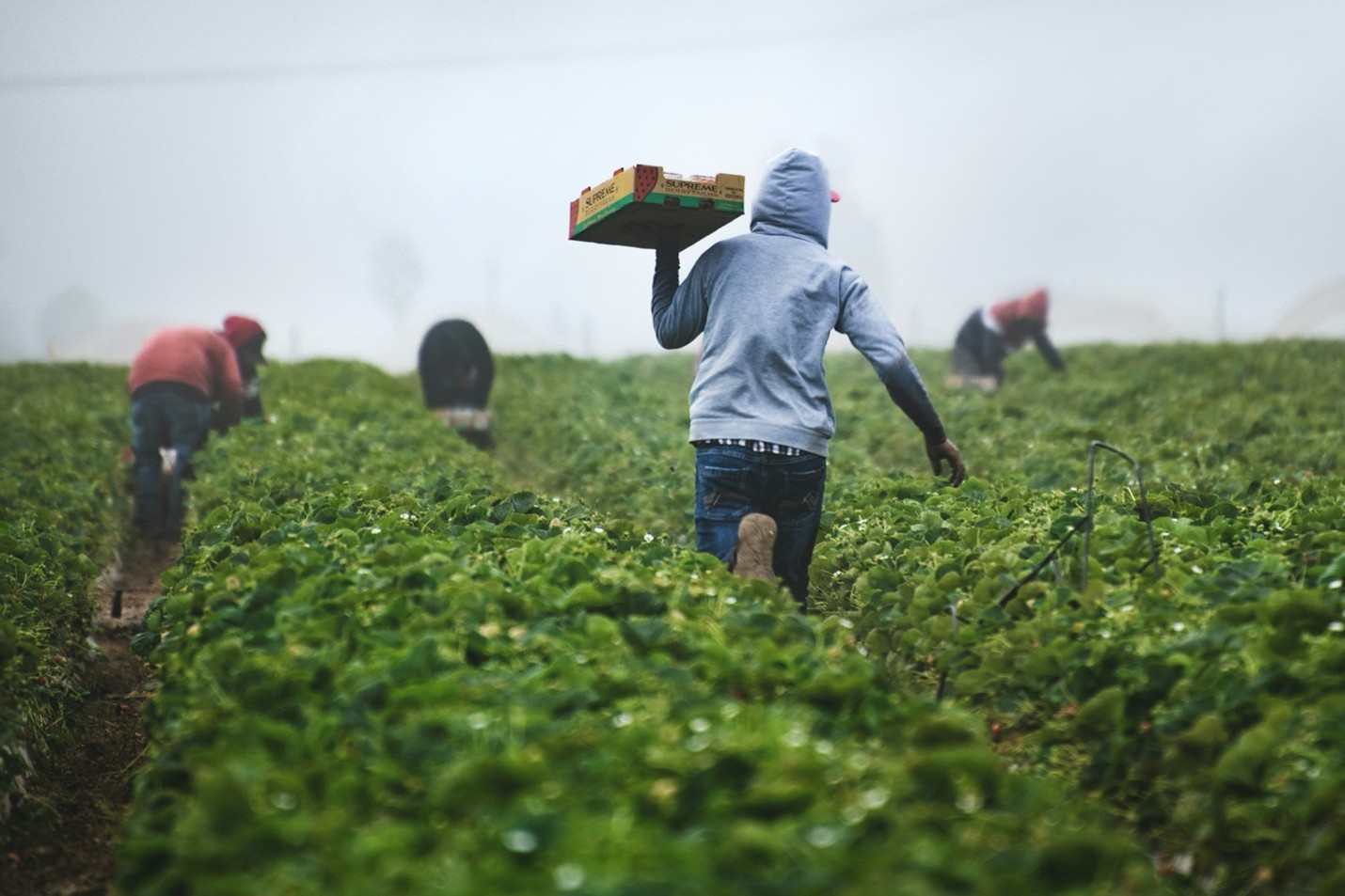
Amongst the fields, farmworkers are vital for the harvesting of the produce.[12] Yet, under the new ICE efforts, Latino farmworkers have stopped going to work.[13] Initially, the Trump administration refrained from ICE raids in farming communities, but quickly changed course.[14] ICE agents started conducting raids “at farm fields and packinghouses from the Central Coast to the San Joaquin Valley.”[15] Raids were documented on farms and fields in Tulare and Ventura counties.[16]

The Central Coast and San Joaquin Valley house some of the top food production counties in the United States.[17] At the top is Fresno County, followed by Tulare, Monterey, and San Joaquin.[18] Most of the farms located in these counties employ undocumented workers.[19] As the immigration raids began targeting these communities, farms have suffered. Farmworkers have stopped going to work for fear of being taken on their commute to work.[20] According to Marcy Kreiter, “Migrants are reluctant to take the chance of being hauled off to detention.”[21] Farmers are struggling to get their crops harvested as more than half of their workers have stopped showing up for work.[22] Farms expecting about 300 workers have only 80 show up after immigration raids.[23]

Farmers are not only experiencing losses in labor, but their crops have also gone unharvested, creating economic losses for them as well.[24] A farmer in Ventura County stated, “if 70% of your workforce doesn’t show up, 70% of your crop doesn’t get picked and can go bad in one day.”[25] Loss of labor thus means loss of crops and loss of food on American tables.

Outside of California, farmers are also experiencing crop and revenue loss. In Oregon, a farmer lost most of his workforce, leaving cherries to rot on the tree.[26] At the end of the picking season, the farmer will lose $250,000–$300,000 of revenue.[27] In Texas, Farmer Nick Billman lost his entire workforce.[28] He is struggling to find workers as he starts planning for the fall season.[29] Billman estimates that if he cannot find labor for his harvest plans, he is going to lose about $100,000 to $150,000 in revenue.[30]

In addition to the loss of revenue, grocery prices may be affected by immigration raids. From July 2024 to July 2025, food prices rose 2.9%.[31] If the produce is not harvested within a specific timeframe, it risks being sunburned or becoming over mature.[32] The labor shortage, in some instances, has prevented the harvest of crops, leading to loss not just for the farmers but for the nation.

The ongoing immigration raids affect the entire food system in the United States. Undocumented immigrants compose 75% of farmworkers in California[33] and 42% nationwide.[34] In addition to farming and agriculture, undocumented workers have a significant presence in food production, wholesale, and restaurants.[35] The fear of being taken away from their families has prevented many from going to work.[36] After a couple of days, others resume going to work due to economic necessity.[37]

The current approach to immigration in the United States is ineffective and harmful to the immigrant community. The leaders of this nation must take a different approach to immigration. Mass deportations are not the solution. Rather, our focus should be looking to new reforms tailoring pathways to legalization. Our food system depends on the immigrant community. They sustain our food system. No one should be living in fear.

[1] Sarah Fortinsky, Trump Executive Orders and Actions: By the Numbers, The Hill (Jan. 21, 2025), https://thehill.com/homenews/administration/5098445-trump-executive-orders-first-day/.

[2] Proclamation No. 14159, 90 Fed. Reg. 8443 (Jan. 20 2025).

[3] Id.

[4] Id. at 8445.

[5] U.S. Immigr. and Customs Enf’t, 100 Days of Record-Breaking Immigration Enforcement in the U.S., (Apr. 29, 2025), https://www.ice.gov/news/releases/100-days-record-breaking-immigration-enforcement-us-interior.

[6] Economic Research Service, Farm Labor, USDA (Sept. 12, 2025), https://www.ers.usda.gov/topics/farm-economy/farm-labor.

[7] La Cooperative Campesina de California, 31 Farmworker Facts You Should Know (Mar. 28, 2023), https://lacooperativa.org/31-california-farmworker-facts-you-should-know/.

[8] FSA, USDA, California State Fact Sheet (2011), https://www.fsa.usda.gov/Internet/FSA_File/10cafacts_v3.pdf.

[9] Id.

[10] Id.

[11] Cal. Dep’t of Food and Agric., California’s Agricultural Production Statistics, https://www.cdfa.ca.gov/Statistics/ (last visited Sept. 16, 2025).

[12] Marcy Kreiter, Crops Rotting in Fields with Undocumented Farmworkers Gone, The Food Institute (July 7, 2025), https://foodinstitute.com/focus/crops-rotting-in-fields-with-undocumented-farmworkers-gone/.

[13] Tim Reid et al., Immigration Raids Leave Crops Unharvested, California Farms at Risk, Reuters (June 30, 2025), https://www.reuters.com/business/immigration-raids-leave-crops-unharvested-california-farms-risk-2025-06-30/.

[14] Jessica Garrison et al., ICE Expands Immigration Raids into California’s Agricultural Heartland, L.A. Times (June 10, 2025), https://www.latimes.com/california/story/2025-06-10/ice-expands-immigration-raids-into-californias-agricultural-heartland.

[15] Id.

[16] Id.

[17]  Office of Public Affairs, Nine California Counties Make Top-10 List for Ag Sales in the U.S., Cal. Dep’t of Food and Agric. (Feb. 13, 2024), https://plantingseedsblog.cdfa.ca.gov/wordpress/?p=27335.

[18] Id.

[19] La Cooperative Campesina de California, supra note 7.

[20] Rebecca Davis O’Brien & Miriam Jordan, A Chill Sets in for Undocumented Workers and Those Who Hire Them, N.Y. Times (Mar. 9, 2025), https://www.nytimes.com/2025/03/09/business/economy/immigrant-workers-deportation-fears.html.

[21] Kreiter, supra note 12.

[22] Reid, supra note 13.

[23] Id.

[24] Id.

[25] Id.

[26] David Culver et al., Deportation Fallout: This farmer lost half his workforce. Now he’s losing his crop too, CNN (Aug. 7, 2025), https://www.cnn.com/2025/08/06/us/oregon-cherry-harvest-immigrant-worker-shortage.

[27] Id.

[28] Edgar Sandoval, On a Quiet Southern Border, Empty Farms and Frightened Workers, N.Y. Times (June 27, 2025), https://www.nytimes.com/2025/06/27/us/politics/border-immigration-farms.html.

[29] Id.

[30] Id.

[31] Economic Research Service, Food Price Outlook – Summary Findings, USDA (Aug. 25, 2025), https://www.ers.usda.gov/data-products/food-price-outlook/summary-findings.

[32] Reid, supra note 13.

[33] La Cooperative Campesina de California, supra note 7.

[34] Amrit Cheng, Mass Deportations, the Economy, and You, Nat’l Immigr. L. Ctr. (Apr. 16, 2025), https://www.nilc.org/articles/mass-deportations-the-economy-and-you/.

[35] Nicole Prchal Svajlenka, Undocumented Immigrants in the Food Supply Chain (2021).

[36] Carolyn Jones, ‘Afraid to go to school’: Immigrant families in the Salinas Valley are gripped by fear, Cal. Matters (Feb. 20, 2025), https://calmatters.org/education/k-12-education/2025/02/deportation/; Mary Miliken & Arafat Barbakh, In California strawberry fields, immigration raids sow fear, Reuters (July 14, 2025), https://www.reuters.com/world/us/california-strawberry-fields-immigration-raids-sow-fear-2025-07-14/.

[37] Reid et al., supra note 13.

An Old-Fashioned Disease Still Poses Modern-Day Threats in Coal Country

By Savannah Collins

Hello, everyone! This is Savannah Collins, the VJEL Volume 26 Environmental Justice Editor, and this is my final post in this position. It has been an absolute honor and privilege to be part of this year’s editorial board and working on environmental justice issues at such a critical time. When I first began this position, I wanted to highlight environmental justice organizations who are on the ground, doing the hard work. I’ve been extremely fortunate to have a wonderful group of contributors this year and the opportunity to speak during the devastation following Hurricane Helene. Now, as a final send off, I would like to highlight an organization near and dear to my heart who I hope reminds you of what we are working for: our fellow person.

In September of 2024, I spoke with Mary Varson Cromer, the Deputy Director of the Appalachian Citizens’ Law Center (ACLC). The ACLC is a nonprofit law firm focused on providing justice for coal miners and those living in the coal fields of Appalachia. Founded on the needs of coal miners, ACLC has adopted a community lawyering approach grounded in a just transition. Mentioned in other posts on The Beacon, a just transition is the notion of making sure the same people are not harmed by new forms of energy we transition to as we move away from a fossil fuel economy. In the case of Appalachia, this looks like ensuring mines that were developed using mountaintop removal are properly rehabilitated, water sources are not completely depleted, and those who worked in the mines have a new place of employment as the mines shut down. It also looks like making sure miners with occupational diseases receive the benefits they were promised.

Coal mining has led to the plundering and exploitation of Appalachia. Miners have often been subjected to extremely dangerous conditions. Historically, they were exploited through the use of company towns and forced to stay in debt to the very companies using them for their labor. These horrendous conditions culminated in many armed battles with the company owners and even the federal government, including the infamous multi-ethnic strike in 1921 that led to the Battle of Blair Mountain. This battle was the origin of the term “redneck”—referring to the red bandanas signaling who were striking miners.

Today, the occupational hazards of coal mining have remained; however, the jobs have dried up quickly as the mines have closed. Due to the lower levels of available coal from centuries of mining, it now takes much more digging to find any usable coal, stirring up great amounts of silica. This increase has directly led to greater rates of black lung at younger ages and with more serious implications. Black lung, also known as Coal Miner’s Pneumoconiosis, is a latent and progressive disease where a buildup of silica in the lungs causes extensive scarring, making it more difficult to breathe. Individuals with black lung essentially are facing a death sentence simply because their work is so hazardous.

ACLC, in partnership with Black Lung Associations across Appalachia, have gone to Congress multiple times on behalf of black lung sufferers to ensure their federal benefits remain intact. In 2019, 150 miners went to Washington, D.C., to speak with lawmakers and make sure their benefits did not sunset. This action was successful.

Benefits for these occupational diseases are critical when the jobs for renewable energy often do not employ the current labor force in an area. Instead, experts are brought in to run the job sites, leaving hard working people like these coal miners struggling to find a job. There was some progress under the Biden administration’s Inflation Reduction Act, working in partnership with agreements involving the United Mine Workers of America, have been trying to link former miners with renewable energy jobs. This work has largely been put on pause with the Unleashing American Energy executive order under the current Trump administration.

Now, more than ever, it is critical to support the work of ACLC and Black Lung Associations. On April 8, 2025, the Mine Safety and Health Administration paused enforcement of the Silica Rule which requires mine operators to “update their respiratory protection programs and…obtain additional respirators.” Without rules enforcing respiratory mine safety, the effects of black lung only increase. Additionally, the National Institute of Occupational Health and Safety was closed in April of 2025, stopping black lung screenings

Wasting Time: The Undoing of a Two-Year Septic Improvement Agreement Between the Department of Justice and the State of Alabama

By Aamore Richards

The Trump administrations recent approach to Diversity, Equity, and Inclusion has posed a threat to environmental justice everywhere. Earlier this year, President Trump issued an executive order eliminating Diversity Equity and Inclusion initiatives from the foreign service, declaring them to be illegal and “immoral” discrimination programs. While it may appear that President Trump’s anti-DEI initiatives are limited to hiring protocols, the ideological premise behind this decision undermines the longstanding principals of environmental justice. At the front end of these environmental justice rollbacks is the state of Alabama.

Lowndes County, Alabama is a predominantly Black county with nearly 73% of residents being African American. In June of 2023, the Alabama Department of Public Health issued a press release detailing the issues with septic systems in Lowndes County. Septic systems serve the purpose of treating and disposing household wastewater in residences disconnected from a centralized sewer system. A properly functioning septic system should prevent sewage from backing up into homes, and therefore ease public health and sanitation concerns for community members. In Lowndes County, the septic systems are not designed or installed to work with Lowndes County Black Belt soil, a dark-fertile clay soil whose thickness makes it difficult for tradition septic systems to function. As a result, raw sewage from residents’ toilets have been washing up into their yards where children play. The incompatibility between the soil and system is leading to improper drainage of wastewater from homes—raising potential health concerns for residents from the exposure to raw sewage.

In 2023, to reconcile the sewage issue faced by Lowndes County residents, the Departments of Justice and Health and Human Services under the Biden administration reached a groundbreaking agreement with the Alabama Department of Public Health. This exclusive legal agreement between the Department of Justice and Alabama Department of Public Health sought to “protect Black and low-income residents of Lowndes County” who: cannot pay to put in a functioning septic system, cannot afford to fix one, or are not on a municipal sanitation system.

In April 2025, the Trump administration abruptly reneged on this agreement. The Department of Justice has cited this decision as an expansion of President Trump’s executive orders forbidding federal agencies to perpetuate diversity, equity, and inclusion initiatives. The silent rationale from the Trump administration appears to be that the agreement between the Department of Justice and Alabama Department of Public Health, fits within the scope of Diversity, Equity, and Inclusion, by trying to be inclusive of low income and Black Lowndes County residents in subsidizing their inability to afford proper septic systems.

The consequences of the Department of Justice’s drawback from the agreement are clear. Black and low-income residents who have not already received support in fixing or installing a compatible septic system in their homes will continue to be plagued by washed-up raw sewage. This contact with raw sewage may deteriorate the quality of health of Lowndes County residents by exposing citizens to harmful microorganisms which cause illness.

The question on everyone’s mind is can they do this? Can the federal government breach a contract with a state agency? How might the State of Alabama proceed to fill a Department of Justice-sized vacancy in their support plan for their residents? What are the legal options remaining for the state to pursue?

The state of Alabama has two options. First, formulating defenses against the Department of Justice’s abandonment of their agreement. One option the state could consider is pursuing legal action against the Department of Justic in a civil suit for breach of contract. Damages received could be used by the state to supplement the costs of continuing to provide residents assistance with installing proper septic systems. The second, and most important focus of the Alabama Department of Public Health should be to take proactive measures to limit the impact health and disease on residents from the exposure to raw sewage. One way the County can do this is by providing a pop-up health truck offering regular checkups and care to potentially exposed low-income residents. By providing health care access assistance, the County can directly monitor and work to prevent the consequences of the failing septic systems.

The Department of Justice’s betrayal of Lowndes County residents is all the more reason why environmental agreements and initiatives ought not to be left to the whims of presidential administrations changes but engraved in the fabric of law. The County may consider filing suit against the federal government for breach of contract or for the County’s economic losses in beginning to facilitate the program. Costs may include any purchases of systems and contracting of employees to work on the implementation and installment of suitable septic systems. If successfully, the County may request the government fulfill its obligations or request compensation which can be used for the County to facilitate the program on its own.


Whose World is This?

By Nakyshia Fralin

In “The World Is Yours,” Nas raps about being “out for dead presidents to represent [him].” While layered with meaning, there’s a message that sticks out to those like me—the chase for money is the answer to life’s problems. It’s a mantra I’ve heard since my childhood, the belief that the world becomes ours when we get those “dead presidents.”

I, like Nas, grew up in a community chained by poverty. A community that is still chained by poverty. My family still lives in neighborhoods next to factories, flooded streets, and barren landscapes. No trees. No healthy food options. An environment that denies its inhabitants basic necessities: clean air, clean water, healthy food, or even a simple park bench.

Pollution is not just some byproduct for the greater advancement of our Nation. It is asthma, heart disease, and cancer to my community. Flooding is not just some byproduct of a bad storm. It destroys homes, poisons drinking water, and leaves many with anxiety and depression. Lack of trees shouldn’t be taken lightly either. It makes the air worse, the heat unbearable, and the flooding inevitable. Lack of healthy food options adding obesity, poor health, poor academic performance, and shortened lives to this deadly cycle.

This is what is known as environmental injustice. Something, I thought I could escape. Yet, that isn’t the case.

Don’t get me wrong—money matters. There is a clear link between poverty and environmental injustice. This understanding was (is) the dominating narrative; however, new research shows something much more devastating.

Environmental injustice follows race, no matter what the socioeconomic status is. A 2025 study revealed that Black communities face significantly higher pollution exposure at every income level when compared to white communities. Whether we are in the city, the suburbs, or rural areas, the burden is the same. In fact, Black families making between $50,000-$60,000 a year, on average live in neighborhoods more polluted than white families making less than $10,000 a year. The conclusion, here, is clear: if environmental injustice follows race then many of those that suffer from its effect do so because of their proximity to Black communities.

The Trump Administration cutting environmental justice initiatives is not to be taken lightly. They have cut $192 billionfrom projects aimed at sustainable housing, water infrastructure, climate and clean energy projects. My hometown, Wichita, Kansas, lost $10 million in funding for environmental justice. This is leaving organizations nationwide from San Diego to New Orleans to Minneapolis without essential funding.

I think of environmental injustice as patient 0. It’s poisonous touch disrupting the balance of tranquility leading to disproportionate health disparities, crime rates, joblessness, and violence in Black communities. Leaving families, like mine, caught in an unbreakable cycle. A cycle that money alone wont fix.

Now more than ever, we need: political action, community engagement, mass education, transparency, and environmental justice organizations. And most importantly, we need unity. Environmental injustice is not the byproduct of poverty; it’s the byproduct of institutional racism.

This vicious cycle has left people of color on the frontline of the climate crisis. Yet, when these effects happen, these communities receive less reinvestment compared to white communities. Environmental injustice is not color-blind and won’t be fixed by income equality. It requires intentional, race-conscious action.

If we don’t then—Whose World is This?

From Pollution Catastrophe to a Just and Equitable Future

By Christian Patierno

The armpit of America (as out-of-staters often refer to it), New Jersey, is working to shed this distasteful reputation with its recent groundbreaking environmental justice legislation. Some critics argue that environmental justice and job creation are incompatible, but New Jersey demonstrates that they can coexist. The two are not mutually exclusive; effective environmental regulations that protect disadvantaged communities can coexist with job preservation and creation. Despite its polluted reputation, New Jersey is making strides to create a better reality for all.

As a native New Jerseyan, I can say it is a beautiful state. Unfortunately, there are failures in the state’s environmental quality. One of the most well-known examples is the failure of the Passaic River, which was once one of the most toxically polluted rivers in the U.S. Years of manufacturing and poor disposal methods left toxins like dioxin, mercury, and PCBs, including byproducts of Agent Orange, in the sediment. This pollution, resulting from poor land-use management, negatively affects vulnerable, often immigrant populations and permeates many populated cities and towns, including my own. And New Jersey’s pollution calamity isn’t limited to rivers; ozone pollution is among the worst in the nation. According to the American Lung Association, all counties in New Jersey except for one fell into metropolitan areas that ranked among the twenty-five worst for ozone pollution. New Jersey has lived up to its reputation as a massive landfill. Of 846 landfill sites, 830 have been closed and are no longer accepting waste; however, many toxins remain and may contribute to New Jersey’s high ozone levels. Finally, driving home the pollution problem, New Jersey has the most Superfund sites in the nation, with 115 sites listed on the EPA’s National Priorities List. These sites are areas where hazardous waste has been improperly managed and are now eligible for federal clean-up funding. However, the effects of the states’ pollution are not felt equally.

The effects of these toxic pollutants are compounded by the fact that New Jersey has the highest population density of any state, resulting in increased exposure to these pollutants. They have disproportionately impacted minority communities. Many of the state’s polluted sites are clustered around major cities like Jersey City, Newark, Trenton, and Atlantic City, all of which have predominantly African American and other minority populations. Studies conducted in New Jersey indicate that many residents believe the government is not doing enough to regulate. They’ve also shown that African Americans are more likely to live in neighborhoods with poor environment and living conditions “which can limit physical activity and contribute to higher rates of premature mortality and morbidity.” This pollution can also devalue properties, create unsafe conditions, and lead to inadequate services in response. However, recent legislation has brought hope to these communities, which have been disproportionately affected by years of pollution and environmental neglect.

This legislation is underwhelmingly referred to as New Jersey’s Environmental Justice Law. However, its effects are far from underwhelming and are instead trailblazing. The law, passed by Governor Phil Murphy in 2020, requires the New Jersey Department of Environmental Protection (DEP) to evaluate the environmental and health impacts on overburdened communities (OBCs) when reviewing applications for new facilities. It directs the DEP to reject applications for new facilities that cannot be shown to avoid disproportionate impacts on OBCs or serve the public interest. An “overburdened community” is defined as any community in which “1. at least 35 percent of the households qualify as low-income households; 2. at least 40 percent of the residents identify as minority or as members of a State recognized tribal community; 3. or at least 40 percent of the households have limited English proficiency.” Notably, this legislation is the first of its kind in the country. It aims to provide all residents, regardless of income, race, ethnicity, or national origin, with a healthy environment to live and raise a family.

However, there’s always a “but”. Critics argue that this law, and others like it, could threaten the economy, especially in the communities it aims to protect. Ray Cantor of the NJBIA stated the rule “misses the mark by only focusing on presumed negative impacts” and doesn’t consider benefits like jobs that facilities bring. Cantor warns that communities could lose opportunities for economic development if permit decisions are made based on “the number stressors on paper, versus actual stressors.” This isn’t specific only to New Jersey; the same arguments are present at the federal level. In West Virginia v. EPA, the Supreme Court limited the EPA’s authority to regulate power plant emissions, justified by the idea that strict EPA regulations might threaten the viability of fossil fuel generation and give the EPA too much power over associated future jobs and revenue. In seeking to be shielded from regulation, the fossil fuel industry often cites the impact on revenue and potential job losses. However, justifying this by citing potential future job and revenue losses is not entirely accurate regarding environmental justice-based regulation; such regulation can support both the environment and the economy.

On a national level, the Inflation Reduction Act has led to billions being invested in clean energy and climate resilience. The Inflation Reduction Act, at the same time, while it works to combat pollution, has generated numerous new jobs. Examples include BlueOval SK, a subsidiary of Ford funded by the IRA, which will build battery manufacturing plants and create 7,500 new jobs near disadvantaged communities. Another employer, ChargerHelp! is training thousands of maintenance technicians from disadvantaged communities to support EV expansion. Yet another, BlocPower, installs low-infrastructure Wi-Fi networks and other electric technologies in low-income neighborhoods. Under the IRA, it also makes certain tax rebates available to customers. EJ policies are not holding these businesses back; they are helping them. Companies are learning to align with federal and state initiatives and secure funding to support communities in need. Environmental attorney Matthew Karmel notes that even in New Jersey, where regulations are stringent, companies are taking proactive measures, engaging with the community, conducting risk assessments, and considering the proximity of EJ communities when evaluating a project.

The New Jersey Environmental Justice Law is not anti-economy; it’s meant to protect disadvantaged communities. The law requires companies to demonstrate that they cannot avoid disproportionate impacts on disadvantaged communities, and if they cannot, they must take additional measures to protect those communities facing greater burdens. This is more than strict permitting; it gives a voice to disadvantaged communities. It helps demonstrate that environmental regulation can have a positive impact on economic growth and that growth doesn’t need to harm public health, especially in disadvantaged communities, while providing good access to jobs.

New Jersey is taking a strong stance with its law, even if a new facility would greatly boost the economy. If it negatively impacts a disadvantaged community, the project should and will be dead in the water, or, I suppose, the Passaic. For a long time, disadvantaged communities in New Jersey have been subjected to pollution by companies that disregarded their health. The law seeks to strike a balance between the two, favoring disadvantaged communities and their health while also providing jobs. One of the most polluted states is making progress. If New Jersey can do it, so can others.

Coming Back to Earth with Agroecology: Regenerating Our Soils and Our Communities Out of Agrochemical-Heavy Conventional Farming

By Ilinca Johnson

Agriculture could become one of the greatest mitigation forces of climate change, as well as remedy and prevent environmental justice issues in the American food system. Currently, the ability of the food system to meet food security needs is threatened by soil erosion, which is created by climate change, and conventional farming practices. An estimation from the U.S. Department of Agriculture suggests more than 57 billion tons of soil are eroded on Midwest farms due to conventional farming practice. These soil-negative circumstances are worsening already poor conditionsfor many farm workers and rural communities across America. Regenerating agricultural soils with agroecology through holistic system uplift goes together with making American farming a climate solution and addresses historic and present wrongs in rural and environmental justice communities.

Agroecology is distinctly and explicitly a systems theory similar to regenerative agriculture. However, agroecology goes further and approaches social and economic dimensions of localized, territorial food systems. When considering approaches to the systematically marginalized, agroecology “seeks to minimize external inputs and optimize sustainable interactions between plants, animals, humans and the broader environment.” Historically, agroecology originates from indigenous food practices before entering scientific literature in the past hundred years. Now, agroecology is promoted as a climate and social justice solution locally and globally.

Agroecology comprises both ecological and social principles. First, there is a link between the vitality of the soil microbiome and crops to be able to hold down higher carbon stocks, not erode, and maintain the health of civilization. If healthy soil bacteria and fungi are gone, then the soil degrades and cannot sustain plant-life. Humans depend on cropland for 99.7% of their food. With proper management from the agroecological regenerative farming techniques,the United States’ historical declines over the past two centuries of Soil Organic Carbon (SOC) can be reversed. Boosting SOC means drawing carbon out of the atmosphere, leading to the revitalization of soils and microscopic soil life. That then revitalizes surrounding or integrated ecosystems and rural communities, as well as provides more nutrient-rich foods to people everywhere.

Second, the social and cultural principles of agroecology encompass the local and cultural-specifics of farmworkers and rural communities, respectively. Agroecology facilitates co-creating and sharing of knowledge within the context-specific agricultural lands, incorporating local culture and food traditions, and building capacities that improve livelihoods and the rights of locals. Further, agroecology recognizes that these communities heavily depend on terrestrial and aquatic biodiversity and services for both livelihood and sustenance, requiring community-level governance with stakeholders. Lastly, agroecology is an agricultural mechanism for just transition, necessitating a shift to a circular, non-extractive economy.

At this time, 80% of all global agricultural land is moderately to severely eroded—to the point of no longer being arable from conventional farming practices. Modern, industrial agriculture replaces multispecies ecosystems with monoculture crops and technologies like laser-guided tractors and agrochemicals. Agrochemicals include herbicides, fertilizers, pesticides, antibiotics, and fungicides. Agrochemicals kill even beneficial soil microbes, causing soil fertility declines, and disrupting surrounding wild ecosystems by killing natural predators. More agrotechnological inputs are required to maintain crop yields as soil dies. Deteriorating soil fertility makes crops more vulnerable to insects. The negative repercussions extend to humans.

Rural agricultural communities living near farms or CAFOs are exposed to pesticides through their employment and pesticide drift. These pollutants can affect farmworkers and rural community members acutely in the short-term by causing headaches, nausea, vomiting, dizziness, and rashes. Over the long-term, pesticide and herbicide exposure can lead to cancer, asthma, suicide, autoimmune diseases, Parkinson’s disease, or sterility. Prenatal exposure has been associated with neurodevelopmental problems including lower IQ, and issues with brain function, reflexes, and ability to connect. Up to 300,000 farmworkers become ill each year because of pesticide exposure.

Significant consolidation of farming operations is leading to fewer protections for farmworkers and ruralcommunities. During the late 1940s, researchers investigated whether increasing the concentration of power in farming, as small independent farms decreased, has had an impact on communities’ overall wellbeing. Early researchdemonstrated that having greater numbers of small farms was related to community wellbeing, an outcome that received huge backlash by corporations. As a result, the USDA shut down its unit that commissioned this research. Later research, including much larger quantitative studies, showed similar findings to these early researches.

Runoff from crop fields and livestock releases large amounts of pollutants into neighboring bodies of water, accounting for “65 to 75 percent of all pollution in the most polluted waters of the United States.” Direct discharge of animal wastes, particularly Concentrated Animal Feeding Lots (“CAFOs”), lowers water quality and the standard of health within ecosystems. Waste spills from larger CAFO’s with poor sanitation are prone to waste spills and can cause public health emergencies, affecting nearby aquatic habitats and species. In North Carolina during the summer of 1995, there were seven major spills from waste lagoons, six related to hog feeding operations. Over more than 30 million gallons of hog waste poor into waterways, resulting in a “massive fish-kill” with over 15 million fish killed in their rivers.

A study from the California Institute for Rural Studies found that 45% of Fresno County farmworkers and 66%of Salinas Valley farmworkers are food insecure, despite living in two of the most agriculturally productive regions of the U.S. Farmworkers often live in substandard housing conditions that are overcrowded, whose conditions are unsanitary, where basic utilities are lacking, and in areas isolated for basic service needs including health clinics, grocery stores, and public transportation. Historically, big agriculture leaders and state law enforcement have met protests of farmworker treatment with violence and opposition.

The situation is not lost to the wind—soil is regenerative. So are people and surrounding communities given empowerment and resources. With the right practices, soil can be renewed, unlike fossil fuels in systems that also benefit small farmers and laborers, surrounding rural communities, and even the consumer too. In the first book ever published on American Agriculture, Connecticut Farmer Jared Eliot used the end of his introduction to consider what occurs when the best techniques are taken to the soil: “the progress that hath been made in So Short a Time is very wonderful.”

Triumphing Over Terror: The Fight for Environmental Justice Under a New Regime

by Kelly Bell

Not even one full day into his second term, President Donald Trump attacked environmental justice. Immediately slashed Biden-era executive orders protecting disadvantaged, low-income, and minority communities included Justice40 and America’s Commitment to Environmental Justice. Announcements continued on further rollbacks, and then, on Feb. 6, Environmental Protection Agency (EPA) announced the leave of 168 employees, all of whom worked for the Office of Environmental Justice and External Civil Rights. That same day, the Office of Environmental Justice was also eliminated from the Department of Justice.

Funding freezes now block over $19 billion in EPA funding. In the not-so-distant past, EPA had a budget of $2.8 billion for the Environmental and Climate Justice Program alone. All over the country, communities facing environmental injustice no longer know if the funding promised to them will arrive. This loss of executive and agency support directly harms Americans. Without funding, federally-available information, and federal support, the already-uphill battle for environmental justice just got steeper. However, the fight was never easy, and now, hope cannot be lost.

States must now more than ever consider implementing their own environmental justice programs for the welfare of vulnerable residents. Vermont’s Environmental Justice Law, for example, created two committees that focus on ensuring environmental justice in the actions of State agencies. One step further that Vermont and other states should and must consider in the wake of the collapsing federal protections is providing state grants specifically to address environmental injustice within their borders. These state grants could be provided to communities, community organizations, or nonprofits in the areas. Vermont gives Community Development grants. Adding a separate initiative for environmental justice community grants tides over the loss of the federal support.

We will unfortunately not see states take as drastic an action as needed to protect these communities, and some states will not take any actions at all. President Biden’s administration faced state backlash from environmental justice initiatives. Louisiana is one state from which we will not see environmental justice support. The state’s 85-mile ‘Cancer Alley’ is a hotspot desperately needing environmental justice; minority communities disproportionally face the significant health effects impacting the region. In reaction to Biden’s initiatives, however, Louisiana refused to acknowledge or claim any significance on this racial disparity.

Nonprofits––both legal and community-founded––will need to keep the dreams of environmental justice alive by stepping up and filling the gaps left by states. The Southern Environmental Law Center, for example, explicitly called for protecting the federal funding already promised to communities suffering from environmental injustice. The Michigan Sierra Club made a statement regarding its priorities to safeguard communities, as did Earthjustice. During President Trump’s first term in office, nonprofits were able to keep environmental justice alive through tireless activism.

Community nonprofits and organizers, burdened once again with a fight their government should be handling for them, carry the heaviest loads. Often on the ground, in the moment, and dealing with the environmental injustice firsthand, community activists have a long fight ahead. The director of a Louisiana nonprofit faces downsizing but plans to keep up the fight as best as possible (though this is a clear example of how deep the work will get in these states supporting Trump’s rollbacks on environmental justice). The steps forward for directors in these situations seem grim, but possibilities exist. Grassroots organizing, making due without the federal grants, may not give way to much progress, but it another way to minimize the harm of the stripped protections. The Strategic Concepts in Organizing and Policy Education, for example, works to promote education about environmental justice impacting the local community and aid in community projects.

In conclusion, President Trump’s environmental justice rollbacks will harm vulnerable communities. States should step up and fight for their communities, but many agree with the rollbacks and will allow these changes without a fight. Legal nonprofits have and will continue fighting, but much of the work in keeping the communities running will fall on residents and local organizations themselves. Instead of embracing fear, remember: in times where we only have each other, unity is our strength.

Green Gentrification: Rochester’s Inner Loop

By Katherine Scott

Community development is an essential part of creating a more sustainable society. The way that most cities currently operate is not efficient and is generally detrimental to the environment. To change that, city planners, architects, and legislators will scope out spaces that can be re-utilized into something more sustainable. They develop plans to create more walkable cities to reduce the amount of time an average commuter has to spend in a car, or they’ll create larger plots of land for trees and other vegetation to create “green space” in a city.

These are great ideas, but the plans often overlook what is already in front of them. City planners and legislators often tear down what already exists to create green spaces or more walkable cities. By doing so, they discount the residents who live in that community.

The major factor that often goes under looked, or that gets reduced to a small net loss, is the economic impact that “greening” the city will have on the current residents. Too often, those residents are low-income and disproportionately people of color. For example, New York City converted an abandoned subway track into a lovely park for people to walk on, called the High Line. This park includes modern art, plenty of plants and flowers, and an incredible view of the city. However, many parts of the High Line are surrounded by resident housing (as is most of New York City). Any residential housing adjacent to the High Line raised housing values by 35%. The increase displaced current residents and keeps out anyone who cannot meet the new economic norm.

This is the process known as green gentrification. Cities have big aspirations of creating a sustainable community but end up displacing low-income residents. This happens all over the country, but more specifically, it is happening right now in Rochester, New York.

Marketview Heights is a community in Rochester that has existed for generations. Members of the Marketview Heights community want to keep the community’s sense of place and are skeptical about the incoming teardown of Inner Loop North. Sense of place is the attachment that one has to their home and to their community. When there is not a strong connection to the community, people tend to not treat the space very well. Renters who move into the places built in place of the Inner Loop often do not have a strong connection to their community. Residents fear losing this sense of place, especially given what they have already experienced from the Inner Loop East project.

In the place of Inner Loop East, where part of the highway used to run, are towering modernized apartment buildings for renters. It is quite a juxtaposition from the houses just across the river that have been standing for generations. When asked about the change, Suzanna Mayer, of the local Non-profit Hinge Neighborhoods, said, They got rid of a moat, and built a wall.”

The city of Rochester, New York, has just recently received a substantial grant from the state to tear down another part of the Inner Loop–a highway that has segregated the downtown Rochester community since the 1960s. From the perspective of an observer of the downtown Rochester community, this is a great success. The city of Rochester is achieving its goal of tearing down the eye-sore highway, making downtown Rochester a more walkable city, and creating “. . .safer streets, bike lanes, green spaces, and good paying local construction jobs. . ..” to quote Senator Chuck Schumer when interviewed for the City of Rochester website. This seems like a great environmental win for the city. Some residents of Marketview Heights, the community right down the street from the recent Inner Loop East construction, disagree.

Renters who move into the places built in place of the Inner Loop often do not have a strong connection to their community.

A solution to this inevitable paradox: Consider what the people already living in that community have to say about developing their community. The experts in community development are the people who live there. No one can create a better place for a person when they have no idea of the needs of that person and their community. Take into consideration that there could be more community-building events or what they can do to encourage renters to consider long-term living.

The “wall” that Inner Loop East built was not just a physical, aesthetic divide but a social divide as well. There must be a plan to incorporate the current Marketview Heights community into the new one created by the Inner Loop project; a plan to create opportunities for the people coming into the community and especially opportunities for its current residents. The architects of the Inner Loop project should build upon what is already in the community and listen to the residents’ input and ideas.

image used with public share permission from: ProtectThackerPass.org/resources

While We’re Here: Acknowledging Harm in Federal Green Initiatives

By Ariana Richmond

On day one in office, the new administration canceled climate change initiatives. Executive Order 14154 eliminated the “electric vehicle (EV) mandate,” revoked twelve executive orders addressing the climate crisis, and attempted to override bipartisan climate change legislation. Setting aside the consequences likely to result from an absence of federal leadership, this complete stop is also an opportunity to pause and think about equitable solutions through a Just Transition. To that end, how have green initiatives like electric vehicle goals harmed marginalized communities?

Federal green initiatives—even well-intentioned with environmental justice—too often still come at the expense of historically oppressed communities. Under the Biden administration, there was bipartisan support for clean energy and infrastructure as well as environmental justice—and even for putting them all together.

At the executive level, the Biden administration committed to environmental justice through the Justice40 (J40) Initiative. Through Executive Orders 14008 and 14096, the White House committed 40% of overall benefits from federal clean energy and infrastructure projects to historically disadvantaged communities.

Consistent with this, Congress passed, and President Biden signed into law, two pieces of landmark legislation: the 2021 Infrastructure Investment and Jobs Act (commonly known as the Bipartisan Infrastructure Law or BIL) and the 2022 Inflation Reduction Act (IRA). Both laws established infrastructure and clean energy projects that prioritized disadvantaged communities. From this, the Biden administration produced a list of over 500 programs under J40authorized by Congress for climate change and environmental justice. In this way, the federal government committed to a green economy while purporting to serve marginalized communities.

However, some of the clean energy programs directly harm marginalized communities. For example, the BIL and IRA advance electric vehicle (EV) manufacturing, which has harmful local impacts. The IRA alone appropriated $3 billion to the Department of Energy’s Advanced Technology Vehicles Manufacturing Loan Program, and removed the program’s loan cap, to fund direct loans for manufacturing facilities for EV battery critical minerals. Accordingly, the Department of Energy issued a $2.26 billion loan to Lithium Americas, a Canadian company, to build a lithium mining facility at Thacker Pass in northern Nevada. Notably, this is all part of the J40 environmental justice program. Further, both the Biden and previous administration supported the mine, with the Biden administration increasing funding and finalizing the loan.

The area of the mine, Thacker Pass, Nevada (Peehee Mu’huh), is unceded land. The Numu/Nuwu and Newe Peoples maintain rights to the land. Today, the area borders Oregon, sits atop an extinct volcano, and is likely one of the largest sources of lithium in the U.S. Most importantly, the area is hugely significant to the Indigenous Peoples who have lived there since time immemorial.

Forcibly removed to reservations nearby, at least six federally recognized Tribes of the Numu/Nuwu and Newe People resist the mine site. The Fort McDermitt Paiute and Shoshone Tribe has a 54-square mile reservation that is around 30 miles from the mine. Some of the harm to Tribes from the mine includes: obstructing hunting, fishing, and gathering rights; preventing cultural and religious practices; obstructing the continuation of traditions; and infringing on ancestral land claims—in addition to ecological and environmental harm. There is also an increased risk of violence, including sexual violence against women, historically pervasive among extractive industry practices. Additionally, the land is a sacred burial site since 1865, when U.S. soldiers massacred Numu/Nuwu and Newe Peoples who inhabited the land.

Tribes resisting the mine have sued in federal district court, lost, and lost on appeal at the Ninth Circuit. Under the National Historic Preservation Act and NEPA, the federal government must follow procedural requirements, including Tribal consultation, before approving the project. Additionally, the U.S. government has a trust relationship with Indigenous Nations and must engage in good-faith, nation-to-nation consultation. According to a February 2025 Human Rights Watch report, the construction of the mine also violates Indigenous Peoples’ rights under international law, to obtain free, prior, and informed consent before permitting the mine. Yet, the U.S. government failed to uphold each of these obligations.

In this way, the lithium mine violates the rights of Tribes despite the U.S. government categorizing the project as green and just. This case illustrates how federal green initiatives purporting to advance environmental justice fail to do so. A green economy carried out at the expense of Indigenous Peoples is neither green nor just. It is important to acknowledge this harm now while federal initiatives are stalled. It is equally important to consult directly with environmental justice communities, including Indigenous Peoples, before advancing policies for a green economy.

Skip to content