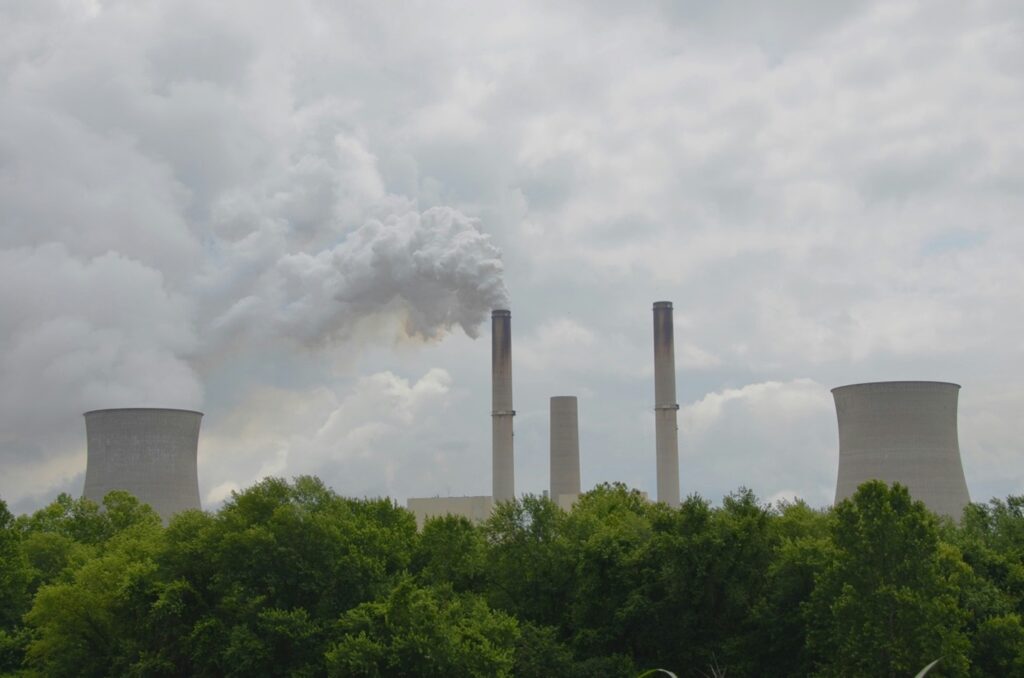


Withdrawing from the UN Climate Negotiations: Cascading Mistakes from the Trump Administration
By Rachel Westrate

No one was particularly shocked when one of President Trump’s first acts upon returning to office on January 20, 2025 was to sign an executive order directing the State Department to withdraw from the Paris Agreement on climate change. After all, Trump pulled out of the Agreement during his first term, only for the United States to re-join the Agreement under the leadership of President Joe Biden in 2021. Now, a new January 7, 2026 Presidential Memorandum demands the U.S. withdraw from the parent treaty of the Paris Agreement—the United Nations Framework Convention on Climate Change (UNFCCC)—as well as 30 other United Nations entities and 35 non-U.N. organizations.

Withdrawal from the UNFCCC will make the United States the only U.N. member state that does not participate in the international climate treaty. For those who care about the health of our planet, U.S. foreign relations, or general international order, this move is deeply troubling. It is unsurprising that this Administration would take such drastic measures to prevent the United States from participating in the international climate conversation. But it is also a profoundly un-strategic move by the Trump Administration, given both their keen interest in international energy trends and ongoing domestic litigation against state climate laws.

This blog will provide a brief background on the international climate regime, summarize the legal speculations around the U.S. withdrawal from the UNFCCC, and discuss the implications for Trump’s international and domestic priorities.

Background: the UNFCCC & International Climate Negotiations

The United States was the first industrialized country and the fourth country overall to join the UNFCCC, after ratification by the Senate and signature by Republican President George H.W. Bush. As the first and still the most significant multinational climate treaty, the UNFCCC establishes the framework under which countries cooperate to address climate change. That framework entails an annual Conferences of the Parties (COPs) where UNFCCC member states negotiate “legal instruments” or “protocols” to help achieve the UNFCCC’s goal of stabilizing greenhouse gas concentrations in our atmosphere.

Countries have negotiated and adopted two main instruments under the UNFCCC: the 1997 Kyoto Protocol and the 2015 Paris Agreement. The United States signed the Kyoto Protocol in 1998. But the Senate never ratified that treaty, because it called for binding emissions reductions in developed countries without imposing similar obligations on developing countries (the Byrd-Hagel Resolution expressing the Senate’s distaste for Kyoto passed with a vote of 95 – 0). As soon as it became clear that the U.S., the largest annual emitter of greenhouse gases at the time, would not ratify the Kyoto Protocol, negotiations began anew under the UNFCCC to work toward an agreement that would be more universally accepted.

The result was the Paris Agreement. Paris, unlike Kyoto, does not mandate emission cuts from any country. Instead, it establishes a cooperative framework under which countries work together to limit warming to under 2 degrees Celsius by creating and submitting plans to reduce national greenhouse gas emissions (called Nationally Determined Contributions, or NDCs). Parties to the Paris Agreement must also submit annual reports on their greenhouse gas emissions. Aside from those reporting obligations, though, the Paris Agreement is an entirely voluntary instrument, relying on bottom-up, domestic action within countries to address climate change—an evolution from the top-down, mandatory emissions reductions required under the Kyoto Protocol. 195 member countries to the UNFCCC adopted the Paris Agreement in 2015, and President Obama used his executive authority to ratify the Agreement on behalf of the United States in 2016.

President Trump withdrew from the Paris Agreement upon taking office, with the U.S. withdrawal becoming effective in 2020. The U.S. then rejoined under President Biden in 2021, only to deposit a notice of withdrawal from the Paris Agreement with the Office of the U.N. Secretary General on January 27, 2025, shortly into Trump’s second term. The U.S. withdrawal will become effective one year from that date, on January 27, 2026. (For a full timeline and guide, see NRDC’s Paris Climate Agreement: Everything You Need to Know).

Legal Implications of Withdrawing from the UNFCCC

While a President can unilaterally withdraw from the Paris Agreement (given that President Obama unilaterally entered it in 2016), it is a matter of legal debate whether the same is true of the UNFCCC. During the last Trump Administration, legal scholars built a body of work exploring this question. Professor Harold Koh published a 2018 essay arguing the President does not have the authority to unilaterally terminate or withdraw from any international agreement. Professor Jean Galbraith argued in a law review article that if a President unilaterally withdraws from a Senate-ratified treaty, the action does not negate the Senate’s initial advice and consent, and a future President could unilaterally rejoin the same treaty without seeking Senate re-authorization. But there is no Supreme Court precedent on unilateral withdrawal or rejoining of Senate-ratified treaties, and so the question remains up for debate.

This time around, the climate legal community has been quick to opine on whether or not the President can withdraw from the Framework Convention without consulting Congress and what withdrawal might mean for U.S. participation under a more climate-friendly future administration. Former U.S. climate negotiator Sue Biniaz and Professor Galbraith explained the international and domestic process of withdraw and reiterated their theory of rejoining without additional Senate consent. Carbon Brief collected experts’ thoughts on withdrawal, rejoining, and practical changes to the climate negotiations absent U.S. participation, detailing the legal uncertainty of the move and analogizing to other international organizations the U.S. has left and rejoined. Law Professor Dan Farber suggested that the U.S. may not even need to be a party to the UNFCCC to play a role in the Paris Agreement. The Executive Secretary of the UNFCCC issued a statement on Thursday, January 8th noting that “the doors remain open for the US to reenter in the future”—but what that looks like legally is anyone’s guess.

We have yet to see if any litigation will be filed against the Trump Administration for this latest action—and whether any potential litigation may provide us with a definitive answer.

International Implications

By withdrawing from Paris, the United States will no longer be required to submit an NDC, nor will it submit yearly reports on domestic emissions (although, despite the withdrawal not officially occurring until 2026, the Trump Administration failed to submit the data in 2025). U.S. funding to the international climate organizations has ceased, including the UNFCCC and the Green Climate Fund (GCF).

But the U.S. withdrawal also means it can no longer participate in negotiations as a party and does not have the right to vote, which in turn means the U.S. will no longer have a say on topics that seem central to the Trump Administration’s policy agenda. In recent years, multinational climate negotiations have increasingly seen calls for an international roadmap to phase out fossil fuels, which would jeopardize the Administration’s goal of exporting domestic fossil fuels. The U.S. has already used its influence in other spheres to weaken environmental language coming out of the U.N., and it seems strange the Administration is willing to so easily give up the opportunity to thwart international climate progress.

Pulling out of the UNFCCC also means that future decisions and agreements will not reflect the interests or priorities of the United States—and are likely to be more heavily influenced by other big players. That includes China, which is rapidly expanding its global influence and renewable energy markets, and the European Union, which usually favors a more top-down, regulatory approach to addressing climate change in comparison to U.S.-favored market-based, voluntary approaches (for evidence of the U.S.-EU tension, see recently released State Department papers detailing the lead up to the Paris summit).

But what is bad for the Trump Administration could well be good for people and the planet. The lack of the presence of the United States, and particularly the Trump Administration, could leave room for more innovation and progress in the climate talks, as U.S. positions (in both Republican and Democratic Administrations) against mandatory emissions reductions, climate finance contributions, and phase-out of fossil fuel subsidies have frustrated negotiations in the past. While deep divides remain among countries party to the UNFCCC and the Paris Agreement, the power vacuum left by the U.S. may create an opportunity for new players and alliances to support ideas that would have previously been considered dead on arrival.

The folly of the Trump Administration and the potential for new movement in the climate negotiations, however, are unlikely to outweigh the staggering loss of the U.S. withdrawing from the UNFCCC. A climate process without the largest historical emitter of greenhouse gases, the second largest current emitter of GHGs, and the world’s largest economy can only achieve so much when climate change is a collective action problem. And while the international climate negotiations process will not break down without the participation of the U.S., the country has been a major player for the last thirty years and often a broker of compromise.

Beyond this Administration, if decisions and agreements coming out of the COPs are not reflective of U.S. priorities and political landscape, it may also make it more difficult for the U.S. to rejoin in the future. President Obama was able to unilaterally join the Paris Agreement because domestic legislation and authority already existed to allow the country to comply with obligations under the agreement—and U.S. negotiators worked to design the agreement with this in mind. Even in the final hours of the negotiations over the Paris Agreement, State Department lawyers had to lobby for a one-word change that threatened the U.S.’s ability to support the outcome. Without U.S. input and pressure, it is possible for the negotiations to produce outcomes that even a climate-friendly Administration would be unable to rejoin without action from the Congress.

Domestic Implications: Inconsistencies in Ongoing Litigation

Perhaps especially cofounding is the Trump Administration’s decision to withdraw from the UNFCCC while relying on U.S. membership in the organization to justify ongoing domestic litigation against state climate laws. Both Vermont and New York passed climate superfund acts in 2024, which require payments from entities that emitted large amounts of greenhouse gases in the past several decades to help pay for climate adaptation projects in the states. On May 1, 2025, the United States of America and the United States Environmental Protection Agency filed suit against Vermont and New York, claiming (among other things) that the climate superfund laws are preempted by the federal government’s foreign affairs power.

The basis for the lawsuits overall is fundamentally flawed, given that the climate superfund laws do not regulate greenhouse gas emissions, states have both a right and responsibility to protect their citizens and environment, and both the UNFCCC and Paris Agreement support subnational action. But putting aside the Trump Administration’s mischaracterization of the laws and misunderstanding of national and international law, withdrawing from the UNFCCC fatally undermines their arguments that the federal government’s participation in the UNFCCC is what preempts states from acting on climate.

In its complaint against Vermont, the United States argues that “[b]y adopting the Framework Convention, the federal government undertook to formulate foreign policy” on greenhouse gases. It characterizes Trump’s decision to withdraw from the Paris Agreement as a foreign policy decision because Trump wants to “put the interests of the American people first in negotiating the terms of any future treaty to implement the” UNFCCC. The Vermont Act, the brief claims, “interferes with… the United States’ participation in the” UNFCCC. In a subsequent brief, the Department of Justice also argues that state climate superfund statutes conflict with the 1987 Global Climate Protection Act, in which Congress directed the President to “‘work towards multilateral agreements’ on greenhouse gas emissions.”

By withdrawing from the UNFCCC, the Trump Administration has pulled the rug out from under those arguments. The Administration has ensured that the United States will not be negotiating any future treaty to implement the UNFCCC or to carry out its obligations under the Global Climate Protection Act. By abdicating its role in formulating the American climate policy, the Trump Administration may well have cleared the way for states to fill the void.

The news from January 7th is, without a doubt, a major setback for the international climate negotiations. But it is also, as U.N. climate chief Simon Steill said, a “colossal own goal” for the United States and the Trump Administration in their quest to influence international and domestic climate priorities in the coming years.

Justice and Equity in Community Forestry: An Enigmatic Dogma?
By Aayush Gautam[1]

In 1987, the Brutland Commission offered the world a new vision with the report “Our Common Future”: a development that meets present needs without compromising the future.[2] This gave rise to a new domain of developmental approach, the concept of “Sustainable Development”, which gained global prominence in the early 1990s.[3] With this came a wave of participatory natural resource management, an ethos grounded in local empowerment and ecological sustainability. Around the globe, countries began embracing models that placed communities as a frontier of development and environmental stewardship.

Nepal, a readily accepting nation for the global initiatives, rode this global wave with legal acceptance in the forestry sector giving legality to the Community Forestry (CF), which later became one of the most acclaimed environmental governance models in the country.[4] However, community-based forest management in Nepal had already taken root in earlier decades, under state-led programs such as Panchayat Forest and Panchayat Protected Forest under the legal provision of Forest Act, 1961.[5] While these earlier models were framed under the centralized Panchayat governance structure, they offered a glimpse of local involvement in forest care and use.

By the early 1990s, this evolved into a nationwide movement. Community Forests, now legally recognized and supported by formal policies, became one of the most acclaimed environmental governance models in the country. Fast forward to today, over 23,000 Community Forestry User Groups (CFUGs) manage approximately 2.58 million hectares, accounting for more than 36% of Nepal’s forest area.[6]

Community Forests: Beyond the canopy

The journey of CFs is, by many measures, a success story. Did CFs help reestablish depleted forest cover that had been lost in the 1970s and 80s? Yes. Did they support livelihoods and reduce dependency on state-managed resources? Yes. Did they strengthen local relationships and collective action? Yes. Did they inject value into local economies and into the national economy as a whole? Yes. But as in most complex social endeavors, bold “Yes” or “No” answers rarely capture the full picture. There is often a blurry line between the two sides of yes and no.

For example, while community forestry successfully restored forest cover, a critical examination is required: : What is the actual meaning of forest restoration? Is it just the visual recovery of the tree stands and increased forest cover? Or the regeneration of a healthy, functional forest ecosystem? Much of Nepal’s CF’s success has focused on reestablishing lost forest cover, but issues of monoculture plantation, the growing threat of wildfires, biodiversity loss of often ignored flora and fauna cast doubt on the ecological robustness of this restoration. Similarly, CFs were initially established to meet local sustenance needs, especially in Nepal’s mid-hills, where fuelwood was essential for cooking. But has CF governance evolved to meet the changing aspirations of communities whose energy needs, economic goals, and demographic dynamics have shifted? Theat remains an unreached terrain of answered geography.

However, caution to the readers, this article does not aim to glorify the pessimistic views presented to downplay CF’s notable achievements. Romanticizing or vilifying the participatory model misses the nuances of interpretation. The goal of this piece is to reflect honestly upon the scenario, on the dimensions of social justice and equity, which often remain buried beneath the roots of a tall standing forest canopy.

Story of the Musahar Community Forest[7]

The Musahar Community Forest is located at the confluence of Khairmara and Madiya river in Ward No. 10 of Bardibas Municipality, Mahottari district. With an area of 36 Hectares, it serves as a vital resource for its users, which provides both ecological benefits and livelihood opportunities. During the early 1980s, local communities from Gausala (south of the forest) felled the forest trees for agricultural purposes, starting a feud with the forest authorities. In the early 1990s, the forest was covered with overgrown bushes, which were cleared by the Musahar community and subsequently planted with fruit trees. Mangoes, jackfruit, citrus, and litchi trees were introduced in about 14 hectares of land. “Each of the 37 households planted 32 fruit trees in the forest completing almost 2000 fruit trees plantation in 1996” – says Dev Narayan Yadav and Ramchandra Sada.

The sale of mangoes through contracts brought an annual average income of almost 0.5 million (all financial figures written in Nepali rupees, NRS). The community already have provided assistance of almost 2 million in social and infrastructure development initiatives like roads, electricity, drinking water, and hospitals. “We were providing monthly salary of 49 thousand to four teachers of Musahar and Yadav community in the nearby school” – says one of the members in the meeting of the user groups. The hand-over of the community forest soon became a transformative initiative in enhancing both ecological and social well-being.

Nonetheless, things gradually took an unprecedented turn. Tensions began to rise among and within the community once lucrative income from the mangoes sales became apparent. Initially managed by the marginalized Musahar and Tamang communities, the CF soon faced demand for inclusion from communities like Koiri, Yadav, and Mahato households. These disputes led to divisions among community members, fueled by historical grievances and socio-political dynamics. “Whenever the meetings were held, disputes arose, and after that, forest officials stopped attending the meetings” – says Ram Babu Mahato in the user group meeting.

Internal tensions, coupled with allegations of financial mismanagement, also made Mangoes’ contract inconsistent and on the brink of closure. Total earnings from the sales were overshadowed by the Secretary of the committee, with significant amount left unrecorded and unaccounted for. This exacerbated mistrust among users. Consequently, the financial discrepancy is being watched by the Commission for the Investigation of Abuse of Authority (CIAA), the bank account has been frozen, and the salaries of the teachers have not been paid for five months. The forest’s exemplary transformation to the community-managed resource spectacle devolved into a state of stalemate and governance fiasco.

Reflection and Conclusion

The issue in the Musahar CF is not an isolated case. It is a reflection, sometimes a warning, of deeper structural issues in community forests across Nepal. Power asymmetries, weak institutional safeguards, and selective participation often overshadow the ideals.

One of the female CFUG secretaries in Kavrepalanchowk district of central mid-hill region says, “I’m in the committee just as a mud statue. They tell me to sign a decision or a cheque, so I do. I don’t know what they do or how they do it. They say nothing will happen.” In the name of obligatory representation, it is a symbolic inclusion, a common practice across many CFUGs. We cannot deny that the “pseudo-participation” seen here is not mirrored in countless community-based forest governance, where decisions are made behind the back and marginalized voices are reduced to a mere signatory.

If Nepal’s community forestry model is to thrive ecologically and ethically, it must go beyond the practice of merely planting trees and sharing resources based on legal provisions. It must redistribute power, recognize structural inequalities, and represent all voices fairly, especially those of the marginalized ones. Because in the end, a community forest is more than just a patch of trees. It is a social contract, and its health depends as much on its canopies as on the justice rooted beneath it.

[1] Aayush Gautam is a forestry researcher working at the intersection of forest science, governance, and forest-based enterprise development in Nepal. He holds a Master of Science in Forestry (Gold Medalist) from Tribhuvan University and has a background in applied research, policy analysis, and field-based forest management.

[2] See Our Common Future, Rep. Of the World Comm’n on Env’t and Dev., U.N. Doc. A/42/427 (1987).

[3] . History of SD, Sustainable Development Commission, https://www.sd-commission.org.uk/pages/history_sd.html (last visited Oct. 5, 2025).

[4] Forrest Act, 2049 of 1993; see also G. C. Dhruba Bijaya, et.al., Community Forestry And Livelihood In Nepal: A Review, The Journal of Animal & Plant Sciences (2016), https://www.thejaps.org.pk/docs/v-26-01/01.pdf.

[5] Pramod Ghimire & Uchita Lamichhane, Community Based Forest Management In Nepal: Current Status, Successes and Challenges, Grassroots Journal of Natural Resources (June 20, 2020), https://www.researchgate.net/publication/342501024_Community_Based_Forest_Management_in_Nepal_Current_Status_Successes_and_Challenges.

[6] Nepal’s Community Forest Groups: Incubators of Democracy, Community Conservation (July 2, 2025), https://communityconservation.org/nepals-community-forest-groups-incubators-of-democracy/; see also Hari Krishna Laudari, et.al., Community forestry in a changing context: A perspective from Nepal’s mid-hill, 138 Land Use Policy (Mar. 2024), https://www.sciencedirect.com/science/article/pii/S0264837723004842.

[7] Some assertions are from the Author’s experience during a field visit to the Musahar Community Forest. The field visit was conducted in June 2025 and involved direct observation, participation in user group meetings, and discussions with community forest user group members and local residents. The following account draws on these field interactions and community testimonies.

Can You Dig It? Artificial Pond Construction in Vermont
By Dane Whitman

“What I have observed of the pond is no less true in ethics. It is the law of average.”[1]

In 1901, the Harvard Law Review published an article stating, “[a]lthough comparatively little has as yet been written about the law of ponds, the decisions are hopelessly confused.”[2] One could argue that, since then, ponds continue to attract relatively little attention in the field of environmental law. Rather than perform an extensive review of the “law of ponds” (previously attempted by Samuel Warren and Louis Brandeis in the 1889 edition of Harvard Law Review),[3]  this blog post will explore a narrower topic: artificial pond construction in Vermont.

Vermont is home to “hundreds of small ponds, many of which provide a great habitat for plants, animals, and people.”[4] Satellite images over Vermont (such as the title image) reveal a landscape sprinkled with countless kidney-bean-shaped pockets of water seemingly unconnected to natural waterways.[5] Are these pools the result of lawless backwoods excavations? Or are backyard ponds evidence of Vermonters exercising their property rights to improve the local ecosystem? An overview of Vermont’s legal landscape suggests that there are both environmental opportunities and considerable risks regarding artificial ponds.

One example of a Vermont homestead utilizing artificial ponds for environmental benefits is Whole Systems Research Farm in the Mad River Valley.[6] The farm’s owner, Ben Falk, excavated a pond that catches rainwater and snowmelt from the upper portions of the property and then irrigates a series of terraced rice paddies.[7] The pond serves as a “bathroom” for his domestic ducks, and therefore the pond water irrigating the rice paddies is “rich in nutrients.”[8] The two small paddies are scaled for subsistence farming, producing enough rice “to satisfy the grain needs of a family of four.”[9]

Amy Siedl, a biologist and lecturer at the University of Vermont, has cited Falk’s farm as a model for climate adaptation.[10] Seidl has suggested that, given the Northeast’s increasing precipitation from climate change, artificial pond systems such as Falk’s are well-suited to capture rain from these events.[11] For example, Falk’s rice crop “thrives” during historic rain events, such as Hurricane Irene, whereas many of Vermont’s corn farmers have struggled with increasingly wet soil conditions.[12]

The remarkable potential of these artificial ponds begs the question: are they legal? Most prudent property owners might be intimidated by the prospect of renting an excavator and breaking ground without performing due diligence. Fortunately, Vermont regulators provide guidance (often accompanied by disclaimers of liability) for property owners to dig ponds that are structurally safe and environmentally sound.

To some extent, Vermont law supports property owners to construct artificial ponds. For example, Vermont’s statutes expressly allow property owners to stock and harvest fish from “artificial ponds.”[13] This requires, however, that “the sources of water supply for such pond are entirely upon his or her premises or that fish do not have access to such pond from waters not under his or her control . . . .”[14] In essence, this statute facilitates backyard fish farming, also known as “aquaculture.”[15]

Vermont’s administrative agencies also provide ample guidance for property owners who wish to excavate and manage artificial ponds on their property. Some of this guidance is practical, ranging from siting considerations; water supply needs; various depth requirements for fish versus waterfowl; which kinds of ponds require engineering consultation; and even a directory of excavation contractors.[16] The State also points potential pond owners to information regarding the best fish to stock, a list of native plants to prevent erosion, methods to maintain water quality for swimming, and how to optimize bird watching potential.[17]

While state resources appear to enable (if not encourage) pond construction, these materials also carry a strong dose of caution. Any pond “capable of impounding more than 500,000 cubic feet of water” will essentially constitute a dam requiring approval by the Department of Environmental Conservation.[18] For some perspective, a person could cover an acre of land with an 11-foot deep pond and still be shy of 500,000 cubic feet of water.[19] The Department explains, however, that even dams for small backyard ponds “are significant structures that can have major public safety and environmental implications.”[20] A variety of local, state, and federal laws can affect dam ownership, and more information can be found on Vermont’s Dam Safety Program website.[21]

Based on the specifics of a project, a suite of other regulatory entitles may also have a stake in your pond construction. Any construction that impacts a stream may require a stream alteration permit with Vermont’s River Management Program.[22] Any pond work that comes within fifty feet of a wetland may require a permit through Vermont’s Wetlands Program.[23] Other considerations include rare, threatened, and endangered species; fish and wildlife; local zoning bylaws; Vermont’s Act 250; historic or archaeological significance; and Vermont’s water quality standards.[24]

Of course, a great variety of tort and property law claims could also involve a pond. One illustrative case dates back to 1909, when a plaintiff successfully argued that mosquitos breeding behind a newly constructed dam caused him and his family to contract malaria.[25] While this was a Georgia case, the court’s words of wisdom apply to any Vermonter hoping to stay a good neighbor while constructing a new pond:

[I]n the construction of dams and in the backing of water they must choose their sites with due regard to the surroundings. They are not authorized to maintain stagnant ponds, polluted pools of water, or places in which mosquitoes breed, in unusual numbers to the endangering of the health of surrounding communities.[26]

Artificial ponds may provide an immediate opportunity for Vermont’s property owners to enhance biodiversity, climate resiliency, and land productivity on a hyper-local scale. Property owners should, however, perform due diligence to mitigate any potential environmental, public health, or safety issues associated with pond construction and maintenance. Nonetheless, it may be well worth the effort to hear choruses of frogs singing through the night; to watch birds inspecting the shoreline; or to ponder over schools of fish—all thriving because somebody dug a hole in the right place.

[1] Henry David Thoreau, Walden 188 (1854).

[2] Note, Rights in Public Ponds, 15 Harv. L. Rev. 68, 68 (1901).

[3] See generally Samuel D. Warren & Louis D. Brandeis, The Law of Ponds, 3 Harv. L. Rev. 1 (1889).

[4] Private Ponds, Agency of Nat. Res. Dep’t. of Env’t. Conservation, https://dec.vermont.gov/watershed/lakes-ponds/private-ponds (last visited Sept. 17, 2025).

[5] Image Credit: Google Earth, Airbus, (Apr. 20, 2025).

[6] Whole Systems Research Farm, Whole Systems Design, https://www.wholesystemsdesign.com/project-wsd-research-farm (last visited Sept. 17, 2025).

[7] Adam Regn Arvidson, Post-oil Groceries, 101 Landscape Architecture Mag. 54, 54 (2011).

[8] Id.

[9] Id.

[10] Audrey Clark, Facing Climate Change: Collapse or adaptation? Biologist Says Humans Can Adjust to Warmer World, vtdigger, (June 30, 2013), https://vtdigger.org/2013/06/30/facing-climate-change-collapse-or-adaptation-biologist-says-humans-can-adjust-to-warmer-world/.

[11] Id.

[12] Id.

[13] 10 V.S.A. § 5210.

[14] Id.

[15] George Devault, Small Scale Backyard Fish Farming, MOTHER EARTH NEWS, (Dec. 30, 2023), https://www.motherearthnews.com/homesteading-and-livestock/backyard-fish-farming-zmaz06amzwar/.

[16] Agency of Nat. Res. Dep’t of Env’t Conservation Water Quality Div., Vermont Pond Construction Guidelines (2006), https://anrweb.vt.gov/PubDocs/DEC/WSMD/Lakes/Docs/lp_pond-construction.pdf.

[17] Private Ponds – Pond Construction, Agency of Nat. Res. Dep’t of Env’t Conservation, https://dec.vermont.gov/watershed/lakes-ponds/private-ponds/private-ponds-pond-construction (last visited Sept. 17, 2025).

[18] 10 V.S.A. § 5210.

[19] Agency of Nat. Res., supra note 17.

[20] Private Ponds: What You Should Know About Constructing a Pond Or Dam, Agency of Nat. Res. Dep’t of Env’t. Conservation https://dec.vermont.gov/sites/dec/files/wsm/lakes/Ponds/Constructing%20a%20Private%20Pond%20Update.pdf (last visited Sept. 17, 2025).

[21] Id.

[22] Id.

[23] Id.

[24] Id.

[25] Towaliga Power Co. v. Sims, 65 S.E. 844, 845 (Ga. Ct. App. 1909).

[26] Id.

Lithium Valley Project Dead in the Water?
By Jules Mulé

On the eastern border of California and Mexico lies the Sonoran desert’s hidden gem: the Salton Sea, the largest body of water in California.[1] It was formed in 1905 when the Colorado River flooded an irrigation canal servicing Imperial County farming communities.[2] From afar, the lake looks like an idyllic desert oasis. Up close, the Salton Sea is more akin to a harbinger of death. After decades of evaporation, the shrinking lake has bombarded residents with exposed pollutants from agricultural runoff that become airborne in toxic dust storms.[3] Constant exposure to these pollutants contributes to exceptionally poor air quality[4] and much higher rates of asthma than the national average.[5] Locals also face high poverty[6] and unemployment rates,[7] largely due to conservative-led immigration policy prioritizing border patrol.[8] But, there is hope for the residents of Imperial County, now known as the Lithium Valley.

The Salton Sea’s surrounding basin boasts geographical features that make it ideal for both geothermal energy production and direct lithium extraction.[9] Geothermal energy and lithium extraction are important tools for combatting climate change. Geothermal is a carbon-free renewable resource, and lithium is crucial for electrification because it is used in the large batteries found in electric vehicles and energy storage systems.[10] The most common method of lithium production is to evaporate large pools of brine, which involves significant freshwater consumption and pollution.[11] However, the geothermal energy plants around the Salton Sea present a unique opportunity for a cleaner method of lithium production. Geothermal plants use mineral-rich brine pumped up from beneath the Earth’s surface to generate electricity. This brine can be co-opted for “direct lithium extraction” before returning to the geothermal plant for subsurface reinjection.[12] Direct lithium extraction is currently the cleanest way to source lithium, as it extracts the lithium directly from the brine with minimal water loss.[13]

Only one domestic lithium mine is currently operational, so the United States is significantly dependent on the lithium from evaporation pools in Argentina and Chile.[14] Increasing domestic production would serve as an economic benefit, a supply security measure, and a step towards combatting climate change. These factors have led to an unprecedented amount of support from the federal,[15] state,[16] and local[17] governments for lithium production around the Salton Sea. The current administration also remains supportive of geothermal energy despite the largely negative treatment of decarbonization and renewable energy development.[18]

Controlled Thermal Resources (“CTR”) is determined to capitalize on the opportunity with the Hell’s Kitchen Project, a 50MW geothermal energy facility with large-scale direct lithium extraction facilities.[19] Hell’s Kitchen is estimated to generate 25,000 metric tons of lithium each year.[20] That much lithium would account for more than 10% of the global production in 2024.[21] However, there is substantial concern among community groups that local resident benefits are being overlooked and underprioritized.[22] Environmentalists are also concerned that risks associated with direct lithium extraction—especially water consumption and air pollution—are being ignored.[23] Motivated by these concerns, the Comité Cívico Del Valle (“CCV”) filed suit against CTR in the Imperial County Superior Court on March 13th, 2024.[24] The court dismissed the case in favor of CTR,[25] but CCV filed an appeal with California’s Fourth Appellate District nearly a year later.[26] In their brief, CCV claims that CTR had not conducted the environmental impact report properly, that they failed to account for the accurate scope of water use, and that they did not consult with local tribal leaders pursuant to California law.[27] CTR has until October 13th of this year to respond.

The lawsuit highlights a significant concern at the heart of the global climate crisis: how do we fight climate change without compromising on environmental justice? Decarbonization and electrification should counteract, rather than utilize, harmful environmental practices. Lithium batteries in electric vehicles and energy storage systems are crucial for decarbonization and electrification.[28] Accordingly, global production and consumption is projected to increase over 300% by 2030.[29] But importing nearly all of the lithium we’d need for these industries, as we do now, keeps the country dependent on fluctuating global supply generated by environmentally harmful traditional mining practices.

Domestic lithium production around the Salton Sea via direct extraction presents the unique opportunity to simultaneously increase supply security and promote a safer lithium extraction method. Domestic lithium production can also increase renewable energy development in the form of geothermal energy. However, there is equal opportunity to directly harm the Lithium Valley residents if environmental guidelines and community voices are ignored. To be done properly, mining operations in the Lithium Valley should be to the benefit of the local residents, not at their expense.

[1] Background Information on the Salton Sea, Cal. Dep’t Fish and Wildlife, https://wildlife.ca.gov/Regions/6/Salton-Sea-Program/Background (last visited Sept. 20, 2025).

[2] Id.

[3] Luke Runyon, How a Dying Lake in California Factors into the Colorado River’s Future, kbps (Mar. 21, 2018), https://www.kpbs.org/news/2018/mar/21/how-dying-lake-california-factors-colorado-rivers-/.

[4] Paul B. English, Imperial County Community Air Monitoring Project, Nat’l Inst. Env’t Health Sci.s (Apr. 12, 2021), https://www.niehs.nih.gov/research/supported/translational/community/imperial.

[5] Shohreh F. Farzan et al., Assessment of Respiratory Health Symptoms and Asthma in Children near a Drying Saline Lake, Int’l J. Env’t Rsch. and Pub. Health 1, 1 (2019).

[6] Arturo Bojórquez, Census: People in Poverty Increased by 22 Percent in the Imperial Valley, Imperial Valley Press (Feb. 6, 2024), https://www.ivpressonline.com/news/local/census-people-in-poverty-increased-by-22-percent-in-the-imperial-valley/article_033c96c4-c226-11ee-a16c-936f6a53fadd.html.

[7] Craig Johnson, The Story Behind the 20% Jobless Rate, Staffing Indus. Analysts (Oct. 8, 2024), https://www.staffingindustry.com/news/global-daily-news/the-story-behind-the-20-jobless-rate.

[8] Sasha Abramsky, Hard Times in the Imperial Valley, Cap. & Main (June 13, 2019), https://capitalandmain.com/hard-times-in-the-imperial-valley-0613.

[9] Patrick Dobson et al., Characterizing the Geothermal Lithium Resource at the Salton Sea 4 (2023).

[10] Marco Tedesco, The Paradox of Lithium, Columbia Climate Sch. Climate, Earth, and Soc’y: State Planet (Jan. 18, 2023), https://news.climate.columbia.edu/2023/01/18/the-paradox-of-lithium/.

[11] March Zheng, The Environmental Impacts of Lithium and Cobalt Mining, Earth.org (Mar. 31, 2023), https://earth.org/lithium-and-cobalt-mining/.

[12] Overview of Direct Lithium Extraction (DLE) from Salar Brine and Geothermal Brine, Sunresin, https://www.seplite.com/sunresin-direct-lithium-extraction/ (last visited Sept. 20, 2025).

[13] María L. Vera et al., Environmental Impact of Direct Lithium Extraction from Brines, 4 Nature Rev.s Earth and Env’t 149, 162 (2023).

[14] U.S. Geological Survey, U.S. Dep’t of the Interior, Mineral Commodity Summaries 110–11 (2025).

[15] Proclamation No. 14241, 90 Fed. Reg. 13673 (Mar. 25, 2025).

[16] Blue Ribbon Commission on Lithium Extraction in California Submits Final Report to State Legislature, Cal. Energy Comm’n (Dec. 1, 2022), https://www.energy.ca.gov/news/2022-12/blue-ribbon-commission-lithium-extraction-california-submits-final-report-state; Eric Everwine, State Allocates $10M to Support Lithium Valley Planning, Infrastructure, Calexico Chronicle (Mar. 24, 2025), https://calexicochronicle.com/2025/03/24/state-allocates-10m-to-support-lithium-valley-planning-infrastructure/?utm_campaign=desert-environmental-news-march-24-2025&utm_medium=newsletter&utm_source=desertenvironmentalnews.beehiiv.com.

[17] Developing Lithium Valley, Lithium Valley, https://lithiumvalley.imperialcounty.org/planning/ (last visited Sept. 20, 2025).

[18] Maria Gallucci, Geothermal Survives in ‘Big, Beautiful’ Budget Bill—but Hurdles Remain, CANARY MEDIA (July 9, 2025), https://www.canarymedia.com/articles/geothermal/enhanced-trump-bill-tax-credits.

[19] See Generally, CTR, U.S. Energy + Critical Minerals Powerfully Combined, https://www.cthermal.com/ (last visited Sept. 20, 2025).

[20] Id.

[21] U.S. Geological Survey, supra note 14.

[22] Manuel Pastor & Chris Benner, Big Lithium Plans for Imperial Valley, One of California’s Poorest Regions, Raise a Bigger Question: Who Should Benefit?, THE CONVERSATION (Sept. 26, 2024), https://theconversation.com/big-lithium-plans-for-imperial-valley-one-of-californias-poorest-regions-raise-a-bigger-question-who-should-benefit-238397

[23] Jared Naimark, Environmental Justice In California’s Lithium Valley 23–26 (2023).

[24] Community & Environmental Groups Issue Landmark Legal Challenge to Imperial Valley Lithium Project, EARTHWORKS (Mar. 14, 2024), https://earthworks.org/releases/community-environmental-groups-issue-landmark-legal-challenge-to-imperial-valley-lithium-project/

[25] Deborah Brennan, Massive Salton Sea Lithium Project Gets Judge’s Go-Ahead, Ending Advocates’ Lawsuit, CAL MATTERS (Jan. 29, 2025), https://calmatters.org/environment/2025/01/salton-sea-lithium-mining/.

[26] Deborah Brennan, When Lithium Mining Starts, Who Benefits, and Who’s at Risk? Inside this Salton Sea case, CAL MATTERS (Sept. 18, 2025), https://calmatters.org/environment/2025/09/when-lithium-mining-starts-who-benefits-and-whos-at-risk-inside-this-salton-sea-case/.

[27] Brief for Petitioner at 13, Comite Civico Del Valle v. County of Imperial, No. D085747 (Cal. Ct. App. Sept. 11, 2025).

[28] Tedesco, supra note 10.

[29] IEA, Global Critical Minerals Outlook 124–35 (2024).

Tribal Environmental Sovereignty in Oklahoma: Where Did It Come from and Where Did It Go?
By Lauren Burden

What does environmental regulation look like for Tribes in Oklahoma today? To answer that question, an understanding of the complicated history of Tribal sovereignty in Oklahoma is essential.

There are three pillars of Tribal sovereignty: (1) inherent sovereignty, (2) delegated sovereignty, and (3) negotiated sovereignty.[1] Negotiated sovereignty comes from treaties and US Supreme Court decisions interpreting those treaties, such as Worcester v. Georgia and Cherokee Nation v. Georgia.[2] Both of these landmark cases confirmed tribal sovereignty by limiting state reach into tribal affairs and officially recognizing tribes as nations.[3] Inherent sovereignty, however, differs from negotiated sovereignty because it is rooted in tribes recognizing themselves as sovereign through self-governance, like they did before colonization.[4] Although tribes still practice inherent sovereignty today[5], tribal governance within reservations and tribal boundaries is often limited, especially regarding non-natives in civil cases.[6] Delegated sovereignty, on the other hand, seems to allow tribes a little more leeway.

Tribes get delegated sovereignty from Congress via the Commerce Clause.[7] The Clause states, “Congress shall have power . . . to regulate commerce with foreign Nations . . . and with the Indian Tribes,”[8] implying Indian Tribes are like foreign Nations. One example of delegated sovereignty in Oklahoma is the Environmental Protection Agency (EPA) delegating to qualifying Tribes the ability to create and manage environmental regulatory programs in Indian country.[9] Specific examples include the Quapaw Tribe of Indians (regulating air quality), the Pawnee Nation of Oklahoma (establishing water quality standards), and the Cherokee Nation (targeting lead abatement).[10] This delegation of sovereign authority, while still technically overseen by the EPA,[11] promotes tribal sovereignty through environmental regulatory self-governance.

Similar to Tribes, Oklahoma also receives authority from the EPA to regulate environmental programs over lands under EPA’s authority (with some oversight, of course).[12] Before McGirt v. Oklahoma, this typically meant tribal lands within Indian country were excluded from state regulation.[13] And since only some Tribes had delegated sovereignty to regulate environmental programs within Indian country, the EPA had environmental authority over most tribal lands before October 2020.[14] This all changed after McGirt.

McGirt v. Oklahoma is another landmark case regarding tribal sovereignty. Specifically, the Supreme Court held in McGirt that the Creek Nation’s reservation remained intact and that only Congress could disestablish it (which it had not).[15] After this ruling, Oklahoma State courts confirmed that other tribal reservations also remained intact.[16] While one would think this is great news for Tribal Nations in Oklahoma, there is a catch. The catch, also known as the “Safe, Accountable, Flexible, Efficient Transportation Equity Act: A Legacy for Users” (“SAFETEA Act”), is an appropriations bill for transit programs and highway safety.[17] This unsuspecting bill has a provision, known as the midnight rider, that keeps tribes in Oklahoma from regulating their own environmental programs without making a deal with the State first.[18] And the State has used this to its advantage.

After McGirt, the State applied for EPA approval under the SAFETEA Act to regulate environmental programs over lands that were previously State regulated but are now considered Indian country.[19] Under the midnight rider, once the State requests this authority, the Administrator (here, the EPA) must grant approval.[20] The EPA approved it in October 2020.[21] But that’s not the end of this story.

In January 2021, President Biden issued an executive order requiring agencies to review the last four years’ actions and regulations to see if they conflict with any national objectives.[22]  After review and consultation with Tribes,[23] EPA issued notice of a proposal to withdraw and reconsider its 2020 decision.[24] In January 2025, the EPA withdrew its 2020 decision and replaced it with the new 2025 decision, detailing its decision in a letter to Oklahoma’s Governor Stitt.[25] This new decision conditions state environmental regulatory approval on Tribal consultation through a specific engagement process,[26] and highly encourages individual State-Tribal agreements to better promote tribal sovereignty.[27] While Governor Stitt considers this an overreach of power,[28] tribal nations are ready to work with the State in protecting their valuable natural resources.[29]

Now we’ve seen where tribal environmental sovereignty in Oklahoma comes from and where it has been, but where will it go from here? That’s a question that only the State and the Tribes can answer. I just hope it’s someplace great.

[1] Lily Yazzie-Begay, What is Tribal Sovereignty?, Native Am. Today (July 13, 2025), https://nativeamericanstoday.com/what-is-tribal-sovereignty/.

[2] Worcester v. Georgia, 31 U.S. 515 (1832); Cherokee Nation v. Georgia, 30 U.S. 1 (1831).

[3] Id.

[4] Id.; See also Kimberley Chen, Comment, Toward Tribal Sovereignty: Environmental Regulation in Oklahoma After McGirt, 121 Colum. L. Rev. Forum (2021).

[5] Yazzie-Begay, supra note 1.

[6] Chen, supra note 4.

[7] Id.

[8] U.S. Const. art. I, § 8, cl. 3

[9] Tribes Approved for Treatment as a State (TAS), EPA (July 3, 2025), https://www.epa.gov/tribal/tribes-approved-treatment-state-tas.

[10] Id.

[11]Letter from EPA, Off. of the Adm’r, to Kevin Stitt, Gov. of Okla., at 2 (Jan. 13, 2025) (online file with Oklahoma.gov).

[12] Id.

[13] Id.

[14] Id. at 3

[15] McGirt v. Oklahoma, 591 U.S. 894, 894-895 (2020).

[16] Letter from EPA, supra note 11, at 3.

[17] Safe, Accountable, Flexible, Efficient Transportation Equity Act: A Legacy for Users, Pub. L. No. 109-59, 119 Stat. 1144 (2005).

[18] Raymond Nolan, The Midnight Rider: The EPA and Tribal Self-Determination, 42 Am. Indian 329, 329 (2018).

[19] Letter from EPA, supra note 11, at 4.

[20] Id.; see also Safe, Accountable, Flexible, Efficient Transportation Equity Act: A Legacy for Users § 10211.

[21] Letter from EPA, supra note 11, at 5.

[22] Id.; see also Executive Order on Protecting Public Health and the Environment and Restoring Science to Tackle the Climate Crisis, 86 Fed. Reg. 7037 (Jan. 25, 2021).

[23] Letter from EPA, supra note 11, at 5.

[24] Proposed Withdrawal and Reconsideration and Supporting Information, EPA (June 9, 2025) https://www.epa.gov/ok/proposed-withdrawal-and-reconsideration-and-supporting-information.

[25] Letter from EPA, supra note 11, at 6.

[26] Id. at 11.

[27] Id. at 14

[28] Governor Kevin Stitt Condemns EPA’s Last Minute Overreach, Oklahoma.gov (Jan. 16, 2025), https://oklahoma.gov/governor/newsroom/newsroom/2025/governor-kevin-stitt-condemns-epa-s-last-minute-overreach.html.

[29] EPA Directs Oklahoma to Coordinate with Tribes on Protecting Air, Water and Public Health, Pawnee Nation (Jan. 28, 2025), https://pawneenation.org/epa-directs-oklahoma-to-coordinate-with-tribes-on-protecting-air-water-and-public-health/.


Making it Personal: The Role of Wrongful Death Lawsuits in Climate Change Litigation
By Grace McGuire

Climate change litigation involves many players but follows a familiar script. Plaintiffs stake a variety of injuries on rising sea levels, loss of biodiversity, and the increased global temperatures that stem from man-made climate change.[1] Landmark decisions like Massachusetts v. EPA have sharpened claimant’s ability to hold regulatory agencies accountable for setting strict standards on greenhouse gas emissions.[2] States and municipalities have followed suit, asserting state-law claims against individual fossil fuel companies to retrieve funding for climate mitigation and adaptation.[3] More recently, investigative journalism has ushered in a “second wave” of climate litigation.[4] With an arsenal of evidence revealing fossil fuel companies knew of the climate disasters they were creating, plaintiffs may find redress under state statutes that protect against false representation.[5]

A plaintiff in Washington State recently brought a claim for wrongful death using this framework. On May 29, 2025, Leon filed suit in the Superior Court of Washington for King County.[6] She seeks to hold six companies responsible for the death of her mother, Juliana Leon, who died from heat stroke while driving in an unairconditioned car during the 2021 Pacific Northwest heat dome.[7] Leon claims fossil fuel giants ExxonMobil, Chevron, Shell, and others “knew that a growing scientific consensus linked the continued proliferation of their fossil fuel products to ‘severe’ consequences.”[8] According to Leon, the companies’ failure to publicly link their products to global effects like heat domes is the proximate cause of her mother’s death.[9] Leon requests compensatory damages, a jury trial, and the equitable relief of a public education campaign designed to “rectify Defendant’s decades of misinformation.”[10] But, the plaintiff does not ask the court to enjoin defendants from halting or regulating any fossil fuel activities.[11]

Wrongful death suits are rare in climate litigation.[12] This scarcity stems from the significant hurdle plaintiffs face in proving greenhouse-gas emissions caused tangible harm.[13] The merit of wrongful death lawsuits may lie instead in public shock-value and potential to generate state lawmaking. These suits also represent the first wave of climate-based tort law, which may mature into a framework with judicially manageable.[14]

From the Washington Court’s perspective, Leon’s claim presents several barriers. Defendant oil companies will argue that Leon’s complaint falls outside the “zone of interest” or is otherwise too attenuated to proceed.[15] In evaluating standing, the Washington Court might look to neighboring states for support. In 2024, the Montana Supreme Court upheld a finding that plaintiffs’ injuries from inadequate state regulation of greenhouse gas emissions were “fairly traceable” to the results of climate change.[16]  Importantly, the Montana State Constitution provides for a statutory right to a “clean and healthful environment.”[17] The Montana Supreme Court used this constitutional right to find that the plaintiffs had standing.[18] In contrast, Leon’s complaint seeks relief under RCW 4.20.010, Washington’s wrongful death statute.[19] The statute provides for the “economic and noneconomic damages sustained by the beneficiaries . . .[w]hen the death of a person is caused by the wrongful act, neglect, or default of another person . . . .”[20] Accordingly, the Washington Court must decide whether the death of Misti Leon is within the “zone of interest to be protected or regulated” by the wrongful death statute.[21]

Is the failure of fossil fuel companies to disclose the negative effects of their products within the scope of Washington’s wrongful death statute? Unlike the constitutional right to a clean environment in Montana, the wrongful death statute turns on ambiguous terms, such as “wrongful act” and “neglect.”[22] But, the Court may “relax [the standing] requirements when a matter of substantial public importance would otherwise evade review.”[23] The Court may be hesitant to grant standing considering the challenging motions sure to follow.[24]

The next hurdle for Leon’s claim lies in the Washington court’s application of the wrongful death statute. The Washington Supreme Court states that a wrongful death claim must have a “subsisting cause of action” before it accrues upon the decedent’s death.[25] It follows that Leon must prove her mother had a cause of action against the fossil fuel companies during her lifetime. Leon’s complaint provides a litany of deceptive behavior but does not allege that her mother had an ongoing claim against the companies.[26]

Considering this factual deficiency, Leon’s claim may not survive on the merits. So, why bring it in the first place? For one, lawsuits like Leon’s get the nation talking. The death of a mother driving home during an outrageous heat episode asks readers to consider how severe weather pattern shifts may affect our loved ones. Widely broadcasted wrongful death suits encourage state legislatures to consider laws that protect citizens against the effects of climate change. Montana’s state constitution is proof that states can draft laws providing environmental rights to citizens. While wrongful death suits may not fit squarely within state jurisprudence today, it is certain that climate-change tort litigation represents a continuing innovation in climate change jurisprudence.[27] Regardless of what the Washington Court may decide, Leon’s lawsuit has not gone unnoticed.

1 Charleston Sues 24 Fossil Fuel Companies for Costs of Surviving Climate Change, CHARLESTON Sc (Sept. 9, 2020), https://www.charleston-sc.gov/CivicAlerts.aspx?AID=885&ARC=1720.

2 549 U.S. 497 (2007).

3 Katarina Resar Krasulova, The Unlikely Renaissance of Federal Common Law in the Second Wave of Climate Change Litigation, 13 ARIZ. J. ENV’T. L. & POL’Y 72, 75 (2022).

4 Id.

5 Id.

6 Matt Simons, Oil Companies Face First-Ever Wrongful Death Lawsuit Over Climate Change, COURTHOUSE NEWS SERV. (May 29, 2025), https://www.courthousenews.com/oil-companies-face-first-ever-wrongful-death-%20lawsuit-over-climate-change/.

7 Id.

8 Complaint at 1, Leon v. Exxon, No. 25-2-15986-8 (filed May 29, 2025).

9 Id.

10 Id. at 77.

11 Id.

12 Simons, supra note 6.

13 Krasulova, supra note 3, at 121-22.

14 Id.

15 See Wash. State Hous. Fin. Comm‘n v. Nat’l Homebuyers Fund, Inc., 193 Wash.2d 704, 711-12 (2019) (providing the two-part standing test in Washington state).

16 Held v. Montana, 560 P.3d 1235, 1261 (Mont. 2024).

17 MONT. CONST. art. II, § 3.

18 Held, 560 P.3d 1235, 1261.

19 Complaint at 71, Leon v. Exxon, No. 25-2-15986-8 (filed May 29, 2025).

20 WASH. REV. CODE § 4.20.010 (2019).

21 Grant County Fire Protection Dist. No. 5 v. Moses Lake, 145 Wash.2d at 702, 713 (2002) (quoting Save a Valuable Env’t v. City of Bothell, 89 Wash.2d 862, 866, (1978)).

22 WASH. REV. CODE § 4.20.010 (2019).

23 Wash. State Hous. Fin. Comm‘n v. Nat’l Homebuyers Fund, Inc., 193 Wash.2d 704, 712 (2019).

24 See Larson v. Snohomish County, 499 P.3d 957, 970 (Wash. Ct. App. 2021)(finding a 12(b)(6) motion to dismiss for lack of standing is the appropriate procedure when “it appears beyond doubt that the plaintiff can prove no set of facts consistent with the complaint that would entitle him or her to relief”).

25 Deggs v. Asbestos Corp. Ltd., 186 Wash.2d 716, 732 (2016).

26 Complaint at 3, Leon v. Exxon, No. 25-2-15986-8 (filed May 29, 2025).

27 Krasulova, supra note 3 at 121-22.

The Electric Vehicle Revolution: Powering an Equitable Transition
By Lakshita Dey

Electric vehicles (EVs) are powering a transformative revolution, paving the way for a cleaner, greener future. EVs offer a significant environmental advantage by eliminating the reliance on fossil fuels, but their widespread adoption faces challenges related to high costs and limited accessibility.[1] As society pushes for these technological advancements, two critical legal questions arise: are incentives working as intended, and are the benefits of these incentives distributed equitably across income groups?

Governments are accelerating EV adoption by providing tax credits and rebates, as they recognize the need to curb greenhouse gas emissions and foster a clean energy future.[2] The Inflation Reduction Act (IRA) extends tax credits for new and used EV purchases through 2032, offers credit for commercial EVs, and revives credits for charging infrastructure.[3] The IRA has demonstrated the government’s commitment to the EV transition, which has significantly boosted the market by reassuring consumers and businesses.[4] Automakers are responding by announcing massive investments in EV production.[5]

Despite these legislative efforts and progressive market shifts, equity challenges remain. The price of an EV presents a hurdle for many families. Even though the average price of an EV is falling, it is still notably higher than the price of a gas-powered car.[6] This economic reality highlights a fundamental issue of deep-seated financial barriers which hinder equitable access.  By their very nature, tax credits only benefit those with sufficient tax liability to claim them, which means that many of these incentives provide little to no direct benefit for low-income families. Consequently, the cost of EV ownership remains a financial burden, even with governmental assistance.

Beyond the purchase price, EV infrastructure presents another barrier to fair access. Owning an EV comes with the challenge of charging. Uneven geographic distribution of public charging stations furthers the lack of accessibility. Research consistently shows that residents of low-income and minority neighborhoods have significantly less access to reliable public charging stations.[7] This inequitable distribution creates “charging deserts,” making EV ownership impractical for those without consistent home charging.[8]

Solving these challenges requires an approach that addresses both the upfront costs of EVs and the inequity of charging infrastructure. Federal bills provide grants to companies that prioritize projects in rural areas and low-to-moderate-income communities.[9]  Point-of-sale rebates can solve the issue of the current tax credit model benefiting only those with sufficient tax liability.[10] This approach is more equitable because it offers a direct, immediate discount at the time of purchase, making the financial benefit accessible to all households, regardless of their tax burden. For instance, the HOMES rebate program allows for a point-of-sale rebate that provides an immediate discount on the EV’s price at the dealership, eliminating tax return[11] This shift represents a significant improvement in legislation and policy, directly addressing a key barrier to equitable access.

Alongside tax rebates, holistic strategies are essential to ensure an equitable EV transition. For example, California’s “Clean Cars 4 All” program addresses two major issues: it promotes access to clean transportation and improves local air quality by getting old, high-polluting vehicles off the road.[12] The program provides significant incentives for low-income residents who trade in their gas-powered cars for cleaner options.[13] This targeted approach promotes equitable access while also directly improving local air quality in disadvantaged communities.

Another crucial strategy is implementing community-based solutions. Specifically, EV car-sharing services provide on-demand access to electric vehicles without the burden of full ownership, insurance, or maintenance.[14] Likewise, investing in and electrifying public transportation directly benefits low-income communities by improving local air quality and providing a clean, affordable alternative to personal vehicle ownership.[15] By combining these diverse strategies, policymakers and communities can achieve a truly sustainable future, ensuring that the benefits of the EV revolution are accessible to all, not just a privileged few.

While community-based solutions are vital, they cannot succeed without an extensive upgrade to charging infrastructure. The success of the EV revolution also depends on closing the charging infrastructure gap. Federal and state governments should continue to prioritize the deployment of affordable and publicly accessible charging stations in low-income neighborhoods and rural areas.[16] To offset profitability issues, charging manufacturers can be incentivized to accept a longer return on investment for charging stations that may not be immediately profitable through tax rebates.[17] Furthermore, the state legislature could also create a subsidized charging card payment for lower-income residents to access public chargers.[18] The solution is not just about individual car ownership; it’s about providing access to clean mobility.

The legal and policy challenges of EVs demand a holistic approach that acknowledges the economic and infrastructural barriers. While the IRA and subsequent statutes represent a commitment to EV transition, achieving equitable access depends on continued legislative and community efforts. This means not just more incentives, but effective ones that are accessible and wide-reaching. Only then can the ongoing EV revolution be truly transformative, with benefits that reach everyone.

[1] C. M. Costa et al., Electrical Vehicles: To What Extent Are Environmentally Friendly and Cost Effective? – Comparative Study by European Countries, 151 Renewable and Sustainable Energy Rev.s 111548, 111550 (2021).

[2] S.P Holland et al., Decarbonizing the US Passenger Vehicle Fleet: Evidence from State and Federal Policies, 100 J. Env’t. Econ. & Mgmt. 102293, 3700-3701 (2020).

[3]  26 U.S.C. §§ 25E, 30C, 30D, 45W (2021).

[4] Id.

[5]  The “One Big Beautiful Bill Act” (OBBBA) significantly undermines equitable EV adoption by prematurely repealing core federal consumer tax credits, including I.R.C. § 30D and I.R.C. § 25E. These incentives were terminated for EVs acquitted after September 30, 2025, accelerating their sunset by up to seven years. One Big Beautiful Bill Act (OBBBA), Pub. L. No. 119-21, 139 Stat. 1 (2025). Consequently, the OBBBA ensures that EV ownership remains primarily limited to high-income consumers, directly contradicting the distributional equity goals of the IRA. Energy Innovation, The One Big Beautiful Bill Act and Other Federal Repeals Will Crash America’s EV Market, https://energyinnovation.org/podcast/the-one-big-beautiful-bill-act-and-other-federal-repeals-will-crash-americas-ev-market/ (last visited Oct. 6, 2025); Ctr. for Am. Progress, The Implementation Timeline of the One Big Beautiful Bill Act (July 29, 2025), https://www.americanprogress.org/article/the-implementation-timeline-of-the-one-big-beautiful-bill-act/ (last visited Oct. 6, 2025).

[6] Lucas Woodley et al., Electric vehicle pricing and battery costs: A misaligned Assumption?, arXiv 2403.00458, at 2 (2025), https://arxiv.org/pdf/2403.00458.

[7] See Emma Hopkins et al., Can the equitable roll out of electric vehicle charging infrastructure be achieved?, 182 Renewable & Sustainable Energy Rev. (2023).

[8] Andrew Cruden, ‘Watering’ the EV Charging Deserts and Leaving No-one Behind?, FEVER (Apr. 9, 2025), https://www.fever-ev.ac.uk/news/watering-the-ev-charging-deserts-and-leaving-no-one-behind.

[9] 23 U.S.C. § 151 (2024).

[10] Laura Roberson et al., Not All Subsidies Are Equal: Measuring Preferences for Electric Vehicle Financial Incentives, 17 Env’t. Rsch. Letters 6 (2022).

[11] 42 U.S.C.S. § 18795(a) (2022).

[12] Gregory Pierce et al., Procedural Equity in Implementing California’s Clean Cars 4 All Program, UCLA Reports 5 (2021).

[13] Id. at 4.

[14] See Morgan Rose, Electric Vehicle Car-Sharing and Secondhand Market Development in Frontline Communities in California and Europe: A Perspective through the Lens of Long-term Land Use Planning (2022).

[15] Id. at 6.

[16] Hana Creger, Clean Mobility Equity: A Playbook – Lessons from California’s Clean Transportation Programs, Greenlining Inst. (Mar. 25, 2021), https://greenlining.org/publications/clean-mobility-transportation-equity-report/.

[17] Rose, supra note 14, at 20

[18] Id.

The “Space Race” Sequel: At What Cost for Global Dominance?
By Eden Reynolds

While the excitement surrounding potential benefits of Artificial Intelligence (AI) like increasing work productivity,[1] generating cute pictures and videos on social media, or other contributions to “harmless” activity, the implications that follow AI use are difficult to ignore. AI requires computational power. This power demands a staggering amount of electricity and strains municipal water supplies that disrupt local ecosystems.[2] AI’s rise negatively impacts the environment. The consequences of these impacts will worsen without policies regulating technology and data centers.

AI’s rapid development models come with serious environmental repercussions.[3] ChatGPT, for example, uses anywhere from ten to 30 times more energy than a regular internet search.[4] Data centers house and power servers required by AI models.[5] These facilities consume a considerable amount of energy and generate a substantial Carbon footprint because the data center must remain temperature-controlled.[6] Globally, scientists measured the electricity consumption of data centers rose to 460 terawatt-hours in 2022.[7] Data centers fall in the 11th largest electricity consumer in the world.[8] Besides the energy supply, data centers use water for cooling by absorbing heat from computing equipment.[9] For each kilowatt hour of energy a data center consumes, it requires two liters of water for cooling.[10]

Data centers not only consume outrageous amounts of energy and water, but they also produce electronic waste (e-waste), which often contain hazardous substances.[11] This e-waste makes valuable metals, like iron, gold, and silver, recoverable to help the economic case, but recycling e-waste is costly because safely handling the hazardous material is difficult.[12] Part of this impact falls on marginalized communities.[13]

The collective costs of AI and data centers are disproportionately harming Black households.[14] Black communities face the harshest pollution exposure from data centers.[15] For example, in Spartanburg County, South Carolina, this rural community attracted technology companies for data centers because of their low population densities, available space, and affordable low energy and land costs.[16] The Spartanburg County data center emits harmful air pollution without enforceable limits.[17] This data center overburdens the community with environmental and health impacts.[18] Statistically, Black people use the least amount of electricity nationally yet experience the highest energy burden.[19] Meaning, their utility bills will increase as much as $40 to $50 mainly due to data centers.[20] This research suggests that the Black communities in rural South Carolina, and other marginalized communities nationally, will face health and financial burdens at the cost of data center development.[21]

In Europe, lawmakers recognized the potential for disproportionate harm against marginalized communities. The European Union (EU) established the first comprehensive AI regulation framework in April 2021.[22] Parliament intended for AI systems to be safe, transparent, traceable, non-discriminatory and environmentally friendly.[23] The EU believes that people should oversee the AI systems, rather than automation.[24] If people supervise the AI systems, then the environment and economy benefit.[25] The EU strategically split the AI Act into two categories: unacceptable risk and high-risk.[26] The different risk levels entail different rules.[27]

The EU banned unacceptable risk AI applications entirely.[28] The prohibited AI usage includes: (1) cognitive behavioral manipulation of people or specific vulnerable groups; (2) social scoring AI that classifies people based on behavior, socio-economic status, or personal characteristics; (3) biometric identifying that exploits vulnerabilities; and (4) real-time identifying systems, such as facial recognition in public spaces.[29] The EU allows some exceptions for law enforcement purposes, but those require court approval first.[30] The EU classified these AI systems as unacceptable risks because the systems pose a clear threat to people’s safety and privacy.[31]

The EU permits but heavily regulates high-risk AI systems to ensure it meets strict safety standards.[32] The EU divided high-risk systems into two categories.[33] First, the EU’s product safety legislation that uses AI systems.[34] Second, the EU databases with registered, specific AI systems.[35] The AI used in specific fields that impact fundamental rights are: (1) critical infrastructure, (2) education, (3) employment, (4) essential public and private services, and (5) law enforcement assessing reliability of evidence.[36] The high-risk AI carries a significant risk of harm but is not inherently incompatible with EU values.[37] The EU considered citizen’s health, safety, and fundamental rights in critical areas when forming these strict rules on risk management, data governance, and transparency.[38] The EU implemented the unacceptable risk and high-risk policies to regulate the technology;[39] and therefore, the EU sought to help the marginalized communities affected by harm imposed by AI systems.[40]

If the EU acknowledges the harmful impact that AI systems create on its communities and enacts legislation with the intent to mitigate these damages, then that begs the question, what is America doing for its people? Frankly, the country has room to improve. The White House released America’s AI Action Plan in July 2025.[41] The White House stated that America is in a “Space Race” to achieve global dominance in AI.[42] America’s AI Action Plan has three objectives: (1) accelerate AI innovation, (2) build American AI infrastructure, and (3) lead in international AI diplomacy and security.[43] These objectives must coexist to meet America’s goal of global AI dominance.[44] However, the recommended policy actions counteract mitigating infrastructure pollution.[45] America wants to establish a new Categorical Exclusions under the National Environmental Policy Act to cover data center-related actions;[46] where the government believes data centers do not have a significant effect on the environment.[47] And where would these data centers and infrastructure be built? Likely in the rural, underserved communities because there is space, property affordability, and decent service.[48] Evidence supports that data centers do negatively impact the environment and surrounding communities.[49] The data centers exhaust an enormous amount of energy, generate a substantial carbon footprint, deplete water sources, and release hazardous waste and pollution into the surrounding regions.[50]

Therefore, America should take a page out of the EU’s book and target its policies towards serving the American people. Marginalized communities do not want infrastructure near their homes, because they know the effects it will have on their health.[51]

[1] Adam Zewe, Explained: Generative AI’s Environmental Impact, MIT News (Jan. 17, 2025), https://news.mit.edu/2025/explained-generative-ai-environmental-impact-0117.

[2] Id.

[3] Id.

[4] Adam Mahoney, America’s Digital Demand Threatens Black Communities with More Pollution, Capital B (Feb. 25, 2025), https://capitalbnews.org/ai-data-centers-south-carolina-black-communities/.

[5] Sophie McLean, The Environmental Impact of ChatGPT: A Call for Sustainable Practices in AI Development, Global Commons (Apr. 28, 2023), https://earth.org/environmental-impact-chatgpt/.

[6] Id.; Zewe, supra note 1.

[7] Zewe, supra note 1.

[8] Id.

[9] Id.

[10] Id.

[11] AI has an environmental problem. Here’s what the world can do about that, U.N. Env’t Programme (Sept. 21, 2024), https://www.unep.org/news-and-stories/story/ai-has-environmental-problem-heres-what-world-can-do-about.

[12] Casey Crownhart, AI will add to the e-waste problem. Here’s what we can do about it, MIT Tech. Rev. (Oct. 28, 2024), https://www.technologyreview.com/2024/10/28/1106316/ai-e-waste/.

[13] See Mahoney, supra note 4.

[14] Mahoney, supra note 4.

[15] Id.

[16] Id.; Spartanburg County data center could emit harmful air pollution without enforceable limits, S. Env’t. L. Ctr. (Aug. 18, 2025), https://www.selc.org/press-release/spartanburg-county-data-center-could-emit-harmful-air-pollution-without-enforceable-limits/ [hereinafter SELC].

[17] SELC, supra note 16.

[18] Id.

[19] Mahoney, supra note 4.

[20] Id.

[21] Id.

[22] EU AI Act: first regulation on artificial intelligence, European Parliament (June 8, 2023), https://www.europarl.europa.eu/topics/en/article/20230601STO93804/eu-ai-act-first-regulation-on-artificial-intelligence.

[23] Id.

[24] Id.

[25] Id.

[26] Id.

[27] Id.

[28] Id.

[29] Id.

[30] Id.

[31] Id.

[32] Id.

[33] Id.

[34] Id.

[35] Id.

[36] Id.

[37] Id.

[38] Id.

[39] Id.

[40] Id.

[41] President Donald Trump, Winning the Race, Am.’s AI Action Plan (July 2025), https://www.whitehouse.gov/wp-content/uploads/2025/07/Americas-AI-Action-Plan.pdf.

[42] Id. at 1.

[43] Id.

[44] Id.

[45] Id. at 14.

[46] Id.

[47] Id.

[48] Mahoney, supra note 4; SELC, supra note 16.

[49] Id.

[50] Zewe, supra note 1.

[51] SELC, supra note 16.

A Power Grab: The Future of Federal Leadership in Energy Transmission Regulation
By Daniela Ricardo

In a recent onslaught of executive orders, the Trump Administration has made clear that energy is a priority.[1] Energy demand is skyrocketing, and the United States is scrambling to keep up.[2] One key factor is energy transmission. The United States’ transmission infrastructure is outdated, and it is not being built fast enough to meet projected demand.[3] Some scholars point to the decentralization of transmission regulation as the culprit.[4] Traditionally, states keep most of the siting and permitting powers of transmission lines and the federal government regulates what occurs between the states and things that concern customers.[5] A more centralized system of regulation could help resolve decongestion. Regardless of whether this is true, recent legislation and executive orders point towards the federal government having more power—but how will the government use that power?

Out of Steam: Transmission and Grid Congestion
The Department of Energy (DOE) has estimated that we need to build 5,000 miles of transmission a year to maintain grid reliability and to keep energy costs stable.[6] When there are not enough transmission lines to support the energy an area needs, it causes grid congestion.[7] Grid congestion results in higher energy prices for the end-use consumer.[8] In 2022, one report estimates that congestion costs totaled $20.8 billion.[9] In 2024, the United States built 334 miles of transmission.[10] Part of the problem with building new transmission lines is how decentralized the system is.[11] Essentially, there are too many cooks in the kitchen.

The federal government has the power to regulate rates and services of interstate transmission of electricity and wholesale electricity.[12] States, on the other hand, have the power to regulate their own electricity generation and retain control over siting and permitting.[13] The Federal Energy Regulatory Commission (FERC) makes sure that “all rates and charges made, demanded, or received by any public utility for or in connection with transmission or sale of electric energy . . . [is] just and reasonable.”[14] Entities such as regional transmission organizations (RTOs) or independent system operators (ISOs) manage wholesale electricity markets within their region.[15] FERC oversees these organizations (except for Texas’s Electric Reliability Council) to “ensure reliability and access to the electric grid.”[16] FERC and state level agencies also oversee areas without these kinds of organizations, which are managed by utilities.[17]

A Power Struggle: FERC and Legislation
In 2024, FERC issued Order No. 1920 to improve regional electric transmission planning and cost allocation.[18] The order requires each transmission planning region to partake in long-term planning for both transmission planning and generator interconnection.[19] While there is an indisputable need for more transmission infrastructure in the United States, many utilities and states argue that FERC’s order is overreaching. In a consolidated case against FERC, utilities and states challenged FERC, accusing it of not addressing “legitimate requirements under the [Federal Power Act] like ensuring just and reasonable rates or reliability.”[20] They also claim that FERC’s plan is broader in scope than what Congress has authorized.[21] If the plaintiffs succeed, FERC’s mission will be derailed. A recent Third Circuit decision, however, sided with FERC’s vision.[22]

In Transource Pennsylvania v. DeFrank, the Circuit Court affirmed the lower court’s decision that the Pennsylvania Public Utility Commission (PUC) could not deny Transource’s application to build new electricity transmission lines because it “posed an obstacle to federal objectives.”[23] The federal objective in this case is relieving regional grid congestion.[24] However, the PUC benefits from grid congestion; the congestion means higher energy costs for Maryland, Virginia, West Virginia, and the District of Columbia, and lower costs for Pennsylvania. Less grid congestion would alleviate some states’ energy costs while increasing Pennsylvania’s energy costs.[25] PJM Interconnection, the RTO in the region, approved Transource’s plan without considering this factor in its cost-benefit analysis.[26] When the PUC received Transource’s siting application, it accounted for Pennsylvania’s increased energy costs in a separate cost-benefit analysis and rejected the application.[27] It also determined that the new plan was not needed.[28] The courts held that the PUC could not use a different metric to reject the application.[29] Because FERC had deemed the new transmission lines would help relieve grid congestion, which could “adversely affect customers,” the courts sided with Transource.[30]

Some think that the Third Circuit’s recent decision could push states into cooperating with FERC.[31] After all, when FERC revised Order 1920, it required transmission owners to involve states in long term planning.[32] Recent executive orders paint a different picture.

The Lights are on, but Nobody’s Home: Federal Energy Policy
Despite the federal government’s increasing power in transmission regulation, federal energy policy does not reflect a cohesive vision. In “Strengthening the Reliability and Security of the United States Electric Grid,” President Trump directed the Secretary of Energy to evaluate the energy grid and to develop a protocol that analyzes resource adequacy and expedites orders under Section 202(c) of the Federal Power Act.[33] This section of the Federal Power Act applies only in the short term, however.[34] The Department of Energy’s subsequent report identified a supply shortfall.[35] Despite there being upwards of 2,000 GW worth of energy in the interconnection queue, the report estimates that only 209 GW will be connected by 2030.[36] The report subsequently received criticism for making far reaching assumptions and for “overlooking state and RTO planning tools.”[37]

The Trump Administration’s recent actions do not reflect a prioritization of energy.[38] Several executive orders are expressly hostile to clean energy.[39] DOE recently rescinded a $4.9 billion conditional loan into the Grain Belt Express, a transmission line which plans to transport electricity generated by wind farms.[40] This conflicts with the Trump Administration’s explicit energy policy. Why cancel a loan for a transmission project when there is an energy crisis? The Trump Administration’s energy policy doesn’t prioritize transmission infrastructure. If the U.S. is a resource shortfall and grid congestion is increasing, undercutting transmission projects is counterintuitive. Even though the federal government’s power over transmission energy is increasing, a lack of cohesion in energy policy implies that the federal government will not wield this power effectively.

[1] Declaring a National Energy Emergency, 90 Fed. Reg. 8433 (Jan. 29, 2025); Unleashing American Energy, 90 Fed. Reg. 8353 (Jan. 29, 2025).

[2] New Report Reveals U.S. Transmission Buildout Lagging Far Behind National Needs, Am. for a Clean Energy Grid (July 23, 2025), https://www.cleanenergygrid.org/new-report-reveals-u-s-transmission-buildout-lagging-far-behind-national-needs/.

[3] Id.

[4] Josiah Neely & Devin Hartman, State Permitting Challenges: Electric Transmission, Real Sol. (July 30, 2024), https://www.rstreet.org/commentary/state-permitting-challenges-electric-transmission/.

[5] Fed’l Energy Regul. Comm’n, Energy Markets (2025).

[6] New Report Reveals U.S. Transmission Buildout Lagging Far Behind National Needs, supra note 2.

[7] Doying et al., Transmission Congestion Costs Rise Again in U.S. RTOs, Grid Strategies 2 (2023), https://gridstrategiesllc.com/wp-content/uploads/2023/07/GS_Transmission-Congestion-Costs-in-the-U.S.-RTOs1.pdf.

[8] Id.

[9] Id.

[10] Id.

[11] Josiah Neely & Devin Hartman, State Permitting Challenges: Electric Transmission, Real Sol. (July 30, 2024), https://www.rstreet.org/commentary/state-permitting-challenges-electric-transmission/.

[12] 16 U.S.C. § 824(b)(1).

[13] Id.; Josiah Neely & Devin Hartman, supra note 11.

[14] 16 U.S.C. § 824(b)(1).

[15] Fed’l Energy Regul. Comm’n, Energy Markets (2025).

[16] Id.

[17] Id.

[18] Fed’l Energy Regul. Comm’n, Explainer on the Transmission Planning and Cost Allocation Final Rule (2025).

[19] Id.

[20] Keith Goldberg, FERC Faces 4th Circ. Heat Over Grid Policy Revamp, LAW360 (Sept. 2, 2025, 5:53 PM), https://www.law360.com/articles/2382886/ferc-faces-4th-circ-heat-over-grid-policy-revamp.

[21] Id.

[22] Keith Goldberg, 3rd Circ.’s Grid-Planning Ruling Will Coax States To Play Ball, LAW360 (Sept. 8, 2025, 9:38 PM), https://www.law360.com/articles/2385199/3rd-circ-s-grid-planning-ruling-will-coax-states-to-play-ball.

[23] Transource Pennsylvania, LLC v. DeFrank et al., No. 24-1045, 2025 WL 2554133, at *1 (3d. Cir. Sept. 5, 2025).

[24] Id. at *7.

[25] Id.

[26] Id. at *8.

[27] Id.

[28] Id.

[29] Id. at *16.

[30] Id. at *1, *6.

[31] Keith Goldberg, supra note 22.

[32] Id.

[33] Strengthening the Reliability and Security of the United States Electric Grid, 90 Fed. Reg. 15521 (Apr. 14, 2025).

[34] U.S. Dep’t of Energy, DOE’s Use of Federal Power Act Emergency Authority (2025).

[35] U.S. Dep’t of Energy, Resource Adequacy Report: Evaluating the Reliability and Security of the United States Electric Grid (2025).

[36] Kelsey Koenig & Mike Haugh, DOE’s Resource Adequacy Report: A Recipe for Policy Failure, Advanced Energy Persp. (Aug. 19, 2025, 3:00 PM), https://blog.advancedenergyunited.org/doe-resource-adequacy-report.

[37] Id.

[38] Id.; Herman K. Trablish, Trump Executive Order Threatens Transmission, Interconnection Initiatives: Former FERC Commissioners, Utility Dive (Mar. 26, 2025), https://www.utilitydive.com/news/trump-executive-order-agency-independence-ferc-transmission-interconnection-initiatives/742356/.

[39] Lutz et al., The Trump Administration and Congress’ Attacks on Wind Power Are Killing Thousands of Jobs and Risk Thousands More, Ctr. for Am. Progress (Jul. 24, 2025), https://www.americanprogress.org/article/the-trump-administration-and-congress-attacks-on-wind-power-are-killing-thousands-of-jobs-and-risk-thousands-more/.

[40] U.S. Dep’t of Energy, Department of Energy Terminates Taxpayer-Funded Financial Assistance for Grain Belt Express (2025); Jason Hancock, Feds cancel $4.9 billion loan for Grain Belt Express transmission line project, Mo. Indep. (July 23, 2025, 12:23 PM), https://missouriindependent.com/briefs/feds-cancel-4-9-billion-loan-for-grain-belt-express-transmission-line-project/.

Debunking EPA Administrator Lee Zeldin’s Claims of the Economic Harms of Emission Regulations
By Max Oechsner

The current American administration has been canceling climate change initiatives since its first day in office.[1] The administration has abandoned lawsuits,[2] heavily deregulated,[3] and issued executive orders that repeal environmental initiatives.[4]  Most recently, the Environmental Protection Agency (EPA) proposed a rule[5] that would eliminate the 2009 endangerment finding by the EPA.[6] This finding determined that certain greenhouse gas (GHG) emissions hurt human health and the environment. [7] The endangerment finding is the only legal basis for the federal government to regulate GHG emissions.[8] This makes it a fairly special piece of regulation. If the endangerment finding goes away, potentially all emission regulations carried out since 2009 could go with it.[9]

Lee Zeldin, the current administrator of the EPA, has defended this proposal to the media vigorously. In one interview, Zeldin bashed the economic costs of EPA regulations as having been “significant.”[10] In another interview, Zeldin claimed that EPA regulations “were seeking, in some respects, to strangulate out of existence entire sectors of our economy.”[11] He claimed that he inherited a “mess,” which has contributed to the high costs of heating homes.[12] But how true is this rhetoric that he presents to the public in support of the EPA’s proposal?

First, we may look to the EPA proposal’s own Regulatory Impact Analysis (RIA).[13] In the RIA, one major consideration is the change in assumptions related to consumer interests in purchasing electric vehicles.[14] Specifically, they discuss how recent uncertainty in the continuation of tax credits established by the Inflation Reduction Act has reduced projected demand for EVs.[15] The uncertainty comes from Trump’s “One Big Beautiful Bill,” but these projections raise concerns that current initiatives are underperforming. However, this consideration does not go so far as to include evidence of economic strangulation.

Another consideration in the RIA is the EPA’s estimate of future gasoline and diesel prices.[16] They conclude that rollback would cause the price of gasoline to be $1 lower compared to Biden-era projections.[17] This projection, however, is not supported by data.[18] The RIA only references President Donald Trump’s “energy dominance” policies.[19] And still, this consideration does not imply the strangulation of any sectors of the economy. To quote Kathy Harris, director of the Natural Resources Defense Council: “It’s a lot of funny math.”[20]

What about the past fourteen years since the endangerment finding? Has there been a noticeable strangulation of any sector of the economy that the endangerment finding regulates? Gas prices, despite being highly volatile, have not shown much increase or decrease in price since 2009.[21] U.S. field production of crude oil has actually gone up.[22] The automotive industry has seen significant growth, increasing by roughly 20 million jobs.[23] On the clean energy front, automakers have invested nearly $200 billion in U.S. clean vehicle production, supporting almost 195,000 jobs.[24] Clean energy itself has increased, with wind and solar production now providing more electricity than coal.[25] In fact, it appears that the more stable regulatory environment has been compatible with growth, innovation, and clean solutions.[26]

The inverse may also be true: a less stable regulatory environment could lead to worse economic conditions. As previously mentioned, rescinding the endangerment finding will result in important climate change regulations being repealed.[27] This could theoretically lead to patchwork state and local regulations in the absence of federal rules. Twenty-four states and the District of Columbia have already adopted GHG emission targets.[28] It is not difficult to imagine that these states may increase those targets while others do nothing. This would likely negatively affect industry, as shown by some automakers recently signing on to self-regulate to avoid regulatory uncertainty.[29]

Ultimately, the endangerment finding being repealed will be harmful on many levels. Our economy will likely do worse overall, with the clean energy market being hit especially hard.[30] The clean energy market’s pain, in turn, hurts our environment and our communities. Socioeconomically disadvantaged communities bear a particularly disproportionate cost from the use of fossil fuels.[31] Without emission limitations, fossil fuel pollution will continue to hurt those communities, deepening existing health disparities.[32] This is especially true considering EPA regulations are the only real option for abating harm, given the significant hurdles to bringing private suits.[33] As a result, those who could benefit most from clean energy investments—through job creation, affordable energy access, and cleaner air—are left behind.

[1] See, e.g., 90 C.F.R. § 8237 (2025) (revoking several previous executive orders such as 86 C.F.R. 43583 (2021), 86 C.F.R. 51579 (2021), and 86 C.F.R. 7615 (2021)); 90 C.F.R. 8347 (2025); 90 C.F.R. 8353 (2025).

[2] Justice Department Dismisses Suit Against Denka, Delivering on President Trump’s Mandate to End Radical DEI Programs, DOJ (last updated March 7, 2025), https://www.justice.gov/opa/pr/justice-department-dismisses-suit-against-denka-delivering-president-trumps-mandate-end.

[3] Press Release, EPA Launches Biggest Deregulatory Action in U.S. History, EPA (March 12, 2025), https://www.epa.gov/newsreleases/epa-launches-biggest-deregulatory-action-us-history.

[4] See, 90 C.F.R. 8455 (2025); 3 C.F.R. 8353 (2025); 90 C.F.R 8347 (2025).

[5] 40 C.F.R. Parts 85, 86, 600, 1036, 1037, and 1039.

[6] 40 C.F.R. Chapter 1.

[7] Endangerment and Cause or Contribute Findings for Greenhouse Gases Under Section 202(a) of the Clean Air Act, U. S. Env’t Prot. Agency (last updated Feb. 27, 2025), https://www.epa.gov/climate-change/endangerment-and-cause-or-contribute-findings-greenhouse-gases-under-section-202a.

[8] Id.

[9] Id.

[10] ABC News, EPA administrator defends repeal of landmark climate regulation finding, YouTube (Jul 30, 2025), https://www.youtube.com/watch?v=wF2SguLC_YA.

[11] CBS News, EPA Chief Lee Zeldin defends proposed repealing of endangerment finding, YouTube (Aug 1, 2025), https://www.youtube.com/watch?v=YCM_o0ora2E&t=207s.

[12] Id.

[13] Office of Transportation and Air Quality, Reconsideration of 2009 Endangerment Finding and Greenhouse Gas vehicle Standards: Draft Regulatory Impact Analysis, EPA-420-D-25-002 (July 2025).

[14] Id.

[15] Id.

[16] EPA, supra note 11.

[17] Jean Chemnick, Inside EPA’s analysis for killing the endangerment finding, Politico (Sept.10, 2025 6:16 AM), https://www.eenews.net/articles/inside-epas-analysis-for-killing-the-endangerment-finding/.

[18] Id.

[19] Id.

[20] Id.

[21] Average price data (in U.S. dollars), selected items, U.S. Bureau of Lab. Stat., https://www.bls.gov/charts/consumer-price-index/consumer-price-index-average-price-data.htm.

[22] Petroleum & Other Liquids, U.S. Energy Info. Admin., (last updated Aug. 2025) https://www.eia.gov/dnav/pet/hist/leafhandler.ashx.

[23] Industry and occupational employment projections overview and highlights, 2023–33, U.S. Bureau of Lab. Stat. (Nov. 2024), https://www.bls.gov/opub/mlr/2024/article/industry-and-occupational-employment-projections-overview-and-highlights-2023-33.htm.

[24] Supra note 22.

[25] In 2024, the United States produced more energy than ever before, US Energy Info. Admin. (Oct. 16, 2025), https://www.eia.gov/todayinenergy/detail.php.

[26] Sean Hackett, Bad for business: The Trump Administration’s attack on EPA’s endangerment finding, Env’t Def. Fund, (May 6, 2025) https://business.edf.org/insights/bad-for-business-the-trump-administrations-attack-on-epas-endangerment-finding/.

[27] Ctr. for Biological Diversity v. EPA, 722 F.3d 401, 404 (D.C. Cir. 2013).

[28] State Climate Policy Maps, Ctr. for Climate and Energy Sol. (last visited Oct. 6, 2025), https://www.c2es.org/content/state-climate-policy/.

[29] Joseph DeQuarto, Automakers Prefer Self-Regulation to Regulatory Uncertainty, The Regulatory R., (Sept. 19, 2019)

https://www.theregreview.org/2019/09/19/dequarto-automakers-prefer-self-regulation-regulatory-uncertainty/.

[30] See supra notes 21–29.

[31] See Aneesh Patnaik, et. al, Racial Disparities and Climate Change, Princeton Student Climate Initiative, (Aug. 15, 2020) https://psci.princeton.edu/tips/2020/8/15/racial-disparities-and-climate-change.

[32] Id.

[33] See Native Village of Kivalina v. ExxonMobil Corp., 696 F.3d 849, 858 (9th Cir. 2012) (holding that the displacement doctrine precludes private nuisance suits).

Skip to content