
A Power Grab: The Future of Federal Leadership in Energy Transmission Regulation
By Daniela Ricardo
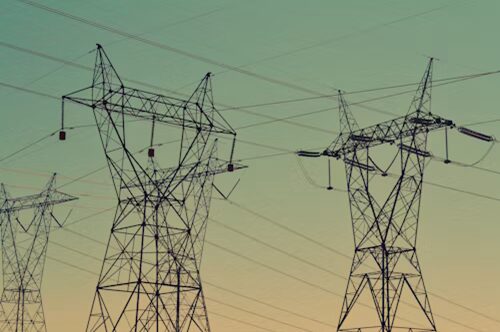
In a recent onslaught of executive orders, the Trump Administration has made clear that energy is a priority.[1] Energy demand is skyrocketing, and the United States is scrambling to keep up.[2] One key factor is energy transmission. The United States’ transmission infrastructure is outdated, and it is not being built fast enough to meet projected demand.[3] Some scholars point to the decentralization of transmission regulation as the culprit.[4] Traditionally, states keep most of the siting and permitting powers of transmission lines and the federal government regulates what occurs between the states and things that concern customers.[5] A more centralized system of regulation could help resolve decongestion. Regardless of whether this is true, recent legislation and executive orders point towards the federal government having more power—but how will the government use that power?
Out of Steam: Transmission and Grid Congestion
The Department of Energy (DOE) has estimated that we need to build 5,000 miles of transmission a year to maintain grid reliability and to keep energy costs stable.[6] When there are not enough transmission lines to support the energy an area needs, it causes grid congestion.[7] Grid congestion results in higher energy prices for the end-use consumer.[8] In 2022, one report estimates that congestion costs totaled $20.8 billion.[9] In 2024, the United States built 334 miles of transmission.[10] Part of the problem with building new transmission lines is how decentralized the system is.[11] Essentially, there are too many cooks in the kitchen.
The federal government has the power to regulate rates and services of interstate transmission of electricity and wholesale electricity.[12] States, on the other hand, have the power to regulate their own electricity generation and retain control over siting and permitting.[13] The Federal Energy Regulatory Commission (FERC) makes sure that “all rates and charges made, demanded, or received by any public utility for or in connection with transmission or sale of electric energy . . . [is] just and reasonable.”[14] Entities such as regional transmission organizations (RTOs) or independent system operators (ISOs) manage wholesale electricity markets within their region.[15] FERC oversees these organizations (except for Texas’s Electric Reliability Council) to “ensure reliability and access to the electric grid.”[16] FERC and state level agencies also oversee areas without these kinds of organizations, which are managed by utilities.[17]
A Power Struggle: FERC and Legislation
In 2024, FERC issued Order No. 1920 to improve regional electric transmission planning and cost allocation.[18] The order requires each transmission planning region to partake in long-term planning for both transmission planning and generator interconnection.[19] While there is an indisputable need for more transmission infrastructure in the United States, many utilities and states argue that FERC’s order is overreaching. In a consolidated case against FERC, utilities and states challenged FERC, accusing it of not addressing “legitimate requirements under the [Federal Power Act] like ensuring just and reasonable rates or reliability.”[20] They also claim that FERC’s plan is broader in scope than what Congress has authorized.[21] If the plaintiffs succeed, FERC’s mission will be derailed. A recent Third Circuit decision, however, sided with FERC’s vision.[22]
In Transource Pennsylvania v. DeFrank, the Circuit Court affirmed the lower court’s decision that the Pennsylvania Public Utility Commission (PUC) could not deny Transource’s application to build new electricity transmission lines because it “posed an obstacle to federal objectives.”[23] The federal objective in this case is relieving regional grid congestion.[24] However, the PUC benefits from grid congestion; the congestion means higher energy costs for Maryland, Virginia, West Virginia, and the District of Columbia, and lower costs for Pennsylvania. Less grid congestion would alleviate some states’ energy costs while increasing Pennsylvania’s energy costs.[25] PJM Interconnection, the RTO in the region, approved Transource’s plan without considering this factor in its cost-benefit analysis.[26] When the PUC received Transource’s siting application, it accounted for Pennsylvania’s increased energy costs in a separate cost-benefit analysis and rejected the application.[27] It also determined that the new plan was not needed.[28] The courts held that the PUC could not use a different metric to reject the application.[29] Because FERC had deemed the new transmission lines would help relieve grid congestion, which could “adversely affect customers,” the courts sided with Transource.[30]
Some think that the Third Circuit’s recent decision could push states into cooperating with FERC.[31] After all, when FERC revised Order 1920, it required transmission owners to involve states in long term planning.[32] Recent executive orders paint a different picture.
The Lights are on, but Nobody’s Home: Federal Energy Policy
Despite the federal government’s increasing power in transmission regulation, federal energy policy does not reflect a cohesive vision. In “Strengthening the Reliability and Security of the United States Electric Grid,” President Trump directed the Secretary of Energy to evaluate the energy grid and to develop a protocol that analyzes resource adequacy and expedites orders under Section 202(c) of the Federal Power Act.[33] This section of the Federal Power Act applies only in the short term, however.[34] The Department of Energy’s subsequent report identified a supply shortfall.[35] Despite there being upwards of 2,000 GW worth of energy in the interconnection queue, the report estimates that only 209 GW will be connected by 2030.[36] The report subsequently received criticism for making far reaching assumptions and for “overlooking state and RTO planning tools.”[37]
The Trump Administration’s recent actions do not reflect a prioritization of energy.[38] Several executive orders are expressly hostile to clean energy.[39] DOE recently rescinded a $4.9 billion conditional loan into the Grain Belt Express, a transmission line which plans to transport electricity generated by wind farms.[40] This conflicts with the Trump Administration’s explicit energy policy. Why cancel a loan for a transmission project when there is an energy crisis? The Trump Administration’s energy policy doesn’t prioritize transmission infrastructure. If the U.S. is a resource shortfall and grid congestion is increasing, undercutting transmission projects is counterintuitive. Even though the federal government’s power over transmission energy is increasing, a lack of cohesion in energy policy implies that the federal government will not wield this power effectively.
[1] Declaring a National Energy Emergency, 90 Fed. Reg. 8433 (Jan. 29, 2025); Unleashing American Energy, 90 Fed. Reg. 8353 (Jan. 29, 2025).
[2] New Report Reveals U.S. Transmission Buildout Lagging Far Behind National Needs, Am. for a Clean Energy Grid (July 23, 2025), https://www.cleanenergygrid.org/new-report-reveals-u-s-transmission-buildout-lagging-far-behind-national-needs/.
[3] Id.
[4] Josiah Neely & Devin Hartman, State Permitting Challenges: Electric Transmission, Real Sol. (July 30, 2024), https://www.rstreet.org/commentary/state-permitting-challenges-electric-transmission/.
[5] Fed’l Energy Regul. Comm’n, Energy Markets (2025).
[6] New Report Reveals U.S. Transmission Buildout Lagging Far Behind National Needs, supra note 2.
[7] Doying et al., Transmission Congestion Costs Rise Again in U.S. RTOs, Grid Strategies 2 (2023), https://gridstrategiesllc.com/wp-content/uploads/2023/07/GS_Transmission-Congestion-Costs-in-the-U.S.-RTOs1.pdf.
[8] Id.
[9] Id.
[10] Id.
[11] Josiah Neely & Devin Hartman, State Permitting Challenges: Electric Transmission, Real Sol. (July 30, 2024), https://www.rstreet.org/commentary/state-permitting-challenges-electric-transmission/.
[12] 16 U.S.C. § 824(b)(1).
[13] Id.; Josiah Neely & Devin Hartman, supra note 11.
[14] 16 U.S.C. § 824(b)(1).
[15] Fed’l Energy Regul. Comm’n, Energy Markets (2025).
[16] Id.
[17] Id.
[18] Fed’l Energy Regul. Comm’n, Explainer on the Transmission Planning and Cost Allocation Final Rule (2025).
[19] Id.
[20] Keith Goldberg, FERC Faces 4th Circ. Heat Over Grid Policy Revamp, LAW360 (Sept. 2, 2025, 5:53 PM), https://www.law360.com/articles/2382886/ferc-faces-4th-circ-heat-over-grid-policy-revamp.
[21] Id.
[22] Keith Goldberg, 3rd Circ.’s Grid-Planning Ruling Will Coax States To Play Ball, LAW360 (Sept. 8, 2025, 9:38 PM), https://www.law360.com/articles/2385199/3rd-circ-s-grid-planning-ruling-will-coax-states-to-play-ball.
[23] Transource Pennsylvania, LLC v. DeFrank et al., No. 24-1045, 2025 WL 2554133, at *1 (3d. Cir. Sept. 5, 2025).
[24] Id. at *7.
[25] Id.
[26] Id. at *8.
[27] Id.
[28] Id.
[29] Id. at *16.
[30] Id. at *1, *6.
[31] Keith Goldberg, supra note 22.
[32] Id.
[33] Strengthening the Reliability and Security of the United States Electric Grid, 90 Fed. Reg. 15521 (Apr. 14, 2025).
[34] U.S. Dep’t of Energy, DOE’s Use of Federal Power Act Emergency Authority (2025).
[35] U.S. Dep’t of Energy, Resource Adequacy Report: Evaluating the Reliability and Security of the United States Electric Grid (2025).
[36] Kelsey Koenig & Mike Haugh, DOE’s Resource Adequacy Report: A Recipe for Policy Failure, Advanced Energy Persp. (Aug. 19, 2025, 3:00 PM), https://blog.advancedenergyunited.org/doe-resource-adequacy-report.
[37] Id.
[38] Id.; Herman K. Trablish, Trump Executive Order Threatens Transmission, Interconnection Initiatives: Former FERC Commissioners, Utility Dive (Mar. 26, 2025), https://www.utilitydive.com/news/trump-executive-order-agency-independence-ferc-transmission-interconnection-initiatives/742356/.
[39] Lutz et al., The Trump Administration and Congress’ Attacks on Wind Power Are Killing Thousands of Jobs and Risk Thousands More, Ctr. for Am. Progress (Jul. 24, 2025), https://www.americanprogress.org/article/the-trump-administration-and-congress-attacks-on-wind-power-are-killing-thousands-of-jobs-and-risk-thousands-more/.
[40] U.S. Dep’t of Energy, Department of Energy Terminates Taxpayer-Funded Financial Assistance for Grain Belt Express (2025); Jason Hancock, Feds cancel $4.9 billion loan for Grain Belt Express transmission line project, Mo. Indep. (July 23, 2025, 12:23 PM), https://missouriindependent.com/briefs/feds-cancel-4-9-billion-loan-for-grain-belt-express-transmission-line-project/.