
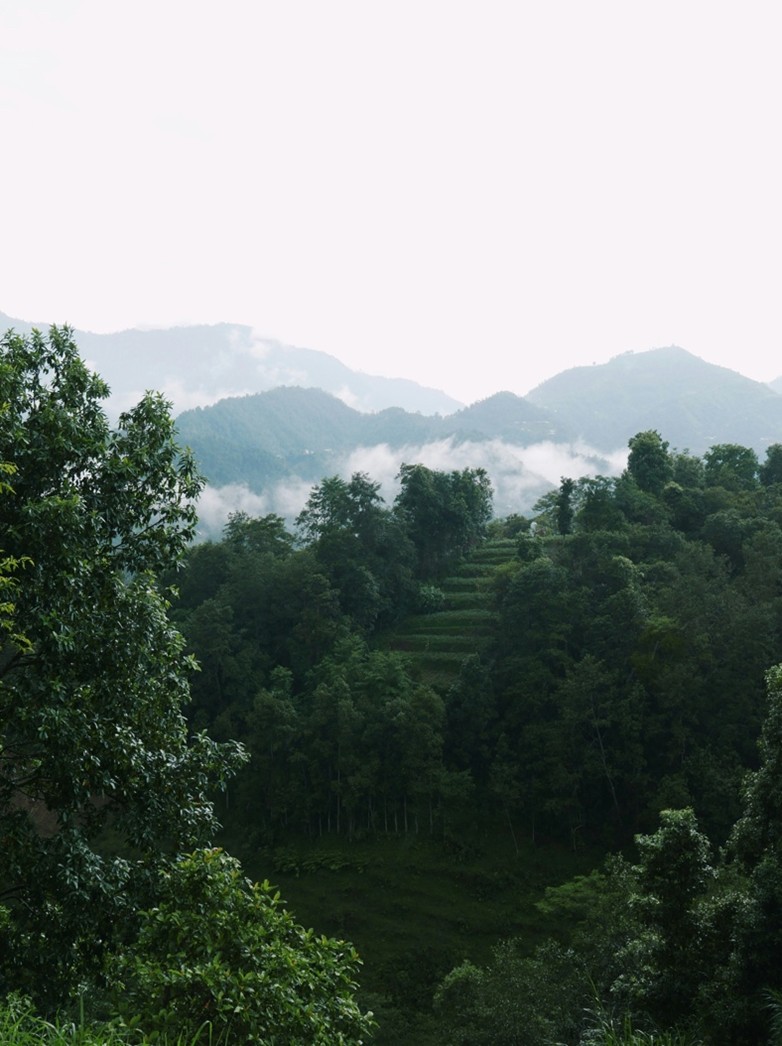
Justice and Equity in Community Forestry: An Enigmatic Dogma?
By Aayush Gautam[1]
In 1987, the Brutland Commission offered the world a new vision with the report “Our Common Future”: a development that meets present needs without compromising the future.[2] This gave rise to a new domain of developmental approach, the concept of “Sustainable Development”, which gained global prominence in the early 1990s.[3] With this came a wave of participatory natural resource management, an ethos grounded in local empowerment and ecological sustainability. Around the globe, countries began embracing models that placed communities as a frontier of development and environmental stewardship.
Nepal, a readily accepting nation for the global initiatives, rode this global wave with legal acceptance in the forestry sector giving legality to the Community Forestry (CF), which later became one of the most acclaimed environmental governance models in the country.[4] However, community-based forest management in Nepal had already taken root in earlier decades, under state-led programs such as Panchayat Forest and Panchayat Protected Forest under the legal provision of Forest Act, 1961.[5] While these earlier models were framed under the centralized Panchayat governance structure, they offered a glimpse of local involvement in forest care and use.
By the early 1990s, this evolved into a nationwide movement. Community Forests, now legally recognized and supported by formal policies, became one of the most acclaimed environmental governance models in the country. Fast forward to today, over 23,000 Community Forestry User Groups (CFUGs) manage approximately 2.58 million hectares, accounting for more than 36% of Nepal’s forest area.[6]
Community Forests: Beyond the canopy
The journey of CFs is, by many measures, a success story. Did CFs help reestablish depleted forest cover that had been lost in the 1970s and 80s? Yes. Did they support livelihoods and reduce dependency on state-managed resources? Yes. Did they strengthen local relationships and collective action? Yes. Did they inject value into local economies and into the national economy as a whole? Yes. But as in most complex social endeavors, bold “Yes” or “No” answers rarely capture the full picture. There is often a blurry line between the two sides of yes and no.
For example, while community forestry successfully restored forest cover, a critical examination is required: : What is the actual meaning of forest restoration? Is it just the visual recovery of the tree stands and increased forest cover? Or the regeneration of a healthy, functional forest ecosystem? Much of Nepal’s CF’s success has focused on reestablishing lost forest cover, but issues of monoculture plantation, the growing threat of wildfires, biodiversity loss of often ignored flora and fauna cast doubt on the ecological robustness of this restoration. Similarly, CFs were initially established to meet local sustenance needs, especially in Nepal’s mid-hills, where fuelwood was essential for cooking. But has CF governance evolved to meet the changing aspirations of communities whose energy needs, economic goals, and demographic dynamics have shifted? Theat remains an unreached terrain of answered geography.
However, caution to the readers, this article does not aim to glorify the pessimistic views presented to downplay CF’s notable achievements. Romanticizing or vilifying the participatory model misses the nuances of interpretation. The goal of this piece is to reflect honestly upon the scenario, on the dimensions of social justice and equity, which often remain buried beneath the roots of a tall standing forest canopy.
Story of the Musahar Community Forest[7]
The Musahar Community Forest is located at the confluence of Khairmara and Madiya river in Ward No. 10 of Bardibas Municipality, Mahottari district. With an area of 36 Hectares, it serves as a vital resource for its users, which provides both ecological benefits and livelihood opportunities. During the early 1980s, local communities from Gausala (south of the forest) felled the forest trees for agricultural purposes, starting a feud with the forest authorities. In the early 1990s, the forest was covered with overgrown bushes, which were cleared by the Musahar community and subsequently planted with fruit trees. Mangoes, jackfruit, citrus, and litchi trees were introduced in about 14 hectares of land. “Each of the 37 households planted 32 fruit trees in the forest completing almost 2000 fruit trees plantation in 1996” – says Dev Narayan Yadav and Ramchandra Sada.
The sale of mangoes through contracts brought an annual average income of almost 0.5 million (all financial figures written in Nepali rupees, NRS). The community already have provided assistance of almost 2 million in social and infrastructure development initiatives like roads, electricity, drinking water, and hospitals. “We were providing monthly salary of 49 thousand to four teachers of Musahar and Yadav community in the nearby school” – says one of the members in the meeting of the user groups. The hand-over of the community forest soon became a transformative initiative in enhancing both ecological and social well-being.
Nonetheless, things gradually took an unprecedented turn. Tensions began to rise among and within the community once lucrative income from the mangoes sales became apparent. Initially managed by the marginalized Musahar and Tamang communities, the CF soon faced demand for inclusion from communities like Koiri, Yadav, and Mahato households. These disputes led to divisions among community members, fueled by historical grievances and socio-political dynamics. “Whenever the meetings were held, disputes arose, and after that, forest officials stopped attending the meetings” – says Ram Babu Mahato in the user group meeting.
Internal tensions, coupled with allegations of financial mismanagement, also made Mangoes’ contract inconsistent and on the brink of closure. Total earnings from the sales were overshadowed by the Secretary of the committee, with significant amount left unrecorded and unaccounted for. This exacerbated mistrust among users. Consequently, the financial discrepancy is being watched by the Commission for the Investigation of Abuse of Authority (CIAA), the bank account has been frozen, and the salaries of the teachers have not been paid for five months. The forest’s exemplary transformation to the community-managed resource spectacle devolved into a state of stalemate and governance fiasco.
Reflection and Conclusion
The issue in the Musahar CF is not an isolated case. It is a reflection, sometimes a warning, of deeper structural issues in community forests across Nepal. Power asymmetries, weak institutional safeguards, and selective participation often overshadow the ideals.
One of the female CFUG secretaries in Kavrepalanchowk district of central mid-hill region says, “I’m in the committee just as a mud statue. They tell me to sign a decision or a cheque, so I do. I don’t know what they do or how they do it. They say nothing will happen.” In the name of obligatory representation, it is a symbolic inclusion, a common practice across many CFUGs. We cannot deny that the “pseudo-participation” seen here is not mirrored in countless community-based forest governance, where decisions are made behind the back and marginalized voices are reduced to a mere signatory.
If Nepal’s community forestry model is to thrive ecologically and ethically, it must go beyond the practice of merely planting trees and sharing resources based on legal provisions. It must redistribute power, recognize structural inequalities, and represent all voices fairly, especially those of the marginalized ones. Because in the end, a community forest is more than just a patch of trees. It is a social contract, and its health depends as much on its canopies as on the justice rooted beneath it.
[1] Aayush Gautam is a forestry researcher working at the intersection of forest science, governance, and forest-based enterprise development in Nepal. He holds a Master of Science in Forestry (Gold Medalist) from Tribhuvan University and has a background in applied research, policy analysis, and field-based forest management.
[2] See Our Common Future, Rep. Of the World Comm’n on Env’t and Dev., U.N. Doc. A/42/427 (1987).
[3] . History of SD, Sustainable Development Commission, https://www.sd-commission.org.uk/pages/history_sd.html (last visited Oct. 5, 2025).
[4] Forrest Act, 2049 of 1993; see also G. C. Dhruba Bijaya, et.al., Community Forestry And Livelihood In Nepal: A Review, The Journal of Animal & Plant Sciences (2016), https://www.thejaps.org.pk/docs/v-26-01/01.pdf.
[5] Pramod Ghimire & Uchita Lamichhane, Community Based Forest Management In Nepal: Current Status, Successes and Challenges, Grassroots Journal of Natural Resources (June 20, 2020), https://www.researchgate.net/publication/342501024_Community_Based_Forest_Management_in_Nepal_Current_Status_Successes_and_Challenges.
[6] Nepal’s Community Forest Groups: Incubators of Democracy, Community Conservation (July 2, 2025), https://communityconservation.org/nepals-community-forest-groups-incubators-of-democracy/; see also Hari Krishna Laudari, et.al., Community forestry in a changing context: A perspective from Nepal’s mid-hill, 138 Land Use Policy (Mar. 2024), https://www.sciencedirect.com/science/article/pii/S0264837723004842.
[7] Some assertions are from the Author’s experience during a field visit to the Musahar Community Forest. The field visit was conducted in June 2025 and involved direct observation, participation in user group meetings, and discussions with community forest user group members and local residents. The following account draws on these field interactions and community testimonies.