Healing the Kennebec: A Once-in-a-Generation Chance for America’s Wild Atlantic Salmon
By Emily Dwight and Kirt Mayland Photographs by Josh Duplechian
A Once in a Lifetime Opportunity
After decades of failure in trying to make fish passage work at multiple dams, there could finally be a real solution for saving wild Atlantic salmon in America. While they once returned in the hundreds of thousands to every major coastal river north of the Housatonic River in Connecticut, wild Atlantic salmon in the United States have declined to the point where the remaining populations in Maine are listed as endangered and protected under the Endangered Species Act.[1] On September 15, 2025, The Nature Conservancy signed a historic $168 million purchase agreement for the four dams on the lower Kennebec River,[2] which represents more than just an ambitious restoration project for wild Atlantic salmon.
The planned purchase and removal is also a recognition that some problems cannot be engineered around, and now there is the potential for a once-in-a-generation opportunity to correct 100-year-old mistakes. The pattern on the Kennebec has been depressingly familiar. Good people with good intentions have tried again and again to thread an impossible needle: keeping four dams operating while somehow shepherding endangered salmon and other fish past them to their spawning grounds. The results speak for themselves. After nearly three decades under a 1998 settlement agreement that promised “rapid restoration” of fish runs, [3] there has been neither rapid progress nor meaningful restoration.[4]
The Nature Conservancy’s agreement with Brookfield could change the equation entirely. For the first time, people are not trying to jerry-rig a solution around the problem—they’re addressing it directly. And the timing couldn’t be more critical. Returning populations of wild Atlantic salmon in the northeastern United States have plummeted to less than 1% of their historic levels, with the only remaining wild populations restricted to a few rivers in Maine, and still threatened by existing dams.[5] The numerous attempts at multi-dam fish passage have never worked for the anadromous fish – ultimately causing repeated stress and resulting in high mortalities.
The Math Never Added Up
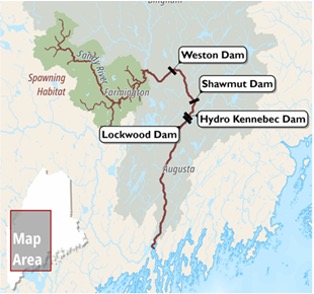
Let’s start with what should have been obvious all along: these four dams—Lockwood, Hydro-Kennebec, Shawmut, and Weston—have a combined generation capacity of approximately 43 megawatts.[6] Collectively hat represents less than half of one percent of Maine’s total electricity generation, and just six percent of its hydroelectric capacity.[7]
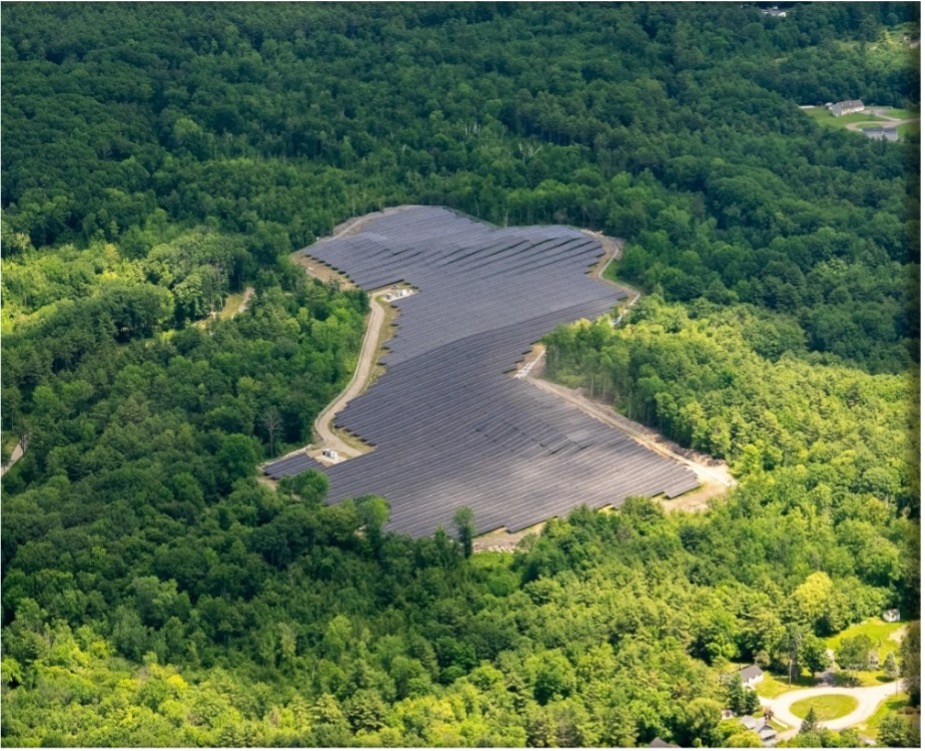
A Maine solar farm. 250 MW of solar/storage could impact only 800 acres
To put this in perspective: Maine has added nearly 2,000 megawatts of solar capacity in recent years and is projected to add another 75- megawatts over the next five years.[8] The entire output of these four dams could be replaced by roughly 250 megawatts of solar paired with battery storage—a technology that is becoming increasingly more cost-effective due to federal tax credits which cover 30-50% of construction costs[9]and which were untouched by the One Big Beautiful Bill.[10]
Meanwhile, these dams rate at the bottom of the energy density scale, inflicting disproportionate environmental damage compared to their meager power contribution, adversely affecting up to 800 miles of river and stream habitat. They sit towards the bottom of the river, in the worst possible location, blocking access to the Sandy River watershed, which contains ideal Atlantic salmon spawning and rearing habitat. The dams are the biological equivalent of a stuck turnstile every few miles on the only road to town.
If hydropower were truly essential in this location (it’s not), another single, properly designed dam with modern and efficient turbines located higher up the river could potentially generate as much power without obliterating salmon populations. For instance, the Harris Station (aka Indian Pond) Dam, the uppermost hydroelectric dam on the Kennebec, has a capacity of approximately 85 MW,[11] nearly double the capacity of these four dams combined, and if it were upgraded with more powerful turbines, it could potentially produce more. The decision to build these four dams over a century ago reflected the narrow focus on power generation at the time. The impacts of dams on biological communities in riverine and riparian ecosystems played little role in the decision to construct dams in the early 1900s.[12] These four dams were also constructed long before major federal environmental legislation was passed in the early 1970s, which would have required review of their ecological impacts. The biological needs of migratory fish were overlooked at the time to further the objective of water storage and power generation.[13]
Learning from Failure—And From Success
The failure rates of fish passage for Atlantic salmon, American shad, river herring, and other species on other northeast rivers such as the Susquehanna, Connecticut, and Merrimack tell a sobering story. Multi-dam fish passage systems have utterly failed to restore populations on these rivers despite decades of effort and millions in investment. According to a 2012 study, less than 3 percent of American shad made it past the dams in these rivers to their spawning reaches.[14] On the Susquehanna, passage efficiency through four dams has often been near zero, with only 8 out of over 10,000 shad making it past the fourth dam in 2014.[15] Similarly, on the Kennebec, the Lockwood fish lift passed just 5 American shad in 2022—out of thousands attempting the journey.[16]
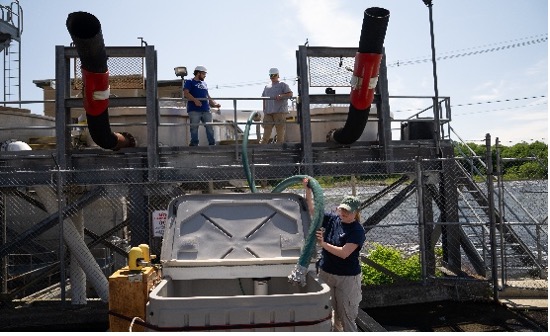
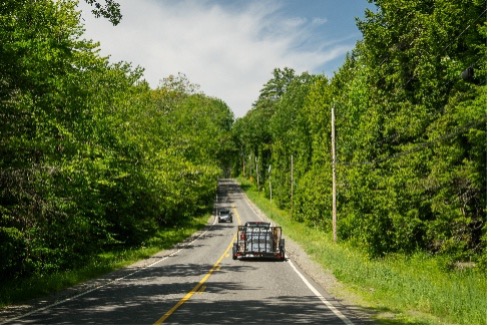
Current Trap, Truck, and Release Operations from the Lockwood Dam Fish Lift to the Sandy River
With an Atlantic salmon run down to 54, the restoration program on the Connecticut and its 5 dams with passage facilities was shut down in 2012, and the program on the Merrimack was abandoned as a failure in 2013.[17]
Salmon can experience weeks of delay at dams with fish passage trying to pass upstream, preventing them from spawning multiple times — a critical factor for population recovery.[18] Downstream migration for their juveniles is often similarly unsuccessful. If the dams were to remain, even with the passage and performance standards proposed in the federal relicensing filings, the Kennebec Coalition estimated that more than 10 percent of juvenile salmon (smolts) would die swimming downstream. The Coalition further estimated that the same four projects would prevent roughly 15 percent of the returning adults from returning to their spawning habitat. Even if everything worked perfectly – “if all the wildly optimistic performance standards were met” – there would still be a combined ‘take’ of more than one fifth of each generation of Kennebec River Atlantic salmon, before accounting for natural mortality.[19]
Still waters above the Weston Dam
The best available science tells us why: dams don’t just block fish—they fundamentally impact biodiversity and alter river ecosystems. They create warm man-made lakes that alter the natural flow of the rivers, favoring “pond” species over native, fluvial species, and invite predation by river birds and land mammals. Destruction cannot be mitigated, only removed. For that reason, from California to New Jersey, 27 states removed 108 dams in 2024[20] as they considered the dams antiquated solutions to both adding new hydroelectric energy generation facilities and restoring fish populations.
Many of these efforts have been successful. Recent results on Oregon’s and California’s Klamath River show what is possible when restoration is chosen over half-measures. Within weeks of removing the final dam in October 2024, over 6,000 Chinook salmon returned to newly accessible habitat—areas they hadn’t reached in over a century.[21]
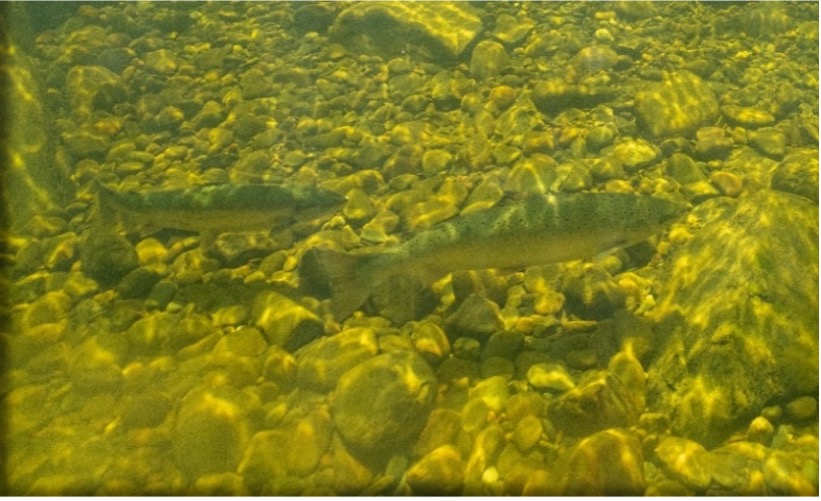
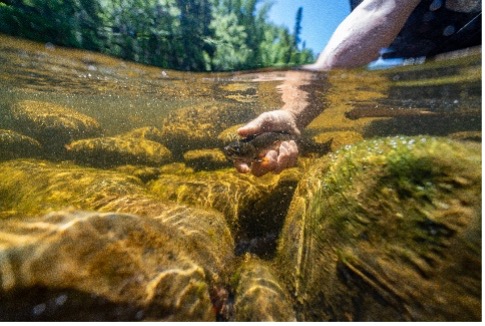
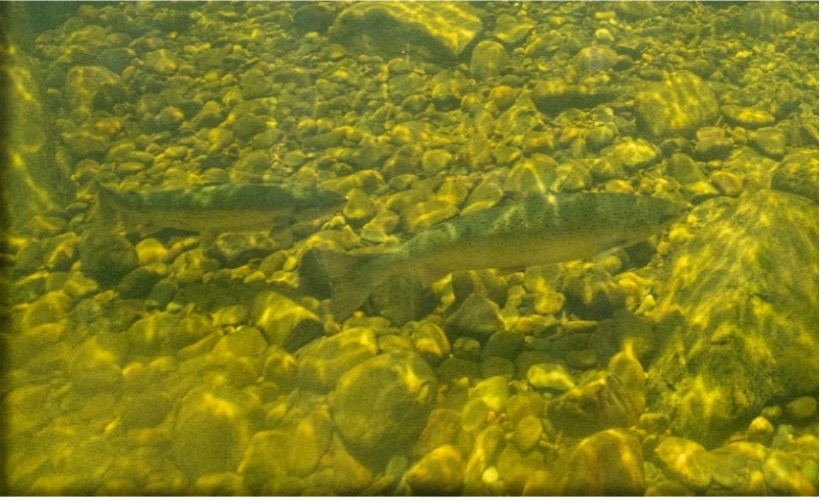
Atlantic salmon in the Sandy River
The news gets even better. In October 2025, monitoring crews confirmed that fall Chinook salmon have made it all the way into the Williamson and Sprague rivers above Upper Klamath Lake— traveling nearly 300 miles upstream for the first time in over 115 years. Scientists have already documented dramatic improvements in water quality, with river temperatures self-moderating, and toxic algae blooms that acted as “heat batteries” in the rivers and reservoirs either shrinking or nearly disappearing. Damon Goodman, Mount Shasta-Klamath regional director for California Trout commented “[t]he rivers seem to come alive almost instantly after dam removal, and fish returned in greater numbers than I expected and maybe anyone expected.”[22]
For the Klamath Tribes, whose members hadn’t witnessed salmon in their ancestral waters for generations, the return has been deeply moving. Tribal Chair William Ray Jr. described their return as “mixed feelings for many tribal members, both rejoicing and a blessing. But also, a certain amount of remorse—all those elders and all those generations that didn’t get to see this happen.” [23]
Closer to home, the Penobscot River’s dam removals sparked an immediate explosion in river herring populations,[24] creating new recreational fishing opportunities and demonstrating that dam removal can coexist with continued hydropower production upstream.
The Kennebec has been called “the Klamath of the East” for good reason. This is a river where removal of aging dams could potentially unlock tremendous ecological and economic potential—and the Klamath’s stunning success shows this isn’t wishful thinking, it is proven science.
What This Deal Makes Possible
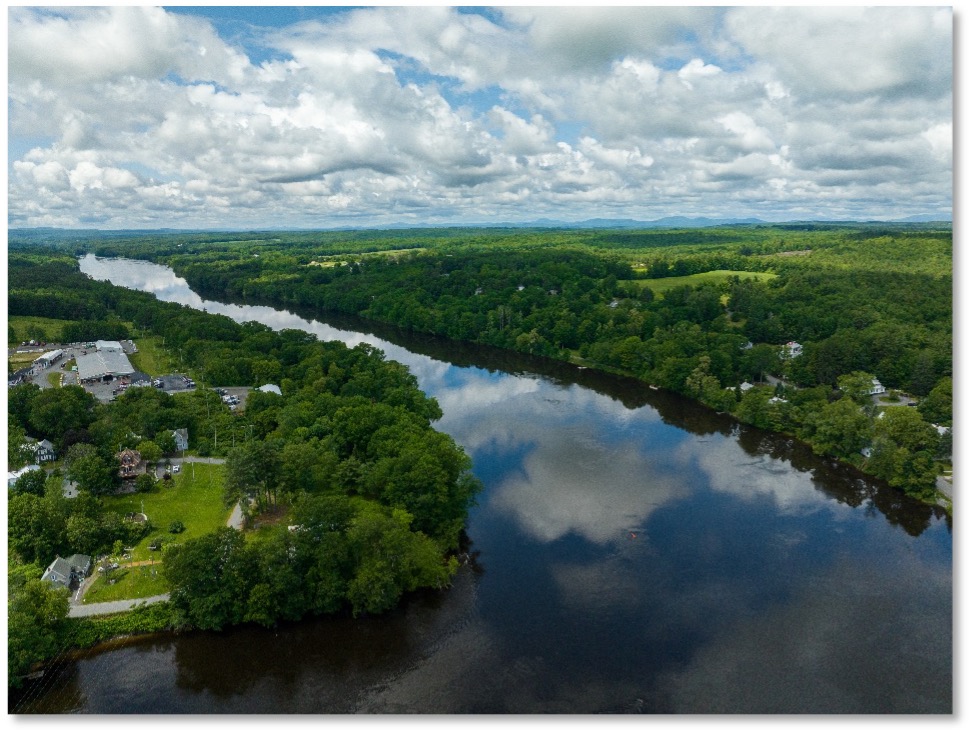
The Sandy River, a tributary to the Kennebec
The Nature Conservancy’s agreement could change everything. For the first time, there is a realistic path to restoring over 800 miles of pristine spawning habitat, most of it in the Sandy River watershed,[25] arguably the best Atlantic salmon habitat on the East Coast.
The Sandy River represents nearly half of all salmon habitat in the Merrymeeting Bay watershed, and it produces the highest percentage of wild, naturally-reared Atlantic salmon in the country.[26] But this isn’t just about salmon. The environmental and economic benefits would cascade throughout the region by restoring commercial fisheries, enhancing recreation, restoring ecosystems, and increasing property values.
Restored Commercial Fisheries
Aside from the benefits to Atlantic salmon, other fish such as American shad, river herring, and American eels could potentially return to historical abundance. Maine’s juvenile eel fishery, already worth nearly $20 million annually, despite limited upstream access, is second in value to only the lobster industry.[27] With dam removal, it could expand dramatically. American shad once numbered in the millions in these waters; their return would support valuable fisheries throughout their range.
Ecosystem Restoration
The Gulf of Maine at the mouth of the Kennebec is warming faster than 95% of the world’s oceansi
As a result of removing dams on the Penobscot River, approximately 3 million river herring returned.[28] River herring provide crucial nutrients and forage for healthy watersheds and coastal fisheries—their restoration could help rebuild groundfish populations like cod and halibut that Maine’s fishing communities depend on.[29] The return of marine-derived nutrients from ocean-going fish benefits the entire watershed, from aquatic insects to the birds and wildlife that feed on them.[30] A free-flowing Kennebec could also provide resiliency against the effects of climate change, allowing nature and species that rely on the river to adjust and even thrive unimpeded by engineered obstructions or fixes.
Enhanced Recreation and Increased Property Values
A free-flowing river from the Sandy River to the Gulf of Maine could transform roughly 30 miles of slow, warm water stalled behind the dams and lead to better conditions for recreational kayaking, canoeing, and fishing. After 1999, when Edwards Dam near Augusta was removed, recreational fishing opportunities appeared immediately[31] and continue to thrive today. The Kennebec could become a destination for anglers, paddlers, and wildlife enthusiasts from across the country, generating substantial tourism revenue for riverside communities.
Further, studies show that free-flowing rivers can increase nearby property values. Flowing rivers with active rapids can be more attractive to live by than the stagnant lakes created by and next to hydropower dams. The removal of the Edwards Dam demonstrated this reality, showing a positive effect on riparian property values after dam removal.[32]
Balancing Communities, Energy and Conservation
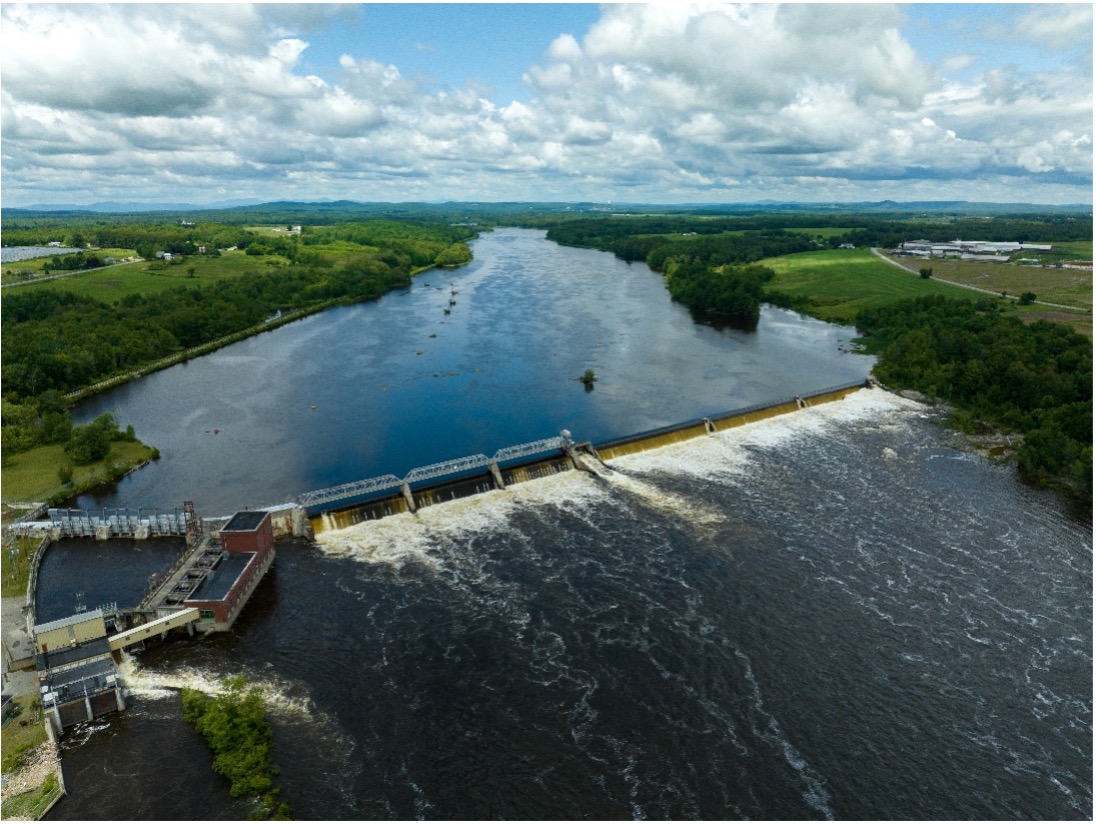
The Sappi Paper Mill is located upstream of the Shawmut Dam pictured here
The Sappi Somerset Mill in Skowhegan, ME, employs 780 people and recently completed a $500 million upgrade. Local municipalities worry about lost tax revenue which may total up to $500,000 annually with the dams’ removal.[33] These are legitimate concerns that deserve serious attention and serious solutions, not dismissal.
The Nature Conservancy has committed to finding solutions that protect both the mill and the river. The newly formed Kennebec River Restoration Trust will work with Sappi and local communities over the next five to ten years to develop plans that meet everyone’s needs.[34] This measured approach provides time for careful planning and community engagement—not the rushed decisions that some fear.
This approach mirrors the successful Penobscot River restoration, where the removal of the Great Works Dam fully funded necessary adjustments to industrial and municipal infrastructure. No mill jobs were lost, no mills closed, and the river dramatically recovered.[35] The same model could work on the Kennebec.
As for energy concerns, the numbers simply do not support claims about a loss in grid reliability. At less than 1% of Maine’s total electricity generation, these dams are nearly irrelevant to the state’s energy security. ISO New England has consistently demonstrated that the grid can absorb the retirement of much larger generation sources. With Maine’s massive solar buildout underway adding capacity equivalent to these four dams combined, coupled with robust regional transmission, the loss of 43 megawatts shouldn’t even register on the grid reliability radar.
Importantly, Brookfield remains committed to operating its dams higher up the Kennebec watershed[36] continuing to produce clean hydropower for Maine while allowing the lower river to be restored. This isn’t a choice between renewable energy and river restoration, it’s a rebalancing that achieves both objectives.
Why This Time Is Different
The timing could not be more urgent. Atlantic salmon in the Gulf of Maine are at the brink of extinction, with returning fish hovering near historic lows.[37] The Merrymeeting Bay region is the only salmon recovery area where wild populations are increasing — almost entirely because of the Kennebec.[38] However, that growth cannot continue with these four dams in place. The Kennebec, along with the Penobscot, offer some of the last, best hopes for recovery of wild Atlantic salmon populations in the United States.[39] What makes this agreement fundamentally different from past attempts is its honesty. The agreement recognizes that continued hydropower operation and effective fish restoration on these four dams are incompatible goals. The previous path, which has been the norm for nearly 30 years—was heading toward yet another expensive compromise[40] resulting in multimillion dollar fish passage facilities that science tells us won’t work, condemning another generation to watch salmon disappear while pretending the problem is being solved.
The Lockwood Dam leaves spawning shad with nowhere to go
Dam owners and agencies have tried the engineering approach, built fish lifts and studied bypass reaches, held countless meetings and produced thousands of pages of documents. Decades and millions of dollars were spent and wasted. And after all that effort, the results were a failure, just as similar efforts failed on the Connecticut, the Merrimack, and the Susquehanna.
The Nature Conservancy’s approach embraces what decades of failure have taught us. Rather than demanding immediate action, it provides time for careful planning and community engagement. Rather than forcing a choice between jobs and fish, it seeks solutions that strengthen both the economy and ecology. Rather than another Band-Aid on a broken system, it can offer genuine healing.
This is about correcting mistakes our predecessors made 100 years ago based on the knowledge, technology, and priorities of their time. They should not be blamed for building these dams when the nation needed electricity and did not fully understand river ecology. But we know better today. We know these four dams are poorly placed. We know their energy contribution is negligible and easily replaced. We know they’re destroying irreplaceable wild salmon populations and decimating other valuable fisheries. And we also know that threats from climate change make protecting resilient natural systems more important than ever.
Maine’s Moment to Lead
Like the Klamath, this is a river where removal of aging dams could unlock tremendous ecological potential. Like the Klamath, this is about righting historic wrongs and restoring connections between rivers and the sea. Like the Klamath, this requires courage to choose restoration over the status quo.
The Nature Conservancy’s purchase agreement offers something Maine hasn’t had before: a realistic path forward that acknowledges the limits of technology and embraces the power of restoration. It provides the funding, the timeline, and the commitment to do this right—to work with communities, protect jobs, and restore the river.
Standing on the banks of the Kennebec today, one can imagine two futures. In one, dam owners and agencies continue trying to engineer around problems created 100 years ago, watching salmon populations dwindle while debating the minutiae of fish passage designs that will probably never work. In the other scenario, the state embraces restoration creating a world-class river that drives economic growth, supports thriving fisheries, honors Indigenous connections to these waters, and becomes a source of pride for everyone.
[19] Kennebec Coalition’s and Conservation Law Foundation’s Joint Comments in Response to Notice of Availability of the Draft Environmental Impact Statement for the Shawmut Hydroelectric project, Lockwood Hydroelectric Project, Hydro-Kennebec Hydroelectric Project, and Weston Hydroelectric Project: Project nos. 2322-069, 2322-071, 2325-100, 2574-092, and 2611-091.
[30] U.S. Department of Commerce, National Oceanic and Atmospheric Administration, National Marine Fisheries Service; U.S. Department of the Interior, Fish and Wildlife Service. Recovery Plan for the Gulf of Maine Distinct Population Segment of Atlantic Salmon (Salmo salar). Final Plan for the 2009 ESA Listing. https://www.fisheries.noaa.gov/s3/dam-migration/final_recovery_plan2.pdf.
[34] The Nature Conservancy. The Nature Conservancy and Brookfield Reach Deal
[35] Bennett, Nick. Testimony in Opposition to LD 1979, An Act To Sustain Good‑paying Jobs in the Forest Products Industry by Ensuring Consistency between Comprehensive River Resource Management Plans and State Water Quality Standards. Testimony before the Maine Legislature’s Environment and Natural Resources Committee. Natural Resources Council of Maine. February 28, 2022. https://legislature.maine.gov/testimony/resources/ENR20220228Bennett132904920283725357.pdf.
[36] The Nature Conservancy. The Nature Conservancy and Brookfield Reach Deal
[37] Atlantic Salmon Commission (U.S.). “Annual Report of the U.S. Atlantic Salmon Assessment Committee.” Report No. 35, 2022 Activities. 2023. https://doi.org/10.25923/skxm-wk46.
The Jones Act: Turbulent Times for American Energy Policy By Aidan Sitler
Congress enacted the Merchant Marine Act of 1920 in the aftermath of World War One.[1] The Jones Act is found in section 27 of the Merchant Marine Act, and it includes protectionist provisions regarding the shipment of goods between U.S. domestic points.[2] The Jones Act requires that merchandise “transported by water within the United States,” be shipped on vessels owned, operated and built by Americans.[3] The Act was codified in part “to ensure a ready supply of ships and mariners in case of war . . . .”[4] It was also enacted to stimulate the American shipping industry and to create more domestic jobs throughout the shipping supply chain.[5] Although Congress originally passed the Act to protect American interests, today it harms the American energy industry and curbs the growth of domestic energy independence.
Currently, the United States relies heavily on the fossil fuel industry for its domestic electricity generation.[6] More than 50% of the U.S. energy generation comes from coal or gas plants.[7] Despite the sustained reliance on fossil fuels, renewable energies have grown from less than 5% of U.S. energy generation fifteen years ago, to over 20% in 2024.[8] Renewables rose at an unprecedented rate as new technology advanced and allowed for greater production and implementation from wind and solar alike.[9] Despite the growth of the renewable sector, offshore wind developments have stalled while utility-scale solar and onshore wind projects continue to flourish.[10]
As of 2021, only two offshore wind facilities were operating in the U.S., with a modest combined total of seven turbines.[11] Together the two wind facilities generate 42 megawatts of electricity capacity.[12] The current generating capacity of offshore wind is minor compared to the U.S grid’s 1300-gigawatt nameplate capacity.[13] This means that the offshore wind facilities presently provide less than one percent of the entire electricity for U.S. grid.[14] But the US Department of Energy estimates that offshore wind has the potential to produce three times the electrical capacity of the current U.S. grid.[15] This potential energy output would help the U.S. transition from carbon-emitting coal and gas plants to a complete clean-energy-sustained grid. Offshore wind development would also help create more stable domestic resources for America’s electricity production.
As interests of global security and resource scarcity continue to shape energy policy, America can focus on expanding domestic energy production. Right now, the U.S. still relies heavily on the global supply chain for imports of natural gas.[16] Canadian pipelines and large shipments of liquefied natural gas primarily accomplish this.[17] As global conflicts such as Russia’s war in Ukraine continue, resource availability and stability can impact the global supply chain and harm America’s economic interests.[18] To limit exposure to the instability of the global supply chain, and to reduce the amount of carbon emissions, offshore wind facility materials should be waived from the Jones Act to help increase America’s energy independence.
An offshore wind facility can take anywhere from seven to eleven years to become fully operational.[19] In contrast, an onshore wind facility can be completed in about half the time.[20] The obstacles facing offshore wind facility developments are both the nature of where they are built, and the current regulations which add additional time and cost constraints to the process. While not much can change the difficult nature of building wind facilities in the ocean, the regulations that impede the building process can be altered. A major regulatory obstacle for offshore wind facilities is the Jones Act. Because the Jones Act requires American made ships to transport merchandise in U.S. waters, the development of offshore wind facilities falls under this category.[21]
The wind facilities are subject to the Jones Act because the pieces of the turbines are shipped from the U.S. port to the point of installation off the U.S. coast.[22] Because companies ship goods between two U.S. points, they are required to adhere to the guidelines of the Jones Act. The primary problem wind production facilities have when conforming to the Jones Act is that there is not an adequate supply of capable U.S. vessels.[23] The U.S. lacks the proper ships to ferry the parts and cranes needed for the construction process.[24] The construction process requires massive parts of the turbine to be hauled off the ship by an onboard crane, and U.S. vessels equipped for this process number in the single digits.[25] Companies now ship turbine related goods from Canadian ports to circumvent falling under the Jones Act.[26] This workaround adds to the total project costs and development time.[27]
Instead of requiring companies to add project time, shipping costs, and increased dealings with foreign ports, the Jones Act should be waived to advance U.S. energy expansion. In the past, the Jones Act has been waived for vessels transporting goods to help Americans during natural disasters.[28] The Department of Homeland Security has the authority to issue waivers for merchandise.[29] In this case, Homeland Security should waive offshore wind merchandise from the Jones Act provisions to help increase America’s energy independence. This waiver would allow a quicker production timeline of offshore wind facilities, and greater growth towards U.S. energy independence. The Act was originally enacted to protect American interests yet is now acting as an obstacle to U.S. energy independence. It would be within the spirit of the Act to help create more American energy security and independence through the growth and development of U.S. owned wind facilities.
[1] Merchant Marine Act of 1920, Pub. L. No. 66-261, 41 Stat. 988 (1920). See also Will Kenton, Understanding the Jones Act: Key Facts, History, and Economic Impact, Investopedia (Aug. 27, 2025), https://www.investopedia.com/terms/j/jonesact.asp.
Stand Your Ground: Environmental Advocates Fights Alligator Alcatraz for NEPA Violations By Matthew Allen
On June 27, 2025, two nonprofit organizations filed suit against state and federal agencies and officials for violations under National Environmental Policy Act (NEPA).[1] This suit arises from the construction of Alligator Alcatraz, an immigration detention center located in southern Florida. Friends of the Everglades (Friends) and Center for Biological Diversity’s (CBD) complaint argues that the U.S. Department of Homeland Security (DHS) failed to complete necessary environmental review before undergoing construction.[2] NEPA promotes efforts to prevent damage to the environment while encouraging productive harmony between man and the environment.[3] Additionally, NEPA requires completion of a necessary report illustrating foreseeable environmental effects based off the proposed action.[4] Filed in the Southern District of Florida, Judge Kathleen Williams ruled in favor of the plaintiffs, clinching a pivotal ruling for environmental groups.
Under federal orders, the Florida Division of Emergency Management (FDEM) took control of the Dade-Collier Training and Transition Airport (TNT).[5] FDEM altered TNT into a mass migrant detention and deportation camp.[6] This federal order, along with construction activities, took place in less than an eight-day span.[7] Friends and CBD interpleaded because of the sensitive location of TNT. The TNT is located within the Big Cypress National Preserve,[8] designated as “an area of critical concern.”[9] Further, TNT is located near the Everglades National Park and historic Everglades. The state legislature established the Big Cypress Area to protect the natural resources and beauty of Florida.[10] Construction of a detention center within this area creates risk of harming local wetlands, wildlife, as well as air and water quality.[11] Due to this threat, the Miccosukee Indian Tribe of Florida (Miccosukee Tribe) intervened as plaintiffs.[12] The Miccosukee Tribe has strong ties to the land and the construction of Alligator Alcatraz poses a significant threat to their food and water supply.[13] The suit requested injunctive relief to stop construction further than what had already been completed.
On August 21, 2025, the District Court ruled in favor of Friends, CBD, and Miccosukee Tribe, finding construction of Alligator Alcatraz violated NEPA standards.[14] Friends and CBD indicated this is a “landmark victory” for those who believe the environment should be protected.[15] NEPA, enacted in 1970, establishes a system for state and federal agencies to find the most beneficial uses of the environment without degradation.[16] Prior to the construction of federal buildings, an environmental impact report must be completed.[17] This report provides reasonably foreseeable effects, elements that could not be avoided, a range of alternatives including negative impacts, and short-to-long term property uses.[18] It is the responsibility of the federal agency to ensure the integrity of scientific discussion and analysis within the assessment.[19] Without this necessary analysis, it is a guessing game how construction of certain facilities can impact the environment.
As the court reviewed the Plaintiffs’ complaint, Defendants failed to establish compelling arguments as to why they did not complete the necessary reports. The possible environmental impacts of this facility are subject to federal control, whereas the Defendant’s argue that Alligator Alcatraz is strictly a state project.[20] The Plaintiffs argue that the Defendants failed to “obtain critical information of the TNT site . . . failure to obtain critical information from the site’s owner . . . and process regarding the facilities construction and operations.”[21] Overall, the Plaintiffs’ argument stems from a lack of accountability and proper procedural steps not completed by the Defendants.[22] The District Court agreed with multiple aspects of the Plaintiffs’ NEPA claim.
NEPA provides clear instructions to which documents are necessary prior to construction of a facility like Alligator Alcatraz.[23] The Plaintiffs argue that this is a project comprised of “systematic and connected agency decisions.”[24] NEPA requires coordination between state and federal agencies, especially for a federally funded project taking place within a specific state jurisdiction.[25] NEPA requires that any “major Federal action significantly affecting the quality of the human environment” be preceded by an environmental impact statement (EIS) to balance impacts of objectives and benefits.[26] A NEPA claim requires the Plaintiff to show that construction of the facility involves (1) a final agency action, (2) a major federal action, and (3) without Defendants conducting a compliant EIS.[27] The District Court capitalizes on the Defendant’s argument that Alligator Alcatraz is not the embodiment of federal issues, therefore NEPA is not the supervising authority. The District Court is not fooled by this argument. Testimony and evidence provided by the Plaintiffs show the facility is operated under a federal agency, funded by federal money, and ultimately deals with federal issues.[28]
Finally, the District Court looks towards potential irreparable injuries to be suffered from the NEPA violation.[29] An injury is irreparable only if it cannot be undone through monetary remedies.[30] The Plaintiffs back their argument with notions of potentially damaged wetlands, endangered species, runoff and water discharge, light, noise, and traffic issues.[31] Plaintiffs provide an extensive amount of support for these notions. Construction of 800,000 square feet of paved area, fencing, lighting, noise, fueling systems, and car traffic will create substantial and irreparable harm to the area.[32] The Defendants attempt to say that all these issues balance out with equity and public interest. Balance of equities and public interest must be weighed when granting preliminary injunctive relief.[33] Immigration is a significant national interest. The Defendants attempt to “humanize” this ongoing issue by stating “as the swell of people seeking refuge and opportunities in our nation steadily increases, the government is under a corresponding pressure to respond and regulate.”[34] What their argument fails to address, is the lack of awareness to NEPA protocols. While the court recognizes that there is public interest, it does not outweigh the evidence provided by the Plaintiffs.[35]
Although there will certainly be an appeal, the masterclass the Southern District of Florida approach provided is exceptional. In difficult times when environmental laws are overlooked for government efficiency, now more than ever it is necessary to step up. The holding by Judge Williams shuts down any notion for the Defendants to skirt by. NEPA will always stand as the foundational point for environmental law. With this ruling, it provides environmental advocates hope for a push for conservation over quick development. The Defendant’s irrational judgment will hopefully prove as a lesson learned: that no matter the public policy being pushed, there are necessary environmental guidelines.
[1] Complaint at 2, Friends of the Everglades, Inc. v. Noem (S.D. Fla. June 27, 2025) (No. 1:25-cv-22896).
National “Forever Chemical” Settlements: Swift Justice or Gross Disservice? By Dane Whitman
A new star has risen over the field of mass toxic tort litigation. Perfluoroalkyl substances (PFAS), a non-stick waterproof coating, is the subject of over ten billion dollars in legal settlements between manufacturers and public water system operators.[1] PFAS have earned the name “forever chemicals” for their resistance to biodegradation in the environment as well as their tendency to accumulate in our bodies over time.[2] While one manufacturer alone has settled with public water system operators for $10.3 billion, some stakeholders have called this amount “grossly inadequate.”[3] Do these settlements serve swift justice for communities with polluted water systems, or do these deals underestimate PFAS’s harmful effects and shield manufacturers from future liability? Given the multifaceted extent of PFAS’s impact on public health, stakeholders should be cautious of settlement agreements that undervalue costs in return for short term money gains.
What exactly do experts know about “forever chemicals” and their impact on public health? The PFAS chemical class encompasses over 15,000 chemicals, many of which manufacturers have used in consumer products such as clothing, cookware, and food packaging.[4] Over 200 million Americans likely drink water from PFAS-contaminated sources, and PFAS persists in the human bodies for decades following exposure.[5] The Environmental Protection Agency (EPA) recognizes that peer reviewed studies have linked PFAS exposure to adverse impacts on reproductive health, child development, cancer risk, immune system and endocrine system performance, as well as cholesterol levels and obesity risk.[6] Meanwhile, the EPA also acknowledges that “thousands of PFAS with potentially varying effects and toxicity levels” will require more research to fully understand.[7]
Over the past decade, the federal government and states have taken decisive action to regulate PFAS. Since Congress passed the Infrastructure Investment and Jobs Act, states have received roughly $1 billion each year to remediate the harmful effects of PFAS and other emerging contaminants.[8] The EPA also established a safe drinking water limit for six PFAS compounds, requiring public water systems to monitor and comply with limits by 2029.[9] Further, certain states including Vermont and Maine have enacted legislation addressing upstream manufacture of PFAS by prohibiting its use in certain consumer products.[10] Meanwhile, hundreds of proposed bills related to PFAS regulation are currently pending in state legislatures across the country.[11] Given PFAS’s relatively recent emergence as a harmful chemical, litigators are reaching settlement agreements with remarkable speed.
PFAS settlement litigators should glean important lessons from previous mass tort settlements. In particular, the Tobacco Master Settlement Agreement (MSA) and the Opioid Purdue Pharma-Sackler Family Settlement Agreement provide insights for future mass tort litigators.[12] Key takeaways from these settlements suggest that litigators should (1) spend settlement funds on focused strategies to mitigate harm; (2) provide comprehensive awards to address past, present, and future harms; and (3) avoid overbroad liability shields barring future civil claims.
For example, the Tobacco MSA demonstrates the risks of broad settlement terms that do not require funds to be spent on mitigating harm. The 1998 Tobacco MSA provided $12.75 billion to plaintiffs over five years.[13] While these funds were “intended” to mitigate youth smoking, the settlements did not require state legislatures to spend settlement funds for these purposes.[14] This led to “a vast majority of the funds being spent on non-tobacco related matters.”[15] While the Tobacco MSA only included states (rather than individual plaintiffs), it did not preempt individual claims.[16]
Conversely, the Opioid Purdue Pharma-Sackler Settlement Agreement demonstrates the risks of undervaluing the costs of harm while providing overbroad liability shields against future claims. This settlement originally required the opioid manufacturer, Purdue Pharma, to provide $4.5 billion dollars for addiction treatment and prevention initiatives.[17] However, this agreement received a negative reaction from plaintiffs because it provided inadequate awards and attempted to shield Purdue Pharma’s owners (the Sackler family) from future civil liability.[18] The Supreme Court (in a 5-4 decision) remanded the agreement for further negotiation after finding that the settlement agreement’s liability shield for the Sackler family violated bankruptcy law.[19] This led parties to renegotiate the settlement, increasing the settlement amount to $7.5 billion while maintaining the Sackler family’s civil liability for future claims.[20]
What role, then, do legal settlements play at this early stage of our national PFAS response? First, unlike the Tobacco MSA, settlement agreements regarding PFAS should ensure that funds are used to mitigate pollution and health risks. However, these awards may be difficult to adequately quantify while public health experts are still uncovering the extent of PFAS’s harmful effects on the human body.[21] Second, settlements should contemplate awards that both fund public mitigation and compensate private damages. Settlement awards limited to remediating municipal water systems overlook communities’ harm from past, present, and future exposure. Finally, settlement negotiators should avoid overbroad shields to future liability, especially while the cost of exposure remains difficult to quantify. Settlement terms that undervalue damages while barring civil plaintiffs from exercising future legal action are a disservice to impacted communities.
Plaintiffs across the United States are already reaching settlements with PFAS manufacturers—notwithstanding scholars’ fledgling understanding of PFAS’s harmful effects. While this swift action reflects a growing national consensus regarding the risks of PFAS, the extent PFAS’s harmful effects is still an emerging research field. Litigators should be wary of closing the door to future civil claims until the public health and legal fields reach a firmer calculus to quantify the past, present, and future harms of PFAS.
[12] Kayla Ahmed, Settling for Less? An Analysis of the Use of Settlement Agreements to Mitigate Non-Communicable Diseases, 35 Geo. J. Legal Ethics 489, 493 (2022).
Rights of Nature as an Alienating Step Towards Better Environmental Laws By Brett Davis
Humanity continues failing to adequately protect world’s ecosystems despite years stewarding for the environment.[1] This failure poses devastating consequences to individuals, societies, and the world.[2] Nothing here is new; humankind has been aware of the cost of neglecting nature for thousands of years.[3] But this awareness has an anthropocentric tint in the modern age, which has informed environmental responses. To combat environmental failures that human-centered approaches bring, the “Rights of Nature” movement has emerged.[4] The movement attempts to redefine environmentalism to make nature a key player.[5] This blog will explore this attempt and provide a Marxist critique of a rights-centered approach to environmental law.
The Rights of Nature movement seeks to end the reductive view that nature is a mere sum of its parts.[6] The old Enlightenment view establishes humans as the environment’s master.[7] This mastery, paired with the idea of the wholly rational human, guided the law to treat nature as a tool for human needs.[8] During the late 20th century, industrial nations began adopting a stewardship approach, placing humans as nature’s protectors.[9] While more environmentally conscious, stewardship has still failed to protect Earth’s ecosystems.[10] The problem is that humans are still the masters of nature, and stewardship still reduces nature to human-defined values. Thus, the Rights of Nature focuses on establishing rights for nature itself¾rights that are defendable in court.[11]
Defendable rights take a legally human form. Recently, New Zealand’s Taranaki Maunga (or Mount Taranaki) was recognized as a legal person.[12] Taranaki joins a list of natural features with personhood in the New Zealand, a world leader in the Rights of Nature.[13] The hope is personhood will help to conserve and restore traditional Māori uses.[14] Members of Māori iwi will be “the face and voice” of Taranaki Maunga and will oversee the rights, powers, duties, responsibilities, and liabilities of the mountain.[15] Using a group of trustees representing a natural personhood is a common approach under the Rights of Nature.[16]
The personhood these trustees protect is one Marxism has long critiqued. Marx critiqued rights as separating individuals from their community.[17] The purely Marxist understanding is that the bourgeoisie favored individual rights undermine the proletariat’s interests in a unified class.[18] Now, modern theorists have expanded the alienating effect of individualism to anti-colonialism, feminism, and more.[19] The root issue of all these movements is clear: rights alienate people and deny the intersectionality arising from human issues.
Rights of Nature are no different than these human rights¾rights alienate nature from itself. Rights establish each actor in a system as distinct, manageable, and understandable. Each piece of nature may receive personhood and subsequent rights,[20] but nature is not a series of distinct persons. This tension, between nature’s reality and right’s unreality, poses serious strains on the framework’s solvency. How do a river’s rights relate to those of a migratory species that occasionally calls the river home? Both entities are simply together in nature. Enlightenment rationalism does not clearly apply to such interconnected systems. Nature does not prioritize one part of itself over another. Proscribing rights to nature creates environmental components as competitive agents in a larger rights system.
In the competitive system, rights act as “trumps,” some rights taking priority over others.[21] A priority of rights leads to balancing, an already contentious point in environmental policymaking.[22] Any current American political issue—freedom of speech, privacy, pro-choice, racial and wealth inequality—highlights the impasse of people’s rights against each other and the state. Nature’s components will just be a new agent in the constant balancing of rights.
This balancing goes to Marx’s concern.[23] How does nature, a collective, integral, and abstract entity, compete with individual rights? How can a river assert a right over the people who use the river for their livelihoods? This is the same problem. No person functions absent of nature, and nature is not complete absent people. Nature’s rights create a nonexistent antagonism: what is best for nature is contrary to what is best for people. And this conflict is the very goal of Rights for Nature, to create a system for nature to “fight” for itself.[24]
The Rights of Nature aim for conflict in the current system, contrasting the utopian ends of Marxism. Supplying nature with the right to defend itself allows for a better functioning status quo. Namely, personhood allows environmental claims a way around typically difficult standing challenges.[25] Additionally, Rights of Nature can help quell the anthropocentric views on the environment prevalent in the West.[26] In these ways, the movement is a steppingstone to better evaluating nature’s importance. But a steppingstone is not an end.
We must ask whether a system of rights that has led to such devastating environmental catastrophes is the system that will truly be able to represent nature. Rights fix nature into the enlightenment system; it does not radically redefine how we approach problems. We live in a world where human rights abuses are still ubiquitous, even in democratic societies.[27] The Marxist critique is one way to explain these failures, and how the Rights of Nature might fall into the same historical struggle. But understanding rights power to alienate right holders underscores the frameworks shortcomings in uniting and caring for nature. The Rights of Nature do not supply the ends for environmental response but are simply a possibly misguided step towards equitable ends.
[1] Sandra Díaz, et al. The Global Assessment Report on Biodiversity and Ecosystem Services, XIV (Eduardo S. Brondízio et al. eds, IPBES, 2019).
[6] Niels Hoek, et al., Implementing Rights of Nature: An EU Natureship to Address Anthropocentrism in Environmental Law, 19 Utrecht L. Rev. 72, 74 (2023).
[19]Seegenerally Vasuki Nesiah, The Ground Beneath Her Feet: “Third World” Feminisms, 4 J. Int’l Women’s Stud. 30 (2003); Kimberle Crenshaw, Mapping the Margins: Intersectionality, Identity Politics, and Violence against Women of Color, 43 Stan. L. Rev. 1241 (1991); Makau Mutua, Savages, Victims, and Saviors: The Metaphor of Human Rights, 42 Harv. Int’l L. J. 201 (2001).
[27]See generally Human Rights Watch, World Report 2024: Events of 2023 (2024).
A Civil Application of McGirt: What Could this Mean for Tribes? By Lauren Burden
In McGirt v. Oklahoma, the U.S. Supreme Court held the Muscogee Creek lands were a reservation for purposes of the Major Crimes Act.[1] Specifically, this means that only the federal and tribal governments are allowed to try tribal members in court for criminal matters, not the state of Oklahoma.[2] States, however, are still allowed to prosecute non-Indian on non-Indian crimes within Indian country.[3] In holding this, the Court confirmed the Muscogee Creek Nation’s reservation “remains ‘Indian Country’”[4] and that once Congress creates a reservation, only Congress can disestablish it.[5]
But why is this important, and why do we care? By establishing that only Congress can make or break reservation status, McGirt validates the continued existence of the Muscogee Creek’s reservation––and their tribal self-governance[6]––even though Oklahoma has historically acted otherwise.[7]
A year later, in 2021, the Oklahoma appellate court applied this same analysis and extended reservation status to other tribes in State ex rel. Matloff v. Wallace and Grayson v. State. Matloff confirmed the continued existence of the Chickasaw, Choctaw, and Cherokee reservations,[8] while Grayson confirmed the Seminole reservation.[9] Other Tribes, such as the Miami, Ottawa, Wyandotte, Quapaw, and the Peoria, have also had their reservation status recognized.[10] This gave some tribes hope that their right to tribal self-governance would continue to be acknowledged, but the State of Oklahoma became fearful about future implications these rulings could create.[11]
Before tribes could get too excited, another case impacting Indian Country was decided in favor of the state of Oklahoma. In 2022, the 5–4 U.S. Supreme Court decided in Oklahoma v. Castro-Huerta that the State did have concurrent jurisdiction with the federal and tribal governments to prosecute non-Indian against Indian crimes in Indian Country after all.[12] The Court reasoned that State criminal jurisdiction in Indian Country stems from Indian Country being part of the state of Oklahoma.[13] Additionally, it reasoned that state jurisdiction is only preempted by explicit federal prohibition or by the state “unlawfully infring[ing] on tribal self-government.”[14] The Court noted the State’s exercise of criminal law could implicitly include the exercise of civil law in Indian Country.[15]
So why can’t McGirt also implicitly extend to civil matters and acknowledge tribal self-governance over civil violations within Indian Country? To answer this, one must first look to the civil limitations facing Indian Country today.
Tribal Courts used to have exclusive jurisdiction over “claims that arise in Indian Country [and] implicate Indian interests.”[16] In Williams v. Lee, the Court reasoned that allowing state jurisdiction over Indian Country would infringe on Indians’ right to govern themselves.[17] However, while not officially overturned, this idea was chipped away and replaced by the Court’s decision in Montana v. U.S.
In Montana v. U.S., the US Supreme Court held that Tribes do not have jurisdiction over non-Indians on reservation fee land (owned by non-tribal members) because regulating non-Indian hunting and fishing “bears no clear relationship to tribal self-government. . . [or] threatened the Tribe’s political or economic security as to justify tribal regulation.”[18] Because the Court did not consider the Tribe’s self-governance or integrity threatened, this meant that the Crow Tribe’s inherent sovereignty was limited regarding non-members on fee lands.[19] However, this case did establish some exceptions under which Tribes can hold non-Indians in tribal court for civil offenses.
Tribes retain inherent sovereign power to hold non-Indians in court for civil offenses for only two reasons. One, if the non-Indian entered a consensual relationship through commercial dealings (contracts, leases, etc.), then their activities can be tribally regulated via taxation, licensing, or other means.[20] Two, if a non-Indian’s conduct threatens or has a direct effect on the Tribe’s “political integrity, economic security, or health and welfare of the tribe” then the Tribe can exercise civil authority over them.[21] If either of these conditions is met, then a tribe may exercise its jurisdictional authority over a non-Indian. If we applied the Montana test to a tribe in Oklahoma, they would have to prove one of these two exceptions currently exists before they can exercise their tribal authority over a non-Indian to protect their people.
Hypothetically, let’s say there is a non-Indian upstream from the Choctaw Nation headquarters (located in Durant, Oklahoma) that is polluting the river with chemicals and runoff from their farm. This non-Indian lives within what is recognized now as the Choctaw Nation Reservation. Let’s say the Choctaw Nation has strict water pollution standards to ensure tribal health and safety via access to clean water. Under the Montana test, the Tribe must prove that this polluter either contracted with the Tribe (unlikely since the polluter seems to be a farmer that just lives in the area) or that they have threatened the Tribe politically, economically, or their communities’ health and welfare. The Tribe could argue that river pollution affects their drinking water, impacting tribal members’ health and welfare; therefore, the Tribe should be able to regulate water pollution within its reservation. However, the polluter could argue that the amount of pollution falls within the federal standards under the Clean Water Act, and therefore, even if he is violating Tribal regulatory law, he is within federal compliance, so Tribal law should not apply. This would then likely turn into very expensive litigation over whether the pollution really affects the tribe’s health and welfare. In contrast, under a civil application of McGirt, the Choctaws would be able to enforce their civil regulatory pollution standards without needing to prove tribal members are actually negatively impacted by the pollution. Therefore, a civil application of McGirt could allow Tribes to maintain and exercise their tribal self-governance over civil matters within Indian Country without having to go through the Montana test.
A recent Oklahoma case, Stroble v. Oklahoma Tax Commission, asked the State’s Supreme Court to do just that: extend McGirt to civil and regulatory law.[22] Here, the court specifically declined to extend McGirt to income taxes because it claimed the U.S. Supreme Court limited McGirt to “criminal jurisdiction under the Major Crimes Act.”[23] It reasoned Justice Gorsuch, while trying to calm the State’s fears, stated the only question before them in McGirt concerns what Indian Country means in a criminal law context.[24] Therefore, the Oklahoma Supreme Court claims it is bound by that ruling and cannot extend McGirt to civil law.[25] However, Stroble has petitioned the U.S. Supreme Court for certiorari as of October 1, 2025,[26] so there may be an explicit answer to this question soon.
[1] McGirt v. Oklahoma, 591 U.S. 894, 899–938 (2020).
[10] Kirke Kickingbird, The Jurisdictional Landscape of Indian Country After the McGirt and Castro-Huerta Decisions, Hum. Rts. Mag. Jan. 2023, at 10.
[11] The Court addresses Oklahoma’s concern that this ruling would extend to civil and regulatory law by stating “The only question before us, however, concerns the statutory definition of “Indian country” as it applies in federal criminal law under the MCA,” McGirt, 591 U.S. at 935.
[26] Matter of Stroble, No. 120,806, 2025 WL 1805918 (Ok. S.Ct. 2025), petition for cert. filed, 25-382 (U.S. Oct. 1, 2025).
Spent Nuclear Fuel Storage: Coming to an Oil Field Near You! By Jules Mule
In Nuclear Regulatory Commission v. Texas, the Supreme Court held that only parties to the Nuclear Regulatory Commission’s (NRC’s) licensing proceedings are entitled to judicial review of the licensing decision.[1] This case comes to the Court after respondents Texas and Fasken Land and Minerals challenged the NRC’s statutory authority to license a private-off-site-spent-nuclear-fuel-storage-facility in West Texas. However, the Court did not decide the case on the merits. Instead, it simply held that Texas and Fasken were not parties to the NRC’s licensing proceedings and are not entitled to judicial review. The Court should not have awarded the NRC undue control over judicial review of its licensing proceedings. More importantly, the Court should not have left such a significant regulatory question open for future litigation.
The United States began commercial nuclear power production in the 1950s after the enactment of the Atomic Energy Act of 1954 (AEA).[2] Nuclear reactors use enriched uranium to generate electricity and create waste known as spent nuclear fuel (SNF). Originally, SNF was reprocessed to extract weapons-grade plutonium for warheads. Eventually, nuclear proliferation concerns in the 1970s led President Ford to halt commercial reprocessing. However, continual generation without reprocessing meant many reactors were already approaching maximum capacity for on-site SNF storage by the 80s. Congress then enacted the Nuclear Waste Policy Act of 1982 (NWPA) which designated Yucca Mountain, Nevada as the nation’s single, permanent SNF repository. Public backlash, however, has killed nearly all federal support. SNF is still mostly stored on-site, but this is unsustainable, as many nuclear reactors are quickly approaching the end of their lifecycles. Now private, off-site storage is gaining federal support.
In 2018, Interim Storage Partners (ISP) applied for a license with the NRC to develop an SNF storage facility in West Texas.[3] Fasken Land and Minerals (Fasken) operates oil and gas wells in West Texas and petitioned to intervene in the licensing proceedings.[4] The NRC denied the petition because Fasken failed “to show that a genuine dispute exists.”[5] Fasken challenged the denial in the D.C. Circuit, but the court upheld the NRC’s decision.[6] Fasken did not petition the Supreme Court for certiorari, and the NRC license proceedings continued.[7] In 2020, the NRC issued a draft environmental impact statement (EIS) and awaited public comments.[8] Among the many commenters were Fasken and a government agency representing the state of Texas.[9] Both raised environmental and public safety concerns, which the NRC considered in their final EIS.[10] The NRC then granted ISP the license to develop the storage facility in 2021.[11]
Following this, Texas and Fasken sued the NRC in the Fifth Circuit.[12] They claimed the NRC lacked the statutory authority to license private off-site SNF storage facilities.[13] The Fifth Circuit agreed, and vacated ISP’s license.[14] The NRC petitioned the Supreme Court for certiorari, and the Court granted cert in 2024.[15]
In a 6–3 opinion delivered by Justice Kavanaugh, the Court held that Texas and Fasken were not entitled to judicial review under the Hobbs Act.[16] The Court reasoned that neither met the AEA’s requirement to qualify as “part[ies] aggrieved” to the proceedings.[17] The one and only requirement is that the NRC must grant a prior petition to intervene the proceedings.[18] If the NRC denies the petition, as in this case, the would-be intervenors cannot seek judicial review in court.[19] Texas did not petition to intervene, and Fasken’s petition was denied and subsequently dispatched by the D.C. Circuit.[20] Therefore, neither was entitled to judicial review on the proceedings. The Fifth Circuit’s decision was reversed and remanded without a ruling on the merits.[21] However, the Court did offer five pages of commentary suggesting the NRC does have statutory authority to license private-storage facilities under the AEA.[22]
Regarding the jurisdictional issue, the Court should have held that Texas and Fasken were entitled to judicial review. Under the Hobbs Act, a “party aggrieved” by a licensing order is entitled to judicial review of the proceedings.[23] The Court relied on § 2239 of the AEA to determine who qualifies as a party to NRC licensing proceedings: “In any proceeding . . . for the granting . . . of any license . . . the Commission shall grant a hearing upon request of any person whose interest may be affected by the proceeding, and shall admit any such person as a party to such proceeding.”[24] The Court narrowly interpreted this language to mean that party status is only awarded if the NRC grants the hearing.[25] The NRC codified this interpretation, and the strict criteria for admittance, in 10 C.F.R. § 2.309(f).[26] However, the more obvious interpretation is that both granting the hearing and awarding party status are separately at the NRC’s discretion. Nevertheless, the Court upheld the NRC’s stricter interpretation, citing only to a 1990 D.C. Circuit case for support.[27]
The case is not very supportive. The issue centers around how § 2.309(f) interacts with an older late-filing rule.[28] Further, the circuit court relies on the now defunct Chevron deference.[29] Ultimately, the Court’s unjustifiably narrow reading of the AEA lends the NRC too much control over judicial review. Left unchecked, the agency can simply deny anyone that requests a hearing and remain unobstructed on the licensing proceedings. As the dissent put it: “Allowing agencies to decide who can challenge their work in court is like letting the fox guard the henhouse.”[30]
Accordingly, the Court should have decided this case on the merits. The dissent offered am alternative method to achieving party status under the Hobbs Act (i.e. commenting on an EIS).[31] Regardless of the method used, the open question is more worthy of discussion: Does the NRC have the statutory authority to license private SNF storage facilities? The Court could not stay silent on the matter after all, delivering five pages of unauthoritative dicta.[32] Oddly enough, the Court again based its argument on a less-than-supportive D.C. Circuit case it claims upheld NRC regulations.[33] In 1980, the NRC promulgated regulations under the AEA that allow it to license private off-site storage facilities.[34] And in 2004, the D.C. Circuit in Bullcreek v. NRC conceded that “the AEA does not specifically refer to the storage or disposal of spent nuclear fuel. . . .”[35] Rather, the authority is implicit, predicated on the decades of historical deference to the NRC.[36]
Unable to point towards any explicit authority in the AEA, the D.C. Circuit and this Court both resort to an even earlier case: Pacific Gas & Electric Company v State Energy Resources Conservation & Development Commission (PG&E).[37] Unfortunately, the most authoritative quote in the entire case is mere recognition: “the NRC has promulgated detailed regulations governing storage and disposal away from the reactor.”[38] The regulations were unchallenged; the case was about licensing reactors, not storage facilities. Even together, these two cases hardly amount to a substantial judgment on the statutory authority of the NRC’s private storage licensing practices. In Bullcreek, the petitioner “conceded at oral argument [that] the NRC had authority under the AEA to regulate private away-from-reactor storage facilities.”[39] And in PG&E, the Court made no mention of private vs. federally-owned storage facilities. It’s likely that the recently enacted NWPA that would soon establish a permanent federally-owned storage site was fresh on the Court’s mind. While recognition of the NRC’s authority over private storage facilities under the AEA is longstanding, the authority is implicit at best and has never been directly challenged. Avoiding judgment on the merits keeps the question open to future litigation and enables unnecessary confusion in the nuclear industry.
Regardless, the Court’s lengthy dicta suggests it would likely uphold the NRC’s statutory authority in any future challenge. Ultimately, the NRC is the obvious choice for regulating private storage. Congress should simply revise the AEA to match the NRC’s existing regulations.
[36]Id. (“[T]he NRC has promulgated detailed regulations governing storage and disposal away from the reactor.”); NRC v. Texas, 605 U.S. 665, 683 (2025).
[37] Pac. Gas & Elec. V. St. Energy Resources Conserv., 461 U.S. 190 (1983); NRC, 605 U.S. at 683-84; Bullcreek, 359 F.3d at 538.
The Rescission of the Roadless Rule and What This Could Mean for Vermont By Maddy Foley
The United States Department of Agriculture recently announced that they will rescind the Roadless Area Conservation Rule (the “Rule”). The lack of legislation protecting national forests will devastate communities that rely on their roadless areas for their health and economy. This post will compare the immediate effects of the Rule’s recission on Alaska to those in Vermont.
The Forest Service Department of Agriculture (USDA) enacted the Rule in 2001.[1] The Rule protects certain roadless areas in the National Forest Service System from road construction, road reconstruction, and timber harvesting.[2] The purpose of the Rule is to promote lasting positive effects on forest preservation in the national forest system.[3] In general, the Rule protects about 30% of national forest lands.[4] Public input such as public comments motivated the enactment of the Roadless Rule.[5] The public wanted areas of wild backcountry to benefit the people and wildlife.[6] The Rule represents the public’s need for land conservation, but the Trump administration does not view roadless areas in this way.
On June 23, 2025, the U.S. Secretary of Agriculture, Brooke Rollins, announced that the USDA will rescind the Roadless Rule.[7] Rollins described the Rule as outdated and that it contradicted “the will of Congress and goes against the mandate of the USDA Forest Service to sustain the health, diversity, and productivity of the nation’s forests and grasslands.”[8] This rescission will open up the 59 million acres of protected forests to road construction and timber production.[9] The USDA claims that the Rule is “overly restrictive and poses real harm” to the trees in the national forests.[10]
The USDA argues that the Rule recission will improve fire prevention safety.[11] The USDA also states that the rescission will allow Americans to “reap the benefits of this great land.”[12] Additionally, land use decisions will be made at a local level[13] so communities can decide what is best for their land.[14]
The rescission of the Rule could harm Alaska. For example, the Rule recission would further President Trump’s executive order to extract natural resources such as timber and oil from the state.[15] Specifically, the executive order rescinds another executive order that protected the Arctic National Wildlife Refuge.[16] The Arctic National Wildlife Refuge sustains several aspects of environmental justice.[17] The Refuge protects biodiversity in Alaska.[18] Additionally, the Refuge exists on the land of the Iñupiat and Gwich’in peoples, thus preserving Indigenous culture and traditions.[19] The Rule provides vital resources for environmental justice initiatives in Alaska.
What President Trump ordered in Alaska could set a precedent for future calls for the destruction of other protected roadless areas. Vermont could face similar calls for destruction as Alaska. Deforestation in the Green Mountains would cause devastating environmental justice impacts such as loss of healthy ecosystems and collapse of the ecotourism industry.
Vermont has a special interest in protecting the roadless lands’ ecology. New England continues to recover from the historic overharvesting of forests and heavy land development.[20] Vermont’s Green Mountains contain 376,000 acres of National Forest System lands that includes 25,000 acres of inventoried roadless land.[21] The roadless areas in Vermont provide habitats for critical species such as beavers.[22] Beaver damns naturally regulate the flow of water down the waterways.[23] Additionally, the roadless areas allow water to naturally seep back into the earth to refill aquifers.[24] Further, the roadless areas in Vermont act as carbon sinks, thus making the overall environment healthier.[25] The Rule protects these environmental benefits. The Rule must continue to protect these roadless areas to ensure a healthy environment for the citizens of Vermont.
Further, the state has an important interest in protecting the roadless area because the mountains provide a significant attraction for tourists. Tourists visit Vermont to see the Green Mountains.[26] The mountains attract tourists with the foliage in the fall, skiing in the winter, and lush green views in the spring and summer.[27] Vermont’s $4 billion tourism industry provides over 10% of jobs in Vermont’s work force.[28] For example, the Telephone Gap Project Area contains roadless lands.[29] This area is a popular site for recreational activities such as skiing, hiking, and watching wildlife.[30] Millions of tourists visit the Telephone Gap Project Area every year.[31] Destroying large amounts of forests for roads and logging could damage Vermont’s reputation for beautiful mountain views. Deforestation would cause a drop in tourism and loss of jobs. Thus, the Rule ensures that Vermont has a reliable tourism industry.
The Roadless Rule should stay in place to ensure environmental justice to regions across the U.S. Vermont’s Green Mountains ensure a healthy environment because they protect the ecology and biodiversity of the land. Further, the mountains draw in tourists which are essential to Vermont’s economy. The roadless areas in Vermont provide substantial support to both the health of the environment and the tourism industry. The Green Mountains, like other national forests in the U.S., need the Roadless Rule to stay.
A Critique of the Louisiana v. Biden Decision By Max Oechsner
A coalition of Republican-led states and oil and gas industry groups was handed a win in the latest legal battle over drilling in the Outer Continental Shelf (OCS).[1] The ruling in Louisiana v. Biden will allow renewed drilling in the OCS, the offshore land surrounding the continental United States.[2] The ruling, however, overly relied on former presidents’ actions and misinterpreted the act that governs the OCS. Not only was it poorly decided, but the ruling will have irreversible consequences on the climate crisis.
Background on the Controversy
The OCS is roughly comprised of the submerged lands off the coast of the continental United States.[3] President Biden, at the very end of his term, withdrew the OCS from potential oil and gas leasing.[4] The President did this through two Withdrawal Memoranda (hereinafter memoranda), one addressing the coast of Alaska, and the other addressing the East Coast, West Coast, and the Gulf of Mexico.[5] Biden’s memoranda stated that the withdrawal was “for a period of time without specific expiration.”[6] The plaintiffs, comprised of Louisiana, Alabama, Alaska, Georgia, and Mississippi, the American Petroleum Institute, and the Gulf Energy Alliance, quickly filed suit.[7]
The plaintiffs filed suit in federal court three days before Trump took office.[8] They challenged the memoranda under the U.S. Constitution and the Outer Continental Shelf Lands Act (OCSLA).[9] The plaintiffs argued that § 12(a) of OCSLA violated the U.S. Constitution, therefore making the memoranda unlawful.[10] They also argued the memoranda were unlawful because they exceeded the scope of the President’s authority under § 12(a).[11]
The day that Trump took office, he issued an executive order that rescinded the memoranda.[12] A month later, a coalition of environmental groups filed suit to challenge his rescission order.[13] The challenge to Trump’s order is still awaiting a decision. Meanwhile, the Louisiana District Court decided the Biden case.[14] In this ruling, the Court first sidestepped the question of whether OCSLA is constitutional by giving deference to Congress.[15] The Court then ruled that President Biden exceeded his authority under OCSLA.[16]
The Flaws in the Court’s Decision
The Biden court had several flaws in its analysis. Its decision rested primarily on two strains of reasoning: how former presidents have used § 12(a) of OCSLA and the text of § 12(a) itself. The court also failed to properly consider the context of § 12(a).
The court first erred in its analysis of the text of § 12(a). Section 12(a) provides that “the President of the United States may, from time to time, withdraw from disposition any of the unleased lands of the outer Continental Shelf.”[17] The court read the text as “encouraging an ongoing duty to revisit and amend regulations.”[18] In support of this reading, the court reasons that “it is generally accepted that in the absence of a specific statutory limitation, an [executive actor] has the inherent authority to reconsider its decisions.”[19] However, the text only grants the power of withdrawal.[20] It does not grant the power to rescind a withdrawal.[21] When a statute does not grant the president a power, the president cannot exercise that power.[22] The Supreme Court, in Youngstown Sheet v. Sawyer, clarified this critical rule of constitutional law:
It is one thing to draw an intention of Congress from general language and to say that Congress would have explicitly written what is inferred, where Congress has not addressed itself to a specific situation. It is quite impossible, however, when Congress did specifically address itself to a problem, as Congress did to that of seizure, to find secreted in the interstices of legislation the very grant of power which Congress consciously withheld.[23]
The application of this rule gives the president power to withdraw land, but not to rescind it. Therefore, the president should not be required to specify the future time at which a subsequent president may reconsider the withdrawal.
The court also errs in its reasoning that “presidential interpretations of their limited authority under § 12(a) support a [limited] reading.”[24] However, courts should not use presidential decisions as persuasive or binding authority.[25] Therefore, the court should not have looked to how earlier presidents seem to have interpreted OCSLA.
Finally, the context of § 12(a) was not adequately considered. In 2019, the Alaska District Court decided nearly the same issue in League of Conservation Voters v. Trump.[26] In that case, several environmental groups challenged Trump’s executive order rescinding an Obama-era withdrawal of the OCS.[27] Therefore, the court decided an inverse issue: whether the president had the authority under § 12(a) of the OCSLA to rescind a withdrawal. In their decision, the court took into consideration the context of OCSLA.[28] A major point in the analysis focused on the contrast between § 8 and § 12.[29] They interpreted § 8 to be “promoting leasing” and § 12 to be “entirely protective.”[30] Ultimately, they found that OCSLA did not give a president the power to rescind a withdrawal.[31] Therefore, the contrast in the structure lends to the idea that § 12 only grants protective withdrawal power.
Conclusion
The decision in Louisiana v. Biden represents a significant misreading of both the text and the intent of the Outer Continental Shelf Lands Act. By grounding its reasoning in the practices of past presidents and stretching the language of § 12(a), the court undermined the intent of Congress. The ruling not only weakens the President’s ability to safeguard ecologically vital offshore lands, but it also opens the door to unchecked executive reversals that erode the stability of environmental governance. Ultimately, Louisiana v. Biden stands as a cautionary example of judicial overreach—one that prioritizes political expediency and economic interests over statutory fidelity and the urgent need to confront the climate crisis.
[25]Sawyer, 343 U.S. at 604 (“No authority that has since been given to the President can by any fair process of statutory construction be deemed to withdraw the restriction or change the will of Congress as expressed by a body of enactments.”).
[26] League of Conservation Voters v. Trump, 363 F. Supp. 3d 1013, 1025 (D. Alaska 2019), vacated and remanded sub nom. League of Conservation Voters v. Biden, 843 F. App’x 937 (9th Cir. 2021).
Housing vs. Sustainability: Vermont Governor Passes Executive Order 06-25, Easing Building Energy Efficiency Standards By Diamond McAllister
Vermont Governor Phil Scott issued Executive Order 06-25 (EO) on September 17, 2025.[1] EO 06-25 is titled “Promoting Housing Construction and Rehabilitation.”[2] It aims to improve housing access in Vermont by streamlining development, supporting affordability, incentivizing developers, coordinating state agencies, and reducing regulatory barriers.[3] Meanwhile, Vermont’s environmental goals, codified at 10 V.S.A. § 578, require the state to significantly reduce greenhouse gas emissions.[4] Governor Scott’s EO highlights the tension between Vermont’s statutory climate commitments and the state’s efforts to accelerate housing development.[5] This tension raises questions about whether easing energy efficiency standards undermines Vermont’s legally binding environmental goals.[6] The EO marks a clear departure from the state’s codified mission to reduce greenhouse gas emissions.
I. Stated Purpose of the Executive Order
According to the 2024 Vermont Housing Needs Assessment, Vermont faces a longstanding housing deficit.[7] Most Vermont homes remain unaffordable to the majority of Vermonters.[8] The Governor spends over three pages of the EO justifying prioritizing rapid housing expansion over strict energy efficiency standards as a response to this housing issue.[9] The Governor cites strict energy efficiency rules as slowing the pace of housing development. [10] Specifically, he claims that the 2024 building energy efficiency standards increase construction costs and make housing less affordable for Vermonters.[11]
For several years, Vermont has faced a pressing housing shortage, with the Governor estimating Vermont needs 40,000 new homes by 2030 to adequately meet the state’s housing needs.[12] Vermont is not on track to meet this demand.[13] The EO streamlines permitting, accelerates project approval, and suspends heightened energy efficiency standards in an attempt to address the shortage.[14] However, by acting while the General Assembly is out of session, the Governor demonstrates tensions between urgent housing needs and statutory commitments.
The Governor listed the housing crisis, failed attempts to address it, and the need for accelerated executive action as the rationale for the EO.[15] He acknowledges legislative efforts to address Vermont’s housing crisis but notes that they have been insufficient.[16] Thus, he argues that the executive branch must use its authority to tackle the state’s critical housing shortage.[17] He calls this approach accelerated executive action.[18] This urgency operates within a broader legal framework that binds Vermont to ambitious climate goals.
II. Vermont’s Climate Framework and Energy Efficiency Standards
The Vermont Global Warming Solutions Act of 2020 (GWSA), codified at 10 V.S.A. § 578, establishes Vermont’s climate goals as legally binding mandates.[19] The statute obligates Vermont to reduce greenhouse gas pollution 26% below 2005 levels by 2025.[20] It also requires emissions to reduce a further 40% below 1990 levels by 2030 and 80% by 2050.[21] The GWSA aims to help Vermonters prepare for negative climate change effects.[22] Increasing energy efficiency across sectors plays a crucial role in reaching climate goals because improved energy efficiency reduces emissions.[23] Specifically, “[i]ncreased energy efficiency can reduce industrial carbon emissions by up to 34% in many sectors.”[24]
The EO’s reinstatement of the 2020 energy efficiency standards rolls back prior efficiency requirements.[25] It shifts the focus from long-term energy efficiency to immediate housing expansion.[26] Efficiency Vermont (a nonprofit focused on transitioning Vermont to cleaner and more affordable energy solutions) has demonstrated key differences between the 2020 and 2024 residential building energy efficiency standards.[27] Among these substantial differences are heavier insulation requirements, stricter energy efficiency standards, required electric vehicle charging provisions, solar-ready zone requirements, mandatory airtightness testing, and more stringent overall performance requirements.[28] The 2020 energy efficiency standard reinstatement thus lowers Vermont’s energy efficiency requirements.[29] The reinstatement sets the stage for expanding housing at the expense of energy efficiency.
III. Expansion of Housing vs. Energy Efficiency
EO 06-25 embodies a deliberate trade-off between two objectives: promoting faster housing development and risking slower progress on energy efficiency.[30] This trade-off is evident throughout the EO, particularly in its framing of the 2024 residential building energy efficiency standards as “regulatory barriers.”[31] The EO reinstates the 2020 standards, giving builders the option to choose between the 2020 and 2024 standards.[32]
Conclusion
Will this rollback prevent Vermont from achieving its codified greenhouse gas reduction goals? The answer is still unclear. The EO, however, marks a clear departure from the state’s mission under the GWSA to reduce emissions. The question now is whether Vermont can expand housing and maintain strong energy standards at the same time. Ultimately, the state must balance its immediate housing needs with its long-term, legally binding climate commitments.