
How ICE Raids Impact the Enforcement of Labor Rights for Migrant Farmworkers
By Grace Cunningham
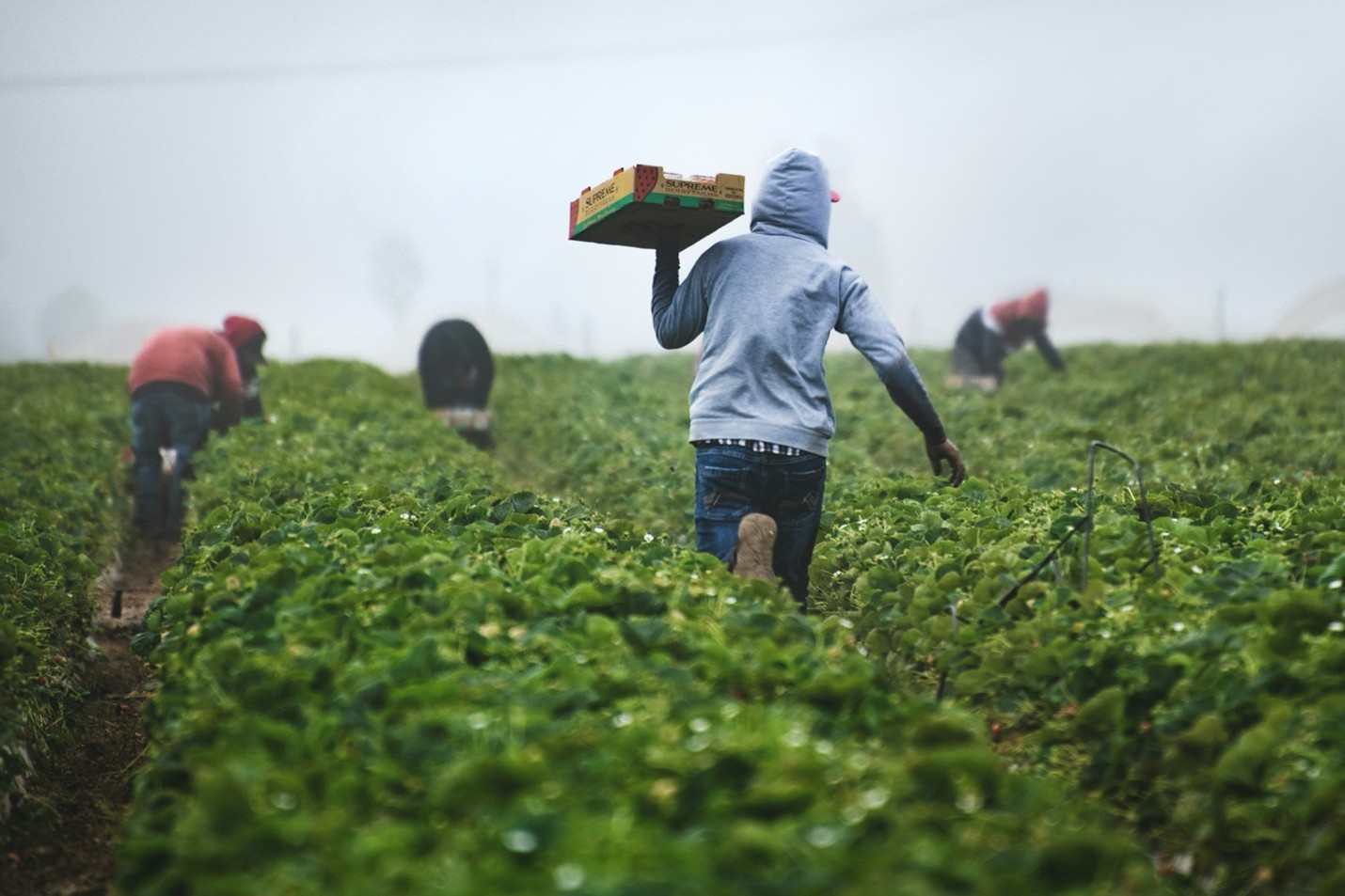
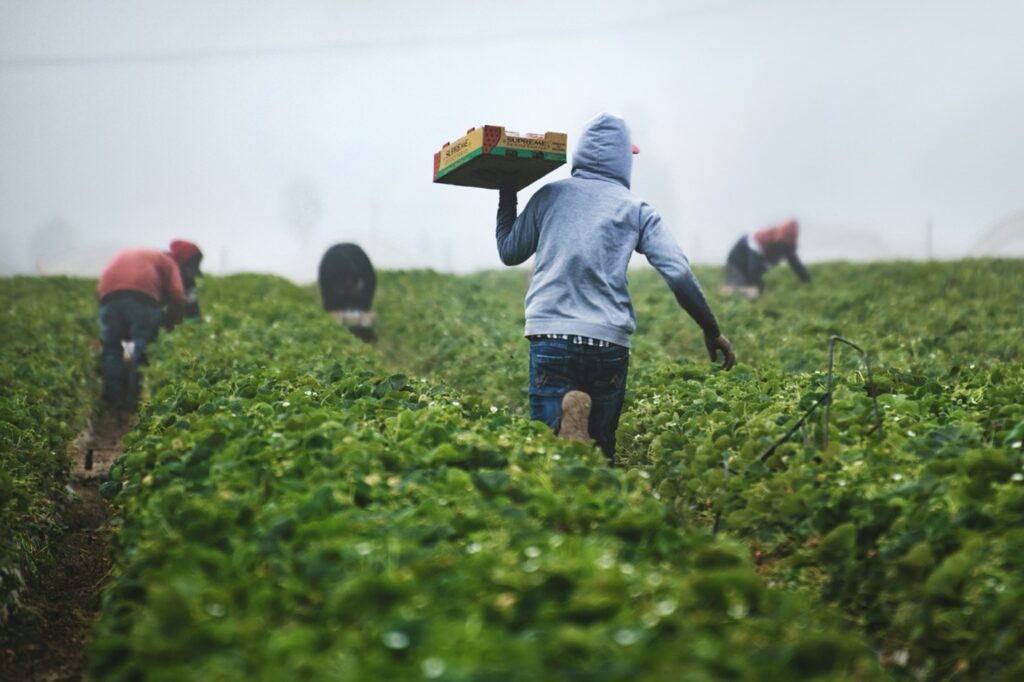
Migrant farmworkers are the backbone of the U.S. agricultural industry, providing essential work from planting and harvesting to caring for livestock. In 2020–2022, only 32 percent of crop farmers were U.S.-born.[1] This workforce faces many vulnerabilities despite the critical role it plays in our food systems. Labor rights protections, such as those provided under the Migrant and Seasonal Agricultural Worker Protection Act (MSPA) and the National Labor Relations Act (NLRA), are designed to safeguard these workers from exploitation.[2] Yet, the increasing frequency of Immigration and Customs Enforcement (ICE) raids have created a climate of fear and uncertainty that render statutory labor protections largely ineffective, revealing a need for immigration and labor policies that prioritize worker safety and rights over punitive enforcement.[3]
Legal Protections for Migrant Farmworkers
The MSPA establishes critical protections for migrant and seasonal farmworkers. This includes requirements for fair wage payment, compliance with work arrangements, and prohibitions on retaliatory actions such as termination, blacklisting, or threats of deportation.[4] These provisions aim to address the inevitable power imbalance between migrant workers and their employers, ensuring that farmworkers can work under safe and nondiscriminatory conditions.[5] Courts have interpreted the MSPA to apply broadly to ensure protection of these workers, regardless of their immigration status. In Phillip D. Bertelsen, Incorporated v. Agricultural Labor Relations Board, the Court held that undocumented status did not preclude farmworkers from receiving backpay.[6] Similarly, in Martinez v. Shinn, the Court upheld damages for wage misrepresentation and retaliation under the MSPA, highlighting the Act’s central role in addressing exploitation of migrant labor.[7] Finally, in Eliserio v. Floydada House Authority, the Court reaffirmed Congress’s intent to make the MSPA accessible to migrant workers by denying a motion to transfer venues.[8] Together, these cases demonstrate the judiciary’s recognition that the MSPA must be construed liberally to ensure meaningful protection for migrant farmworkers.
Similarly, the NLRA extends protections to all “employees,” including undocumented workers, as established in Sure-Tan, Inc. v. NLRB.[9] Although later decisions, such as Hoffman Plastic Compound, Inc. v. NLRB, limited available remedies for undocumented workers, the Court still reaffirmed that they are entitled to the same protection against unfair labor practices.[10] These statutory frameworks create enforceable rights, regardless of immigration status, that ICE raids undermine.
The Impact of ICE Raids on Labor Rights Enforcement
ICE raids disrupt the enforcement of labor rights in several different ways. First, the fear of detention or deportation discourages workers from reporting any labor violations or asserting their rights. This effect is particularly pronounced in industries where undocumented workers make up a significant portion of the workforce. In 2020–2022, the U.S. estimated that 40 percent of all crop farmers were undocumented or lacked legal immigration status.[11] Workers are likely to avoid filing complaints on wage theft, unsafe working conditions, or any other abuses out of fear that it could lead to their deportation.[12]
Second, employers could exploit the threat of immigration enforcement as a tool of retaliation. Employers may report workers to ICE in response to union activity or complaints about labor violations.[13] This directly undermines the protections guaranteed under the MSPA and NLRA. Such practices not only harm the individual workers but weaken the collective efforts to improve working conditions across the industry.
Constitutional Implications
ICE raids raise serious Fourth, Fifth, and Fourteenth Amendment concerns. Warrantless workplace raids raise issues under Camara v. Municipal Court,[14] which require administrative searches to be conducted with the consent of an authorized occupant or pursuant to a judicial warrant. In Noem v. Vasquez Perdomo the Supreme Court temporarily stayed a district court’s injunction that had barred federal immigration agents from conducting stops based solely on race, ethnicity, language, or occupation.[15] The emergency order, issued without oral argument or briefing, effectively allowed these practices to continue, raising significant constitutional concerns. Additionally, the reports of racially discriminatory targeting during raids also implicate the Equal Protection Clause under the Fourteenth Amendment and the Due Process Clause under the Fifth and Fourteenth Amendments.[16] Further, relying on race violates reasonable search and seizure requirements under the Fourth Amendment, as recognized in United States v. Brignoni-Ponce.[17]
Reports of warrantless searches and discriminatory practices during ICE raids further erode trust between migrant communities and the legal system. This erosion of trust extends beyond just law enforcement and to labor advocacy organizations and other institutions that rely on cooperation from workers.[18] By undermining statutory labor protections, ICE raids perpetuate a cycle of exploitation that not only harms migrant workers but also threatens the long-term sustainability of the agricultural workforce.
Protecting Workers, Strengthening the System
The intersection of immigration enforcement and labor rights present complex challenges for migrant farmworkers and the entire agricultural industry. ICE raids exacerbate existing vulnerabilities, undermining the enforcement of labor protections and creating a climate of fear that threatens advocacy and organization.[19] To begin to address these issues, we need to strengthen and enforce legal protections for migrant workers. Strengthening reforms should enhance anti-retaliation provisions in the MSPA and NLRA to prevent employers from weaponizing immigration enforcement.[20] Reforms should also expand U Visas, which provide legal status to noncitizen victims of certain crimes, to cover labor violations, and make T visas, which protect victims of human trafficking, accessible to farmworkers who are exploited, allowing farmworkers to report abuse without fear of deportation.[21] Finally, safeguards against warrantless workplace raids should be enforced.[22] Together, reforms could ensure that migrant workers have a clear legal path to protect their rights. Ensuring these reforms are implemented is essential to protecting migrant workers, upholding labor rights, and sustaining a just agricultural system.
[1] U.S. Dept. of Agric., Econ. Research Service (ERS), Farm Labor, https://www.ers.usda.gov/topics/farm-economy/farm-labor (last updated Sept. 12, 2025).
[2] U.S. Dept. of Labor, The Migrant & Seasonal Agricultural Worker Protection Act (MSPA) (last visited Oct. 12, 2025), https://www.dol.gov/agencies/whd/laws-and-regulations/laws/mspa; U.S. Dept. of Labor, Wage & Hour Div., National Labor Relations Act, https://www.dol.gov/agencies/whd/flsa (last visited Oct. 14, 2025).
[3] Nat’l Employment. Lawyers Ass’n (NELA), NELA Statement on Worksite Raids by U.S. Immigration and Customs Enforcement, https://www.nela.org/nela-statement-on-worksite-ice-raids/ (last visited Oct. 14, 2025).
[4] MSPA, supra note 2.
[5] Id. (stating the purpose of the Act).
[6] Phillip D. Bertelsen, Inc. v. Agric. Labor Relations Bd., 23 Cal. App. 4th 759 (Cal. Ct. App. 1994).
[7] Martinez v. Shinn, 1991 U.S. Dist. LEXIS 10796 (E.D. Wash. 1991).
[8] Eliserio v. Floydada Hous. Auth., 388 F. Supp. 2d 774 (S.D. Tex. 2005).
[9] Sure-Tan, Inc. v. NLRB, 467 U.S. 883, 891–92 (1984).
[10] Hoffman Plastic Compound, Inc. v. NLRB, 535 U.S. 137, 144 (2002).
[11] USDA, supra note 1.
[12] See e.g. Does I–XXIII v. Advanced Textile Corp., 214 F.3d 1058, 1071 (9th Cir. 2000) (recognizing the threats of retaliation, such as deportation, deters undocumented workers from filing complaints).
[13] See e.g. Arias v. Raimondo, 860 F.3d 1185, 1187 (9th Cir. 2017) (highlighting several retaliatory practices where employers contacted immigration authorities to intimidate workers asserting their workplace rights).
[14] Camara v. Municipal Court, 387 U.S. 523, 530–31 (1967)
[15] Noem v. Vasquez Perdomo, No. 25A169, 606 U.S. ____ (2025).
[16] See U.S. Const. amend. XIV, § 1; U.S. Const. amend. V.
[17] United States v. Brignoni-Ponce, 422 U.S. 873, 886 (1975) (holding ancestry alone is insufficient to justify a stop under the Fourth Amendment); see U.S. Const. amend. IV.
[18] NELA, supra note 3.
[19] Id.
[20] Lynn Rhinehart & Celine McNicholas, Shortchanged—Weak Anti-Retaliation Provisions in the National Labor Relations Act Cost Workers Billions, Econ. Pol’y Inst. (Apr. 22, 2021), https://www.epi.org/publication/shortchanged-weak-anti-retaliation-provisions-in-the-national-labor-relations-act-cost-workers-billions/.
[21] Nat’l Immigration Law Ctr., The U Visa and How It Can Protect Workers, https://www.nilc.org/wp-content/uploads/2024/09/How-U-Visa_Can-Protect-Immigrant-Workers.pdf (last visited Oct. 14, 2025).
[22] NELA, supra note 3.