
The Moon Is Ours: How the Outer Space Treaty Protects Humanity’s Collective Interests in Celestial Bodies
By Kacie Smith
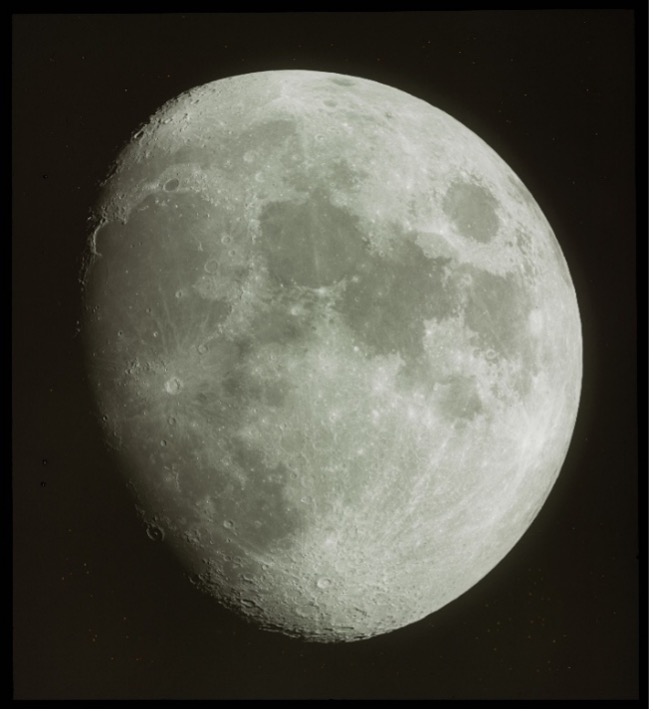
On September 6, 2026, President Donald Trump shared an image of the moon on his Truth Social account, with image text that stated, “THE MOON IS OURS,” followed by an American flag emoji.[1] From there, coverage of the post spread across multiple social media platforms,[2] and some online news websites published articles with titles implying that the President’s social media post indicated a decisive shift in United States space policy.[3] That is unlikely to be the case. Many of these news sources correctly named the Outer Space Treaty (OST) as the legal foundation protecting the moon from U.S. ownership.[4] A closer inspection of the OST and the body of associated international space law reveals what rights the U.S. has with respect to fair use and exploration of the moon and other celestial bodies.
The OST is the first of five U.N. international space treaties that aim to secure international cooperation in peaceful space exploration and the preservation of space as a resource for the benefit of all people.[5] The OST, also known in long form as the “Treaty on Principles Governing the Activities of States in the Exploration and Use of Outer Space, including the Moon and Other Celestial Bodies,”[6] is based on a United Nations declaration from 1962.[7] The OST was put before the U.N. Legal Subcommittee for review, revision, and approval in 1966.[8] Then, in 1967, the OST entered into force backed by the three most influential spacefaring nations[9] of that era: Russia, the United Kingdom, and the United States. As of January 1, 2026, a total of 118 countries have ratified, accepted, or otherwise formally bound themselves to the OST[10] as “States Parties”[11] to this treaty. These States’ activities involving the moon, space, and other celestial bodies are subject to the OST. The U.S. was an instrumental force in the development of this treaty[12] and remains voluntarily bound today.[13]
The verbiage of the OST very clearly states that signatory States cannot lay claims of sovereignty on celestial bodies, including the moon.[14] This rather neatly dismisses the claim of outright U.S. ownership of the moon that is currently making the rounds on social media. That said, under the OST, the U.S. and other States still have rights to access and use the moon for certain purposes—regardless of ownership status of the moon itself. For example, under Article I of the OST the States are free to explore and access all areas of celestial bodies including the moon and free to conduct scientific investigations in those areas.[15] Article IV restricts military establishment or weapons testing on the moon but allows for military personnel to be present for scientific research.[16] Article VI imposes responsibility on States for the actions of any non-governmental entities that perform any activities in outer space, including on celestial bodies.[17] A broad reading of Article VIII allows for States to build structures on the moon, and retain ownership of the structures, without assuming any ownership of the celestial body beneath the structure.[18] Further, Article XII states that any facilities or installations on the moon are required to be open to visits from representatives of other States Parties, which cuts both against and in favor of State development on celestial bodies.[19] Clearly, because the U.S. is a State Party to the OST, the U.S. and any other non-governmental entities that appropriately fall under U.S. responsibility have meaningful access to the moon for peaceful purposes, even without a claim of U.S. sovereignty on the moon.
There are four other U.N. treaties relating to outer space activities: the Rescue Agreement,[20] the Liability Convention,[21] the Registration Convention,[22] and the Moon Agreement.[23] Interestingly, of the five international space treaties that fall under the U.N. purview, there is only one treaty that the U.S. has neither signed nor ratified: the Moon Agreement.[24]
The Moon Agreement (MA) attempts to further define and restrict allowable State activities on celestial bodies within our solar system, expanding on the foundation set by the OST and the other three U.N. treaties.[25] Where the OST makes no mention of the exploitation of celestial resources or the preservation of existing celestial environments, the MA specifically names these concerns.[26] Other key additions under the MA include reporting requirements for State activities[27] and scientific discoveries,[28] and limitations on the construction of manned and unmanned stations.[29] The MA also proposes the establishment of an “international regime” to oversee safe development of the moon and to manage resources rationally and equitably.[30] Thematically, the MA strongly emphasizes the need to protect the interests of future generations, and discourages the destruction of natural celestial environments. [31] Where the OST promotes even-handed access to celestial resources for all States, the MA attempts to erect guardrails to prevent a tragedy of the commons that may result from self-serving State activities otherwise permissible under the OST alone. The U.S. is not alone in resisting the restrictions proposed by the MA: of the 118 countries that ratified the OST, only 16 have also ratified the MA.[32]
Ultimately, the U.S. remains bound to the OST, and consequently cannot lay claims of sovereignty on the moon or on any other celestial bodies as defined in the OST, regardless of U.S. status under the MA. The OST continues to promote equal access internationally to outer space and celestial bodies and, for “the benefit of all peoples,”[33] the moon is ours
[1] Image posted by Donald J. Trump (@realDonaldTrump), Truth Social (Sep. 6, 2026), https://truthsocial.com/@realDonaldTrump/117225384741591978 (on file with author).
[2] Video posted by Daily Mail (@dailymail), Instagram (Sep. 7, 2026), https://www.instagram.com/reel/Dc_BbUnDxNQ/ (on file with author).
[3] Chrys Brent Deiparine, ‘Something is Very Wrong with the President’: Donald Trump Declares ‘The Moon is Ours’ in AI Post, MSN (Sep. 7, 2026), https://www.msn.com/en-gb/news/other/something-is-very-wrong-with-the-president-donald-trump-declares-the-moon-is-ours-in-ai-post/ar-AA2bKYnQ (on file with author).
[4] See Nikki McCann Ramirez, Donald Trump Spent the Weekend Cosplaying as a Supervillain on Truth Social, Rolling Stone, Sep. 7, 2026, https://www.rollingstone.com/politics/politics-news/donald-trump-weekend-cosplaying-supervillain-truth-social-1235622402/ (on file with author) (“The Moon is — to be clear — universal property belonging to all mankind and no individual nation. The United States signed a treaty agreeing to this in 1967.”).
[5] International Space Law Explained, United Nations: Peace and Security, https://www.un.org/en/peace-and-security/international-space-law-explained (on file with author) (last visited Sep. 26, 2026).
[6] Treaty on Principles Governing the Activities of States in the Exploration and Use of Outer Space, including the Moon and Other Celestial Bodies, U.N. Off. for Outer Space Affs., https://www.unoosa.org/unoosa/en/ourwork/spacelaw/treaties/introouterspacetreaty.html (on file with author) (last visited Sep. 26, 2026).
[7] G.A. Res. 2222 (XXI), annex, Treaty on Principles Governing the Activities of States in the Exploration and Use of Outer Space, including the Moon and Other Celestial Bodies (Dec. 19, 1966).https://www.unoosa.org/unoosa/en/ourwork/spacelaw/treaties/outerspacetreaty.html.
[8] U.N. Off. for Outer Space Aff., Treaty on Principles Governing the Activities of States in the Exploration and Use of Outer Space, including the Moon and Other Celestial Bodies, https://www.unoosa.org/unoosa/en/ourwork/spacelaw/treaties/introouterspacetreaty.html (last visited Sep. 26, 2026).
[9] G.A. Res. 2222 (XXI), annex, Treaty on Principles Governing the Activities of States in the Exploration and Use of Outer Space, including the Moon and Other Celestial Bodies (Dec. 19, 1966). https://www.unoosa.org/unoosa/en/ourwork/spacelaw/treaties/outerspacetreaty.html; International Space Law Explained, https://www.un.org/en/peace-and-security/international-space-law-explained (last visited Sep. 26, 2026).
[10] Comm. On the Peaceful Uses of Outer Space, Status of International Agreements relating to activities in outer space as at 1 January 2026, Legal Subcomm. on Its Sixty-Fifth Session, U.N. Doc. A/AC.105/C.2/2026/CRP.9/Rev.1 (2026).
[11] G.A. Res. 2222 (XXI), annex, Treaty on Principles Governing the Activities of States in the Exploration and Use of Outer Space, including the Moon and Other Celestial Bodies (Dec. 19, 1966). https://www.unoosa.org/unoosa/en/ourwork/spacelaw/treaties/outerspacetreaty.html.
[12] G.A. Res. 1348 (XIII), Question of the Peaceful Use of Outer Space, (Dec. 13, 1958), https://www.unoosa.org/unoosa/en/ourwork/spacelaw/treaties/outerspacetreaty.html; U.S. Dep’t of State, Treaty on Principles Governing the Activities of States in the Exploration and Use of Outer Space, Including the Moon and Other Celestial Bodies at Narrative, https://2009-2017.state.gov/t/isn/5181.htm#treaty (last visited Sep. 26, 2026).
[13] Comm. On the Peaceful Uses of Outer Space, Status of International Agreements relating to activities in outer space as at 1 January 2026, Legal Subcomm. on Its Sixty-Fifth Session, U.N. Doc. A/AC.105/C.2/2026/CRP.9/Rev.1 (2026).
[14] G.A. Res. 2222 (XXI), annex, Treaty on Principles Governing the Activities of States in the Exploration and Use of Outer Space, including the Moon and Other Celestial Bodies at Art. II, (Dec. 19, 1966) https://www.unoosa.org/unoosa/en/ourwork/spacelaw/treaties/outerspacetreaty.html.
[15] Id. at Art. I.
[16] Id. at Art. IV.
[17] Id. at Art. VI.
[18] Id. at Art. VIII.
[19] Id. at Art. XII.
[20] See generally U.N. Off. for Outer Space Aff., Agreement on the Rescue of Astronauts, the Return of Astronauts and the Return of Objects Launched into Outer Space, https://www.unoosa.org/unoosa/en/ourwork/spacelaw/treaties/introrescueagreement.html (last visited Sep. 26, 2026).
[21] See generally U.N. Off. for Outer Space Aff., Convention on International Liability for Damage Caused by Space Objects, https://www.unoosa.org/oosa/en/ourwork/spacelaw/treaties/introliability-convention.html (last visited Sep. 26, 2026).
[22] See generally U.N. Off. for Outer Space Aff., Convention on Registration of Objects Launched into Outer Space, https://www.unoosa.org/unoosa/en/ourwork/spacelaw/treaties/introregistration-convention.html (last visited Sep. 26, 2026).
[23] See generally U.N. Off. for Outer Space Aff., Agreement Governing the Activities of States on the Moon and Other Celestial Bodies, https://www.unoosa.org/oosa/en/ourwork/spacelaw/treaties/intromoon-agreement.html (last visited Sep. 26, 2026).
[24] There are sixteen total agreements: five U.N. treaties and eleven other agreements. The U.S. has ratified four of the five U.N. treaties and ratified five of the eleven other agreements. See Comm. On the Peaceful Uses of Outer Space, Status of International Agreements relating to activities in outer space as at 1 January 2026, Legal Subcomm. on Its Sixty-Fifth Session, U.N. Doc. A/AC.105/C.2/2026/CRP.9/Rev.1 (2026).
[25] G.A. Res. 34/68, annex, Agreement Governing the Activities of States on the Moon and Other Celestial Bodies, (Dec. 5, 1979), https://www.unoosa.org/oosa/en/ourwork/spacelaw/treaties/moon-agreement.html.
[26] Id. at Art. 7.
[27] Id. at Art. 5.
[28] Id. at Art. 6.
[29] Id. at Art. 9, Art. 10.
[30] Id. at Art. 11.
[31] Id. at Art. 4.
[32] The Philippines did not ratify the OST and therefore was not included in the original count of 118 countries. For this reason, the Philippines is excluded from this analysis even though they ratified the MA. Comm. On the Peaceful Uses of Outer Space, Status of International Agreements relating to activities in outer space as at 1 January 2026, Legal Subcomm. on Its Sixty-Fifth Session, U.N. Doc. A/AC.105/C.2/2026/CRP.9/Rev.1 (2026).
[33] G.A. Res. 2222 (XXI), annex, Treaty on Principles Governing the Activities of States in the Exploration and Use of Outer Space, including the Moon and Other Celestial Bodies, (Dec. 19, 1966) https://www.unoosa.org/unoosa/en/ourwork/spacelaw/treaties/outerspacetreaty.html.